West Bank Tensions: Hebron Siege Ends, Gaza Deaths Climb
Israel declared the ten-day military operation in Hebron over on Tuesday, while Gaza's health ministry reported that 1,593 people have died since the previous ceasefire.
By Yuki Kaminski ·
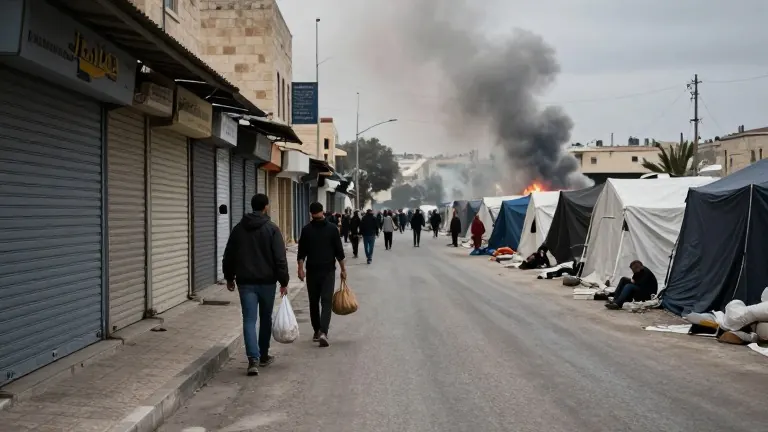
The Israeli military confirmed on November 2 that it had withdrawn from Hebron, allowing displaced families to return to their homes. Governor Khaled Dudin announced the end of the ten-day siege, which had sealed off ten entrances to the city and displaced approximately 5,000 residents. The operation resulted in at least 120 arrests and the demolition of 13 businesses, including the homes of two men blamed for a recent attack.
The withdrawal follows a week of intense political debate in Israel. Palestinian citizens of Israel voted for Ra’am and the Joint List in record numbers, with nearly 840,000 voters supporting these parties, a 64 percent increase over 2022. While Prime Minister Benjamin Netanyahu’s Likud party alleged the election was stolen through Qatari financing, election committee chairman Noam Sohlberg declared the process conducted properly. Police sources also cited a lack of evidence for widespread fraud.
Despite the official end to the voting disputes, coalition negotiations remain complicated. Opposition leader Gadi Eisenkot has outlined four conditions for potential partners, including mandatory national service for all citizens and recognition of Israel as a Jewish, democratic, liberal, and egalitarian state. These terms are viewed as prohibitive by Palestinian parties, though some leaders have expressed willingness to support an Eisenkot government from outside the coalition to remove Netanyahu.
In Gaza, the death toll since the previous ceasefire reached 1,593 by November 2, according to the Ministry of Health. Sunday marked the deadliest day of the week, with at least eight killed. A drone strike on a Ministry of Economy facility in al-Mawasi, Rafah, killed five people on October 28, including Ministry of Agriculture official Wajdi Abu Bakr, who died from his injuries on Sunday.
Youth and civilian casualties have increased. Six-year-old Tahani Shalalfeh died of a gunshot wound in al-Mawasi on October 27, while eight-year-old Yamen Saqr died on October 30 from wounds sustained in Khan Younis. On November 1, a strike near Taj Mall in Gaza City killed Zain Owais along with his father, Mohammed Ali Owais, and a third man.
Humanitarian conditions have deteriorated as winter approaches. The Red Crescent warned on Monday that the health system is at risk of collapse after 26 hospitals went out of service due to fuel shortages. Gaza’s Social Development Ministry stated that 200,000 tents are needed for shelter, yet only dozens have arrived because of Israeli entry restrictions. Two infant girls died of burns in a tent fire in al-Mawasi on Friday.
Across the West Bank, sieges continue in other areas. In Masafer Yatta, at least 12 villages were cut off, and forces detained ten teachers from the Jinba school on Sunday. In Wadi Rakhim, Yousef Shanaran reported that his family has been besieged for four weeks, with settlers poisoning their well. The United Nations Office for the Coordination of Humanitarian Affairs documented 397 settler attacks in the first 26 days of October, a monthly high since 2006.
Source: Al Jazeera