Pahlavi to Accept German Freedom Prize on Behalf of Iranian People
For the first time in its two-decade history, the Friedrich Naumann Foundation's Freedom Prize honors an entire nation, with exiled Crown Prince Reza Pahlavi accepting it in Frankfurt as trustee for the Iranian people.
By Yuki Kaminski ·
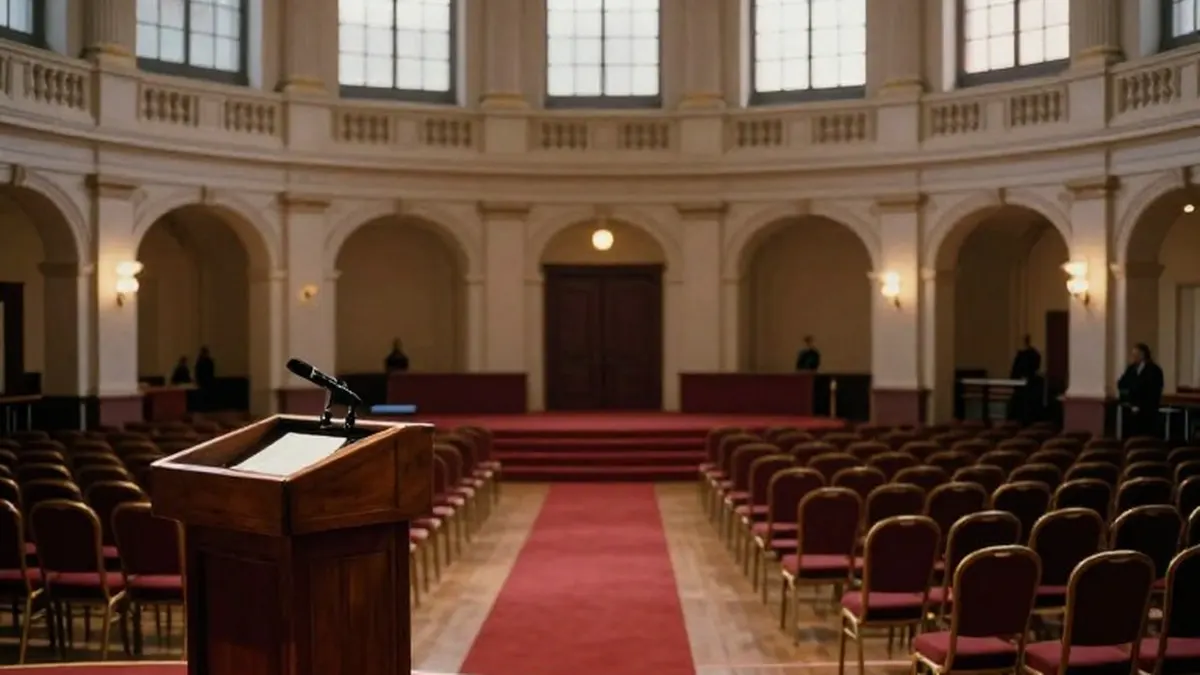
Exiled Iranian crown prince Reza Pahlavi will take the stage in Frankfurt on Saturday to accept the Friedrich Naumann Foundation's 2026 Freedom Prize, an award that for the first time in its two-decade history has been bestowed on an entire nation: the people of Iran and their struggle against the Islamic Republic.
The German foundation, known for its advocacy of democracy and liberal politics, said the decision was driven by the sacrifices of ordinary Iranians, particularly during the January crackdown, when security forces killed thousands of demonstrators and imposed a sweeping internet blackout. Pahlavi, the exiled son of Iran's last shah, will hold the prize in trust until it can be handed to representatives of a freely elected Iranian government.
What began in late December 2025 as protests over deteriorating economic conditions grew rapidly into a nationwide movement demanding an end to clerical rule, accompanied by strikes, anti-government slogans and open chanting of Pahlavi's name, a sight unthinkable only a few years ago. The full human cost of the repression remains difficult to establish, largely because of the communications blackout imposed as security forces moved against demonstrators.
Prof. Ludwig Theodor Heuss, a former chairman and current member of the foundation's board of trustees, told The Jerusalem Post that estimates point to more than 5,000 people killed, while opposition groups and human rights organizations claim as many as 50,000 may have died on January 8 and 9 alone. "I think no people in the world paid a higher price for freedom in this year," he said, noting that more than 70 executions were carried out in October. "The terrible thing is that these things go on. The killing goes on."
The choice of Pahlavi to collect the prize has drawn some criticism, since Iran's opposition spans monarchists, republicans and ethnic and regional movements. Heuss stressed the distinction: "He receives it as a trustee. That's very important for us. It does not belong to him." The move, he said, is no endorsement of Pahlavi as Iran's future leader or of restoring the monarchy: "We absolutely trust in democracy. That's not our decision." What mattered was Pahlavi's stated commitment to freedom, the rule of law, democracy and peace with Israel and neighbors, laid out in the Iran Prosperity Project.
Pahlavi called the honor "a heavy responsibility, but not a new one for me." "For over four decades, I have stood by my covenant with the Iranian nation to lead the struggle for freedom and transition away from this criminal cult," he told the Post in written responses. He thanked the foundation for recognizing the Iranian nation's struggle against "one of the darkest regimes in the world," describing freedom as "a human value" and the foundation as "a light in the darkness of this world."
Saturday's ceremony at Frankfurt's historic St. Paul's Church caps a week of European diplomacy in which Pahlavi pressed senior officials in Brussels and Germany for a tougher line on Tehran. Meeting David McAllister, chairman of the European Parliament's Committee on Foreign Affairs, he urged additional sanctions, action against networks tied to the Islamic Republic, measures against the regime's diplomats and cooperation with technology companies to help Iranians circumvent internet restrictions. "I can see a shift in the European mindset about the regime," he said.
The tour also took on a security dimension, with a planned meeting with Belgian Defense Minister Theo Francken and an address at Belgium's Royal Military Academy. By backing Russia's war in Ukraine, plotting terrorism on European soil and pursuing nuclear weapons and ballistic missiles, Pahlavi argued, the Islamic Republic poses "an existential threat to Europe and the Western world." His message: standing with the Iranian people is "not an act of charity; it is an absolute necessity for Europe's own national security."
The Belgian stop exposed political divisions, as Francken welcomed Pahlavi while Foreign Minister Maxime Prévot voiced reservations about an official parliamentary reception. Pahlavi said Iran "should not be a partisan issue," though he faulted sections of the political Left for viewing Islamists "through a lens of political alliance." Heuss, whose foundation is independent of the German government, said Germany and Europe "should not strengthen the regime in Iran," while allowing that "diplomacy is okay. Diplomacy is right when it saves lives."