Iran Threatens US Navy With Direct Fire as Oil Prices Soar
Escalating military rhetoric and fresh attacks on tankers are driving crude costs to record highs while diplomatic efforts remain stalled.
By Isabella Kaur ·
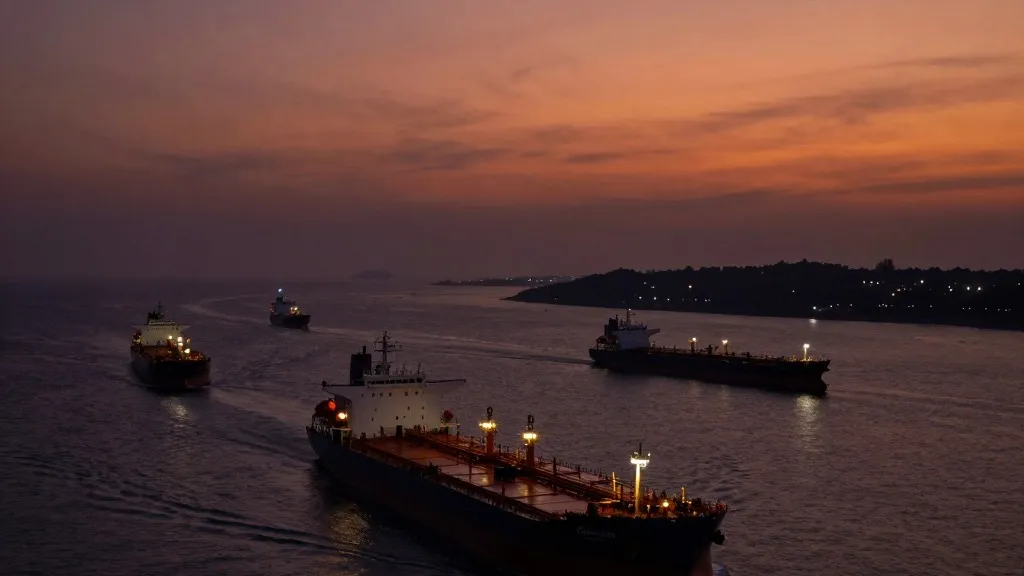
The cost of energy and the security of global trade routes are shifting significantly as the conflict between Iran and the United States intensifies. With Brent crude oil prices climbing to approximately $117 per barrel, the highest level since April, the financial pressure is already being felt by consumers and industries worldwide. This surge is driven by renewed uncertainty over shipping safety and the threat of a broader military engagement. For ordinary people, this translates into higher fuel prices and potential inflation across sectors that rely on imported goods. The situation has moved beyond a regional dispute to become a central factor in the global economic landscape.
The military situation has grown more volatile following statements from the US President, Donald Trump. Speaking at a rally in Florida on Friday, he suggested that the US military might launch another large-scale bombing campaign, which he referred to as another "Epic Fury." This remark comes as Washington debates its strategy. The administration is weighing two options: ending the fighting quickly with massive strikes or maintaining the current naval blockade and sanctions to gradually squeeze the Iranian economy. This uncertainty has left allies and adversaries alike waiting for a clear directive.
In response to these US signals, Ali Abdollahi, the chief of the general staff of Iran's armed forces, issued a stark warning on Saturday. He declared that the US Navy cannot re-enter Iranian territorial waters or their immediate surroundings because Iran is prepared to target any vessel in the region. Abdollahi stated that the US president can only dream of his soldiers returning to the Persian Gulf. He also criticized American rhetoric as contradictory, arguing that if the US claims Iran's military has been largely destroyed, it should move its aircraft carriers and support ships closer to the coast. Instead, the distance of these vessels suggests caution rather than confidence.
Iranian forces have explicitly stated their intent to trap the US and Israel in a military quagmire. This strategy is a direct retaliation for the surprise attack on February 28, which initiated the eight-month war and destabilized the entire region. The threat is not merely verbal. The Islamic Revolutionary Guard Corps reported that seven tankers were attacked or hit mines in the hours before Thursday. On Friday, the group claimed that two supertankers had struck mines. The IRGC has also indicated that its military doctrine has shifted toward a more offensive posture, increasing the risk for commercial shipping.
The conflict is also expanding across other fronts in the Middle East. The Iran-allied Houthis in Yemen struck the Saudi capital, Riyadh, on Saturday. This attack follows recent strikes on Dammam's international airport and the Shaybah oilfield. In response, Saudi forces have bombed Houthi-held areas, including Marib and Taiz. Meanwhile, in southern Lebanon, reported Israeli air strikes hit the area around Nabatieh, and artillery fire fell near Zawtar ash-Sharqiyah. These simultaneous actions demonstrate how the war is spreading beyond the original battlefield.
In the West Bank, Israeli Prime Minister Benjamin Netanyahu has ordered a lockdown of the territory. This decision comes after a Palestinian attack killed two soldiers in Hebron. Netanyahu is also facing a domestic political deadline, with an election scheduled for October 27. The timing adds a layer of political complexity to the military decisions being made in the region. The lockdown is intended to prevent further attacks, but it also increases tensions on the ground as the population adjusts to stricter military control.
Diplomatic efforts have struggled to produce a breakthrough. Senior diplomats from Turkey, Saudi Arabia, Pakistan, and Egypt met with counterparts from the UK, France, Germany, and Italy in Istanbul on Friday. Neither the US nor Iran was present at the talks. Turkey's Foreign Minister, Hakan Fidan, warned that a new attack on Iran would widen the war and spread the conflict across the region. He noted that no one is endorsing such a move at this point. However, the German and regional ministers placed blame for the instability on both sides, with the regional group citing Israeli occupation as the main source of instability.
The meeting resulted in a demand for unrestricted passage through the Strait of Hormuz and backing for the Islamabad memorandum of understanding signed in June. However, Iranian state-linked media described the meeting as showing a gap between diplomatic claims and field realities. Analysts argue that the US and European powers must concede first. As the diplomatic path remains blocked, the threat of military escalation grows, with analysts suggesting that the zero hour for a new intense round of fighting is approaching.
Further complicating the picture, Iranian intelligence reports suggest Tehran has activated a dead hand doctrine. This strategy would allow attacks on US, Israeli, and regional interests to continue from all 31 provinces even if senior leaders are assassinated. The IRGC has also threatened seabed internet and communication cables if civilian infrastructure is targeted again. As Washington orders diplomatic staff to leave Saudi Arabia and other regional countries, the world watches closely to see if the next few days bring a decisive strike or a fragile pause.
Source: Al Jazeera