Gulf Waters See Historic Spike in Ship Attacks Amid Rising Regional Tensions
October marks the deadliest month for commercial vessels in the Strait of Hormuz as military clashes and diplomatic maneuvers intensify across the Middle East.
By Yuki Kaminski ·
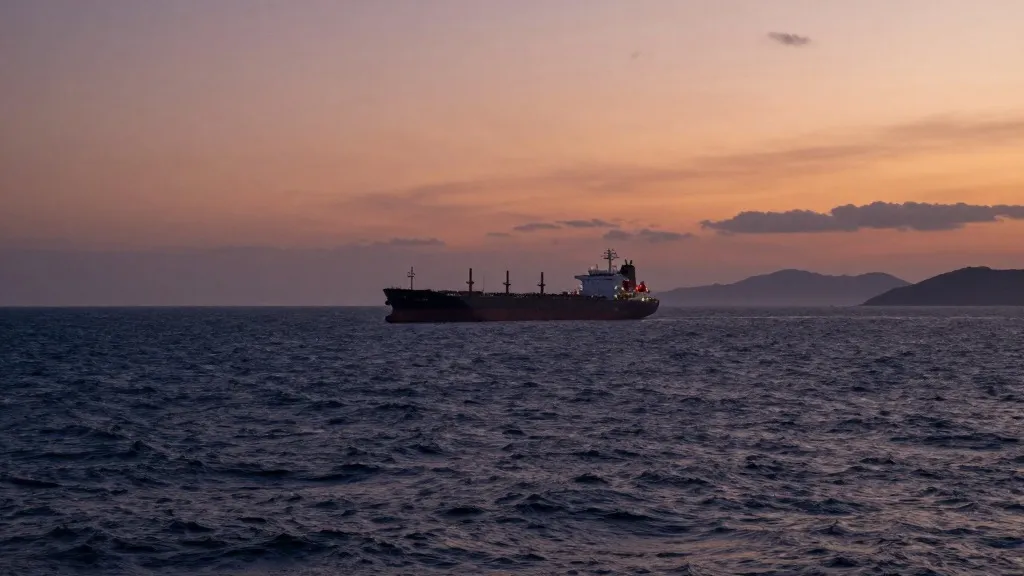
October has emerged as the most dangerous month on record for commercial vessels operating in the Strait of Hormuz and adjacent waters, according to a Washington-based think tank that has tracked such incidents since 2017. This surge in maritime hostility underscores the escalating instability in the Gulf region, where new attacks have compounded existing fears regarding the ongoing conflict with Iran.
The maritime dangers were highlighted by reports from the Iranian Revolutionary Guard Corps, which stated that two supertankers struck naval mines while navigating an unapproved route south of the strait. In a separate incident, the United Kingdom Maritime Trade Operations confirmed that another tanker was struck by an unidentified projectile seven nautical miles from the Omani coast. These events contribute to a growing pattern of disruptions in one of the world's most critical energy corridors.
Terrestrial security concerns also intensified as the Saudi-led coalition announced it had intercepted and destroyed a ballistic missile and a drone targeted at Saudi territory. The kingdom's Directorate of Civil Defence briefly warned residents of potential danger in Riyadh, Najran, and Wadi al-Dawasir, before later declaring those areas safe. This defensive response illustrates the breadth of the regional threat, which now encompasses both aerial and naval vectors.
Political rhetoric from key global powers has grown increasingly sharp. US President Donald Trump suggested that Washington could launch another military operation against Iran during a rally in Florida. In response, Major General Abdollahi, the chief of staff for Iran's armed forces, declared that Iran would not allow aging US warships to return to the Persian Gulf under any circumstances. An adviser to Iranian Supreme Leader Mojtaba Khamenei further criticized the aggressive posturing of Trump and Israeli Prime Minister Benjamin Netanyahu, describing their threats as signs of desperation rather than strength.
Diplomatic efforts continue in parallel with the military tensions. Iranian President Masoud Pezeshkian is scheduled to visit Moscow next week to meet with Russian President Vladimir Putin and attend the Gas Exporting Countries Forum summit on 27 October. Meanwhile, UK Foreign Secretary Ed Miliband stated that Britain is intensifying its search for a diplomatic resolution, noting that the conflict is increasing energy costs for British households.
Regional instability extends beyond the immediate Gulf conflict. In the occupied West Bank, Israeli forces ordered Palestinian residents in Hebron to evacuate on foot and demolished structures near the site where two soldiers were killed, while also detaining dozens of people during widespread raids. In Syria, public protests erupted following a recent Israeli incursion in the south that resulted in the death of a man with a disability. Additionally, Turkish Foreign Minister Hakan Fidan indicated that an announcement regarding the reunification of Libya's rival eastern and western administrations is imminent.
As the Knesset election approaches in Israel, Prime Minister Netanyahu has warned that the nation should brace for international banking sanctions. He proposed that cryptocurrency could serve as a tool to circumvent these financial restrictions. These comments highlight the economic dimensions of the conflict, which are now influencing domestic political strategy in the days leading up to the vote.
Source: Middle East Eye