Afghan Farmers Drive 9,000 Hectare Poppy Boom in Balochistan
Afghan farmers are leasing land in Pakistan and Iran to grow opium after the Taliban ban, according to satellite data and local reports.
By Isabella Kaur ·
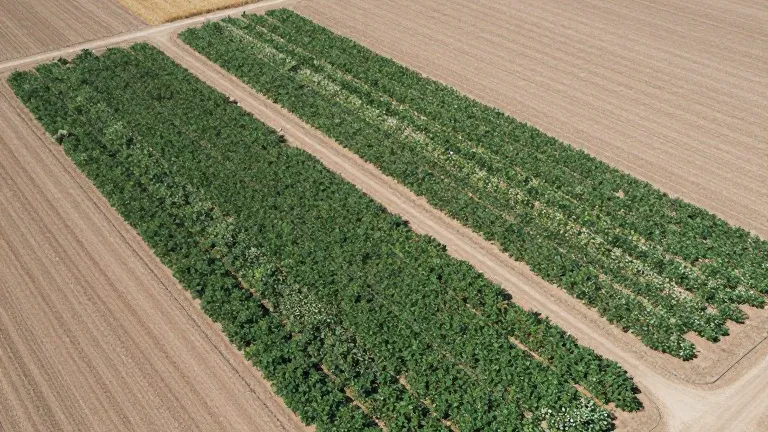
The shift in global opium production has moved across borders. Satellite imagery reveals that farmers in Pakistan and Iran have planted over 9,000 hectares of poppies in 2026, a direct response to the Taliban's 2022 ban on narcotics in Afghanistan.
David Mansfield, a UK-based expert on Afghanistan's illicit drugs industry, stated that the ban and regional instability created conditions for widespread cultivation in the borderlands. He described these areas as becoming a global center for opium production. The expansion is concentrated in Pakistan's Balochistan province and Iran's Sistan-Baluchistan province.
The timeline of this shift began when Afghan farmers from Kandahar and Helmand provinces crossed the border. They leased land in Balochistan, bringing capital and agricultural expertise. Many of these growers invested millions of Pakistani rupees in solar-powered wells. They then share profits with local landowners.
Alcis, a British firm, analyzed satellite data for an August report. The firm identified more than 9,000 hectares of poppy cultivation in Balochistan alone. Most of these fields are located in the districts of Loralai and Killa Abdullah. Mansfield noted that many farmers doubled their cultivated land in 2026. He called this a stark indication that cultivation levels will rise further in 2027.
Local officials and farmers confirm the expansion. Abdul Qahar Wadan, a former National Assembly member from Killa Abdullah, alleged that senior military officials and power brokers back the cultivation. He claimed they take commissions from growers. Monawar Hussain, the district chief administrative officer, disputed this, stating that cultivation declined after an eradication campaign last year. However, Alcis imagery from 2026 shows no clear evidence of eradication.
Lala Jan Kakar, a resident of Killa Abdullah, said that drought and flash floods have ruined traditional fruit farming. He noted that the demand for poppies is higher than for fruits. A farmer in the same district spoke anonymously about paying bribes to local authorities. He alleged that growers sometimes plant poppies on barren land to facilitate publicized eradication efforts when media attention is high.
A similar pattern has taken hold in Iran. Afghan farmers work as tenants and sharecroppers in provinces including Sistan-Baluchistan, Razavi Khorasan, Kermanshah, Lorestan, and Fars. Satellite imagery from 2026 shows extensive poppy fields in Sistan-Baluchistan, some using drip irrigation. Mansfield described a shift from mixed farming to large-scale poppy monoculture. He said these farmers are devoting large plots entirely to poppy.
Iranian authorities have been unable or unwilling to destroy the 2026 crop due to the war against the United States and Israel since late February. Experts expect cultivation to rise further in 2027 as the economy weakens. Meanwhile, opium cultivation is rebounding inside Afghanistan. Production is concentrated in Badakhshan Province, which accounts for about half of national output. Mansfield warned that if farmers in the southwest interpret recent Taliban concessions as tolerance, Afghanistan could see a dramatic rise in production in 2027.
Source: RFE/RL