Funeral Shooting Claims Nine Lives
A rare terrorist attack struck a Greek Orthodox church in Jordan, leaving dozens injured and raising questions about the safety of the country's Christian minority.
By Isabella Kaur ·
Violence erupted at a religious gathering in the Middle East, marking one of the deadliest incidents in the region's history in recent years.
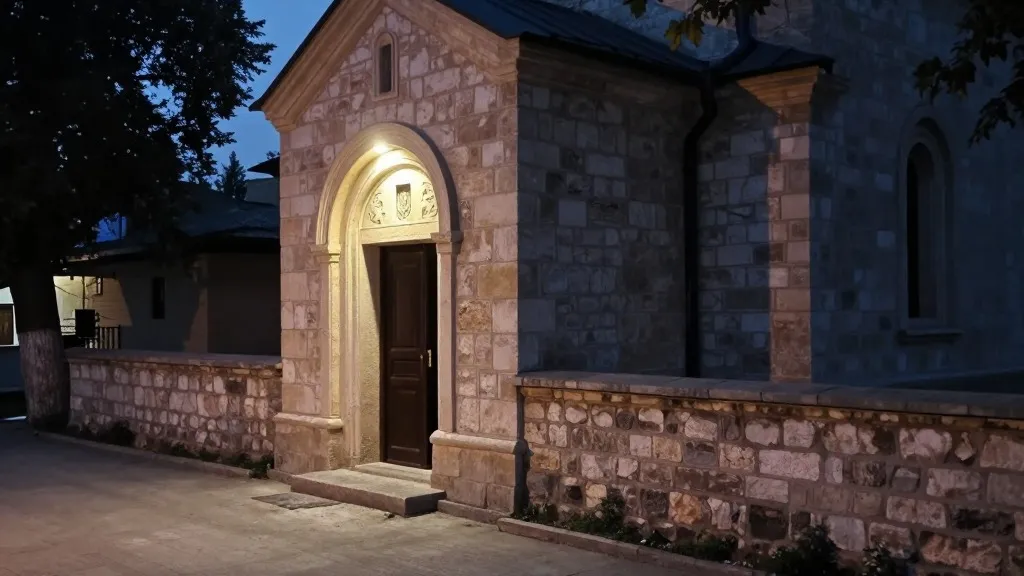
The incident occurred on Friday when armed men opened fire during a service at St George's Greek Orthodox church in the town of Hamoud, located within Karak governorate. Initial reports confirm that nine individuals lost their lives, while forty others sustained injuries. Health officials confirmed the casualty figures, with the minister of health noting that the wounded were being treated at local facilities. The public security directorate, led by Major General Abdallah al-Maaytah, stated that most of the injured were receiving care and that efforts to locate the perpetrators were still underway.
Interior Minister Mazin Al Farrayeh characterized the event as a terrorist act driven by extremists. He noted, however, that it was premature to determine if the gunmen had formal links to established organizations either within Jordan or abroad. As of the latest updates, no group has officially claimed responsibility for the violence. Prime Minister Jafar Hassan described the event on social media as a manifestation of blind extremism, vowing that the society would not be allowed to follow that path.
King Abdullah, a key partner for the United States in the region's security efforts, traveled to Karak shortly after the shooting. He pledged to punish the perpetrators with an iron fist and stated that those attempting to divide the nation with bullets would fail against the people's unity. The monarch emphasized the resilience of the country in the face of such targeted violence.
Video evidence from the scene provided a grim view of the events. Footage aired on state television, which was verified by checking details like the entry path and surrounding walls, showed three figures firing from a sidewalk. The attackers used trees and a low wall for cover before running toward the church entrance. Witnesses described a scene of chaos and fear. Priest Theodoros Soueiss recalled instructing the congregation to stay low as panic spread. He described the gunfire as indiscriminate, noting that no one could predict where the bullets would land.
Other attendees shared similar harrowing accounts. Khaled Burqan, who was present at the funeral, told state media that dozens of people were inside when the gunmen fired for several minutes. Another witness, Ihab Ammareen, described seeing people fall to the floor covered in blood. He said the atmosphere was filled with crying, wailing, and screaming, making it difficult to articulate the terror of the moment.
In the aftermath, security forces were deployed around the church, where blood was visible on the floor near the entrance. The United States embassy in Amman announced on Saturday that protective measures had been increased at shopping centers, diplomatic missions, and other high-profile sites across the country. Internationally, UN Secretary General António Guterres condemned the violence, labeling attacks on places of worship as unacceptable. Mike Waltz, the US ambassador to the UN, called the incident a brutal and depraved attack on a sacred site.
Jordan is often viewed as a stable nation in the region, though US authorities have reported foiling multiple attempted attacks by Islamist militants in recent years. The country also faced Iranian strikes earlier this year following US and Israeli operations against Tehran in February. Christians remain a minority in Jordan, a nation that hosts several biblical locations attracting pilgrims from around the globe. Outside a government hospital in Karak, local residents expressed their shock. Hani Al-Mbaydeen urged the state to investigate the origins of such dark ideas and understand how they enter the minds of the younger generation.
Source: The Guardian