Voters cast tens of millions of ballots despite federal monitoring
Election Day proceeded with minimal technical disruptions, though early voting volumes surged by 34 percent compared to 2022.
By Isabella Kaur ·
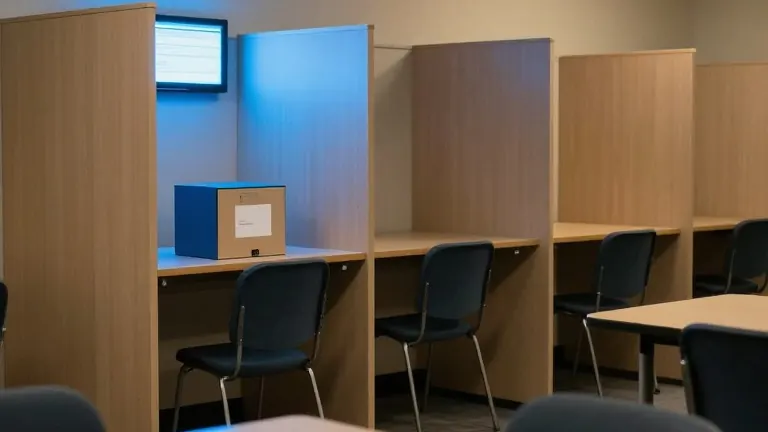
Voters across the United States cast tens of millions of ballots on Tuesday, completing a midterm election cycle marked by high turnout and limited disruption. Despite prior warnings of federal interference, polling stations operated with few major technical failures or procedural blocks. The administration of the election remained largely in local hands, with officials managing standard issues such as delayed openings and equipment glitches.
The surge in participation was evident in the numbers before the final polls closed. More than 61 million Americans had already voted during the early voting period. According to data from the University of Florida's Election Lab, these early in-person and mail-in ballots represented a 34 percent increase over the 2022 midterm elections. The rise was driven primarily by in-person voting, setting a high baseline for the final tally.
The Department of Justice deployed approximately 1,000 monitors to observe voting processes on Election Day. Harmeet Dhillon, head of the Civil Rights Division, stated that election integrity was a top priority for the administration. While monitoring has historically served to document racial discrimination under the Voting Rights Act of 1965, local officials had expressed concern that federal observers might interfere with the voting process due to ongoing claims of fraud by the White House.
Most of those concerns did not materialize in the hours following the opening of polls. No widespread reports of federal monitors impeding voters emerged by Tuesday evening. However, the New Mexico secretary of state's office noted specific incidents in Bernalillo County, where monitors were reported to be asking unusual questions of voters in Albuquerque. Lindsey Bachman, a spokesperson for the state, said the New Mexico Department of Justice contacted the federal team lead to address the behavior and received assurances it would be corrected.
Technical issues also surfaced in Westchester County, New York, which includes part of the competitive 17th Congressional District. A malfunction with a ballot scanner forced election workers to accept ballots manually for later processing. Right-wing commentators suggested the delay indicated fraud, but candidates from both parties urged voters to continue casting their ballots. Mike Lawler, the Republican incumbent, posted on social media that every ballot would be counted.
Weather and logistical challenges also affected voting in other regions. Flooding in parts of Florida and the Four Corners states of Arizona, Colorado, New Mexico, and Utah compelled local officials to relocate some polling sites. In these areas, officials resorted to emergency ballots to ensure residents could vote. Additionally, fears of a heavy presence from Immigration and Customs Enforcement near polling locations did not materialize by 9 p.m. Eastern Time.
As the counting of votes continues, attention shifts to the certification process and potential disputes in close races. Shaylyn Cochran, deputy executive director of the Lawyers' Committee for Civil Rights Under Law, noted during a press call that election season extends beyond Election Day. She emphasized that advocates would remain vigilant regarding the handling of results, particularly following the FBI's earlier seizure of election materials from Fulton County, Georgia.
Source: WUWM