Tiny snail expands range in southern Michigan
New Zealand mudsnails discovered in Kent County waters mark the first confirmed presence in the southern Lower Peninsula.
By Isabella Kaur ·
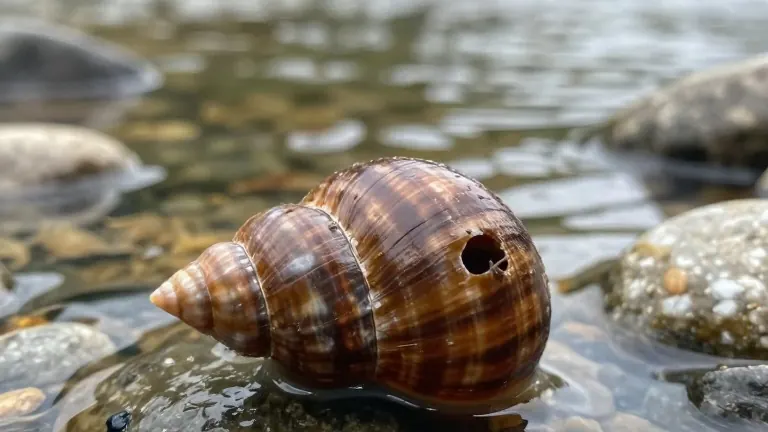
New Zealand mudsnails have been identified in Bear Creek, a tributary of the Thornapple River in Kent County, Michigan. This discovery represents the first confirmed expansion of the invasive species into the southern Lower Peninsula. The find occurred during a volunteer monitoring event organized by the Coldwater River Watershed Council. Scientists will now conduct population genetics studies to trace the origin of these specific individuals.
The snails are extremely small, with several able to fit on the eraser of a pencil. Despite their size, they reproduce rapidly and reach high densities. The Michigan Invasive Species Program reports that one snail can clone into 200 new snails per year. In some western states, populations have reached 300,000 snails per square meter. In Michigan, the recorded individuals appear to be entirely female.
Jen Koop, an invasive species biologist and professor at Northern Illinois University, noted that the snails' size makes them difficult to detect until they are established. Once they enter an aquatic system, Koop stated that there is currently no means to eradicate them or mitigate their effects. The snails compete with native species for food and can drive out native snail populations. In some areas, their density is high enough to clog pipes and drainage systems.
Donna Kashian, Director of Environmental Science at Wayne State University, explained that the mudsnails may benefit from other invasive species. Zebra and quagga mussels filter nutrients from the water column and deposit nutrient-rich waste on stream and lake beds. This creates ideal habitat conditions for the mudsnails. Kashian described the situation as a positive feedback loop between the two invasive groups.
Great Lakes fisheries already face challenges from reduced water column nutrients and lower zooplankton levels. The addition of the mudsnail compounds these stressors on the food web. By outcompeting native organisms, the snails can affect sport fish such as trout. Kashian emphasized that each new invasive adds stress to a system that has limited capacity to absorb changes.
The New Zealand mudsnail is native to New Zealand and has spread globally for over a century. It arrived in the Great Lakes in 1991, likely through ballast water. The species can reproduce asexually, meaning a single female can establish a new population without a mate. The snails possess a trapdoor shell that allows them to survive passing through the digestive systems of fish, preventing the fish from gaining nutrients from the meal.
To prevent further spread, the Michigan Invasive Species Program recommends cleaning, draining, and drying all equipment between water bodies. This includes waders, boots, and any gear that contacted water or mud. The New Zealand Mud Snail Collaborative suggests using separate gear for known infested watersheds and inspecting equipment before transport. Freezing, hot water, or long air exposure can kill the snails to prevent them from hitching rides on gear.
Source: Michigan Public