Netanyahu Faces Eisenkot in 120-Seat Knesset Race
Voters in Israel decide Tuesday whether the prime minister keeps a third consecutive term as polls show a split between pro and anti-Netanyahu blocs.
By Yuki Kaminski ·

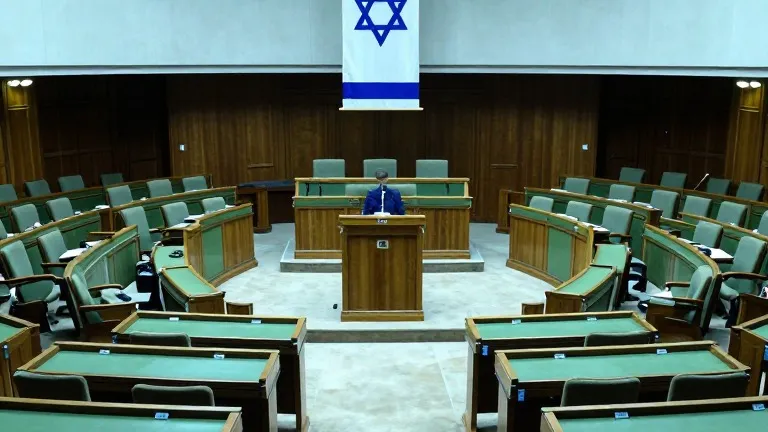
Benjamin Netanyahu, who has served as prime minister for 19 of the last 30 years, enters a tight race on Tuesday to determine control of the 120-seat Knesset. The election functions less as a traditional left-right contest and more as a referendum on his leadership, with polling data indicating that pro-Netanyahu and anti-Netanyahu camps are running nearly even.
The leading opposition challenger is Gadi Eisenkot, a former Israel Defense Forces chief of staff who entered politics four years ago. His party, Yashar, advocates for direct governance and US-style term limits for the prime minister. Eisenkot, the son of working-class Moroccan Jews, positions himself as a pragmatic alternative to Netanyahu's long tenure.
The opposition bloc also includes former prime minister Naftali Bennett and Avigdor Lieberman, both right-wing figures who previously served under Netanyahu before parting ways. On the far right, Itamar Ben-Gvir's Otzma Yehudit party pushes for additional settlements in the West Bank and Gaza, a ministry to encourage the voluntary departure of Palestinians, and the death penalty. Yishai Fleisher of that party told voters in Bet Shemesh that Netanyahu must be pulled to the right.
Netanyahu has framed the campaign around a choice between the right and Palestine. His campaign posters juxtapose his leadership with the heads of two parties representing Palestinian citizens of Israel, who constitute about a fifth of the population. In the final weeks, debate focused on whether Jewish opposition parties, projected to outpoll Netanyahu's bloc but lack a majority, would form a coalition with mainly Arab parties.
The conflict in Gaza has shaped voter sentiment. Israel's war in the territory killed more than 70,000 Palestinians, a figure that includes a third identified by Israel as Hamas combatants. Despite the high toll, Hamas was not eradicated, and Iran's nuclear threat remains. Netanyahu also faces legal challenges from a corruption trial and the Qatargate affair, which involves his closest aides.
Support for the prime minister remains steady among a loyal base built over three decades. His allies argue that army and intelligence chiefs failed to inform him of the 7 October 2023 attack, a claim critics call unfounded. Many observers believe Netanyahu's skill as a coalition builder will help him outmaneuver rivals during post-election negotiations.
Opposition hopes are bolstered by the return of secular expatriate Israelis to vote. Pollsters do not capture this demographic, which could be decisive if the race turns on a single seat. Yair Golan, leader of the Democrats party, expressed optimism about forming a long-term security strategy, though he avoided the term peace process.
A state ceremony on Thursday marked the 1995 assassination of Yitzhak Rabin, an event Netanyahu skipped in favor of sending a low-ranking minister. A video from a Negev music festival showed young Israelis singing Shir LaShalom, a song associated with Rabin, suggesting a shift in public mood as the election results approach.
Source: The Guardian
More Politics · World news · Report a business · Got a Story?