Israeli Army Demolishes Hebron Blocks, Displacing 200 Families Before Vote
Netanyahu launches strikes in the West Bank city four days ahead of general elections, citing a deadly checkpoint attack as justification.
By Hassan Okoye ·
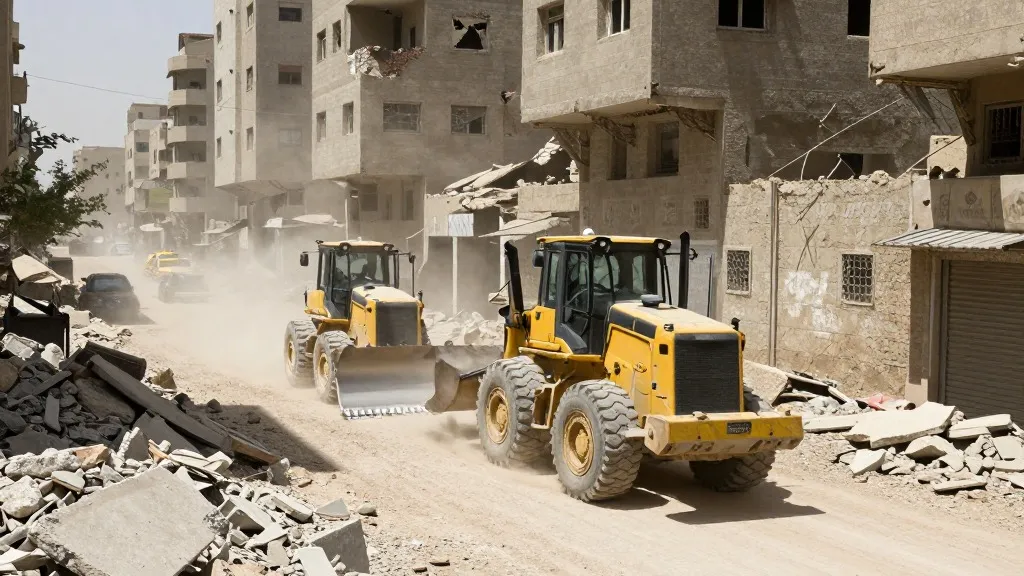
The Israel Defense Forces launched a large-scale military operation in the occupied West Bank city of Hebron on Friday, demolishing residential and commercial structures. Local authorities confirmed that the action displaced at least 200 families and restricted movement for the city's 200,000 residents. The army sealed off Hebron, creating a perimeter that sharply limits access for civilians. Footage circulated online shows bulldozers leveling an entire street, while spray-painted marks identify additional buildings slated for destruction.
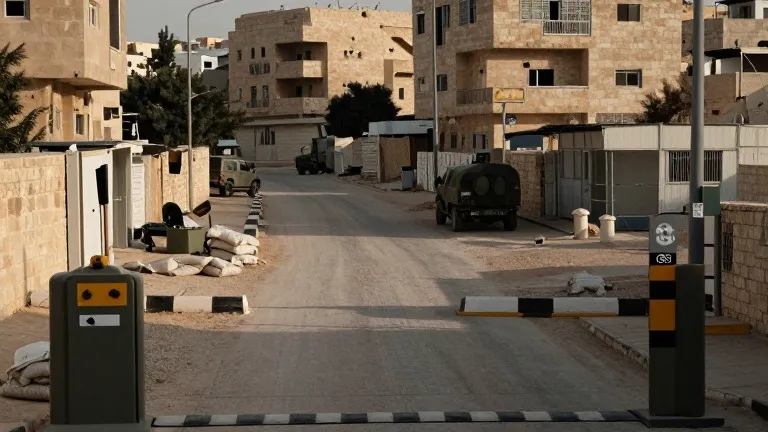
Prime Minister Benjamin Netanyahu authorized the campaign following a fatal attack on an Israeli military checkpoint. Two Israeli soldiers were killed and three others wounded when two Palestinian gunmen opened fire. Both attackers were subsequently killed by security forces. Netanyahu stated that the operation would target buildings near the checkpoint and the neighborhoods associated with the gunmen. He described the objective as the destruction of terrorist infrastructure and the removal of weapons from the area.
The timing of the offensive coincides with a general election scheduled for next week. Netanyahu cancelled campaign events for Friday morning to travel to Hebron, where he was photographed wearing protective armor. In a video posted from the site, he declared that forces would go house to house to evacuate residents and neutralize threats. He also indicated that the current actions might precede a larger military effort in the West Bank, a region under Israeli control since 1967. He threatened a major surprise for the Palestinian Authority, which administers parts of the territory.
Hebron Mayor Youssef al-Jaabari reported that the strikes concentrated on the Ein Deir Baha and Farsh al-Hawa neighborhoods. He estimated that the military aims to displace 2,500 people from a 0.35 square kilometer zone. Al-Jaabari noted that dozens of families were forced to sleep outdoors, with some instructed to leave without their vehicles. The city governor and deputy mayor corroborated the displacement figures, confirming that hundreds of households have been uprooted.
Political reactions within Israel varied. Finance Minister Bezalel Smotrich called for a campaign in the West Bank similar to those conducted in Gaza and Lebanon. National Security Minister Itamar Ben Gvir urged the dismantling of the Palestinian Authority. In contrast, the Palestinian Authority requested urgent international action to prevent further forced displacement, asking the global community to move beyond verbal condemnation.
Israeli rights groups have historically criticized the demolition of homes as collective punishment, a practice that has occurred in previous operations. Netanyahu compared the current Hebron campaign to 2025 strikes in northern refugee camps, where hundreds of homes were destroyed and tens of thousands of people were displaced. Al-Jaabari told journalists that the operation was driven by electoral politics. He argued that Netanyahu and his cabinet members are seeking to secure support from the far right and settler communities in the upcoming vote.
Source: BBC News