West Bank boy left in vegetative state after 2023 rocket strike
Parents of Kinaan Dadou, now 10, struggle to fund $250,000 treatment after Palestinian and Israeli officials decline full responsibility for his care.
By Yuki Kaminski ·
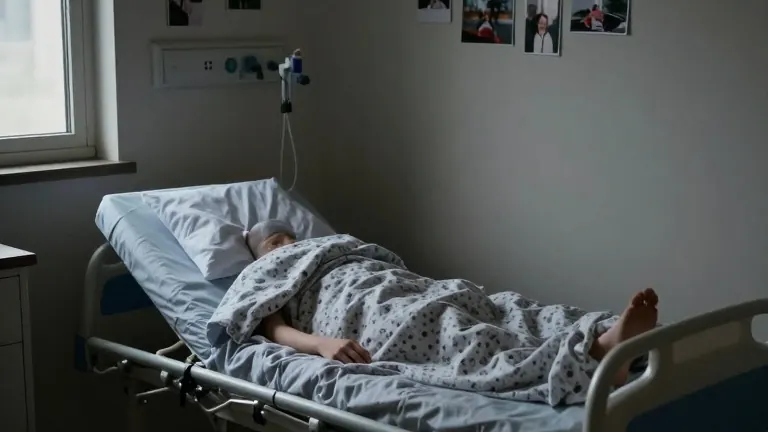
Kinaan Dadou no longer speaks, eats with his mouth, or walks. The 10-year-old lies in a small bed in a persistent vegetative state, fed through a tube and breathing via a tracheostomy. His parents in the West Bank village of Um Rukkeh pay 4,000 shekels monthly for medication alone, borrowing funds to cover the costs.
The family’s financial strain stems from an injury sustained on October 7, 2023. A Hamas rocket aimed at the Israeli settlement of Efrat missed its target by several hundred meters. The projectile landed in front of Kinaan’s home. A piece of shrapnel struck the then 7-year-old in the head. An Israeli soldier promised an ambulance, but no vehicle arrived. The parents drove Kinaan to the hospital themselves, waiting six hours for a doctor while his brain hemorrhaged.
Since that day, the parents have sought medical support from both the Palestinian Authority and Israeli authorities. The Palestinian Authority administers healthcare in the area but has refused to cover further specialist care. Under Palestinian law, people with disabilities are entitled to 75% of rehabilitation costs. Children have the right to the highest possible standard of free healthcare. Officials in the Palestinian ministry of health did not respond to questions about the family's status.
Israel controls construction permits and movement in the area, known as Area C. Israeli authorities told the family’s lawyer that Kinaan was injured outside their jurisdiction. The family argues that Israel’s control over their daily lives, including a warning to demolish their home three months ago, contradicts this claim. The Israeli body Cogat, which oversees the territories, also did not respond to inquiries.
Alaa Hassan Yakoub Dadou, Kinaan’s father, says the family is stuck between the two entities. "The Palestinian side says: 'This isn't our area.' What’s our crime? That we happen to live among settlements? Neither side takes responsibility for us," Alaa said. The family has appealed to the Israeli government on humanitarian grounds.
A specialist in Turkey indicated that an intensive recovery program and further surgery could improve Kinaan’s condition. The estimated cost is $250,000. Alaa lost his job as a laborer in Israel after work permits for most Palestinians were suspended following the October 2023 attacks. His wife, Woroud, now performs some medical procedures herself to save money. She changes Kinaan’s breathing tube, a task that saves the family 225 pounds per month.
"I try to keep the tube as clean as possible so it lasts longer, but sometimes if I use the same one too long he begins to cough," Woroud said. She learned the procedures by watching doctors in hospital.
Alaa compares Kinaan’s situation to that of an Israeli colleague’s child, who was injured on the same day. That child was flown to Germany for treatment and has since improved. Alaa noted that if Kinaan were an Israeli settler, he would likely have access to better medical facilities.
"If this was an Israeli child, even a settler child, do you think they’d have left him like this? He’d have been taken to the best hospitals. They would have done everything for him," Alaa said.
The family currently relies on savings and informal loans. They have not received a final decision on their appeals to either government. Kinaan’s room contains photos of him before the injury, showing a boy who climbed trees and dreamed of becoming a pilot. His father says he wants to relieve his son's suffering, noting the burden of not knowing exactly what hurts him.