Rubio denies US role in Bolsonaro exit
The Secretary of State claims Washington only processed existing visas, even as Trump suggests the former candidate can remain indefinitely.
By Hassan Okoye ·
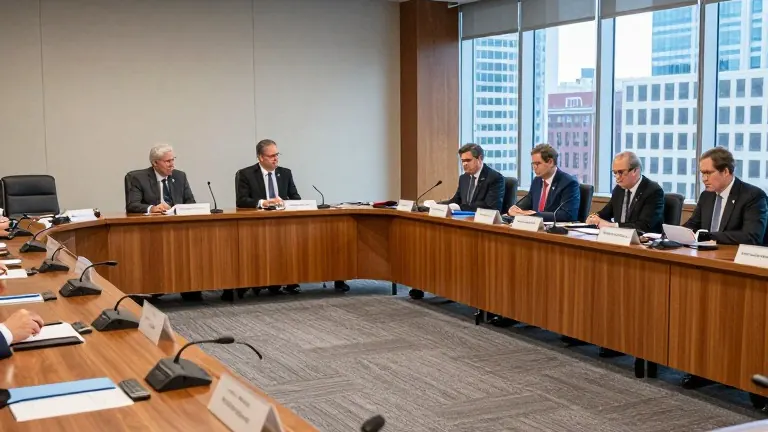
US Secretary of State Marco Rubio stated on Saturday that the Trump administration did not facilitate the departure of Brazil’s former president Flavio Bolsonaro from his home country. Rubio made the remarks in Atlanta, Georgia, where diplomats from the G20 were convening. He insisted that Washington was not directly involved in the logistical moves that allowed Bolsonaro to leave Brazil after losing the October 25 runoff election to Luiz Inacio Lula da Silva.
Bolsonaro arrived in Miami, Florida, on Wednesday. His entry occurred one day after the US Department of State announced that Bolsonaro and his family would receive US visas. The former president had been ordered to surrender his passport by Brazilian police, who labeled him a flight risk amid ongoing investigations into alleged corruption, money laundering, and tax evasion. Despite this legal status, he traveled via Argentina and Ecuador to reach the United States.
Rubio clarified that Bolsonaro previously held a visa and that President Trump made a decision to allow him entry. "We had word that he had arrived in the United States," Rubio told reporters. He added that the US government did not facilitate any specific actions regarding the travel. The Secretary of State noted he had met with Brazilian Foreign Minister Mauro Vieira in Atlanta on both Friday and Saturday. Rubio expects to meet with Brazilian officials again in November during a foreign ministers meeting in France.
President Trump offered a different perspective from his Florida residence on Saturday. He voiced sympathy for Bolsonaro, whom he previously described as having lost in a rigged election. "I think he got treated very shabbily, very shabbily, so he can stay here as long as he wants," Trump said. His comments imply that Bolsonaro may remain in the US for an extended period. The Reuters news agency reported that Bolsonaro was admitted under humanitarian parole, a status that typically lasts for one year.
The sequence of events highlights the rapid shift in diplomatic posturing following the Brazilian election. Bolsonaro lost the runoff to Lula, a result that interrupted a streak of conservative electoral victories in Latin America. Since arriving in the US, Bolsonaro has refused to concede the election. He has called the results fraudulent without providing evidence and claims to be the true leader of Brazil. He also described his departure as a response to persecution.
The contrasting accounts from the White House and the State Department underscore the complexity of the relationship between the two largest democracies in the Western Hemisphere. While Rubio emphasizes procedural adherence to visa rules, Trump’s remarks suggest a more personal endorsement of Bolsonaro’s stay. The administration’s stance remains split between formal diplomatic protocols and the president’s direct commentary on the situation.
Source: Al Jazeera