Siege and Scandal: West Bank Crackdown Tests Political Stakes
A sweeping military operation and a controversial journalist incident in Hebron raise questions about proportionality ahead of upcoming Israeli elections.
By Hassan Okoye ·
The immediate aftermath of a deadly ambush on a military reserve base has triggered a sweeping military response across the occupied West Bank, creating a tense standoff between Israeli security objectives and Palestinian calls for restraint. This escalation is occurring against the backdrop of a significant political gamble, with national elections scheduled for October 27. The central tension now revolves around whether the heavy-handed tactics employed in Hebron and other key cities are a calculated security measure or a strategic move to influence voter sentiment.
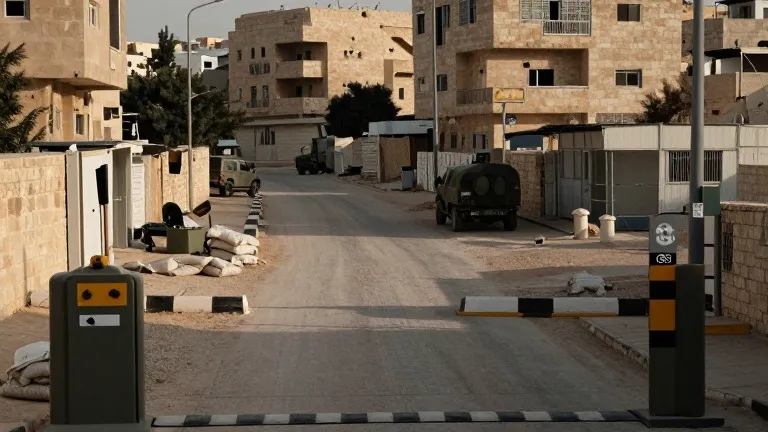
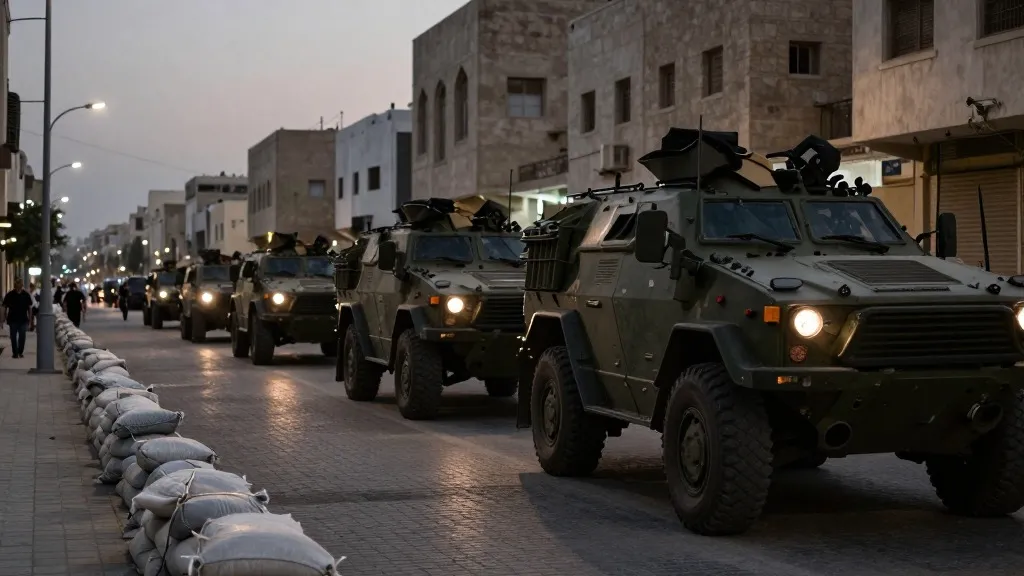
Israeli forces have established a complete cordon around Hebron, resulting in the displacement of thousands of residents from their homes. This action follows the killing of two Israeli soldiers by Palestinian gunmen in an attack that took place on Friday. Both assailants were killed during the engagement. In response, Prime Minister Benjamin Netanyahu directed a comprehensive lockdown of the region, a move that has since expanded into widespread military operations across multiple districts.
Yousef al-Ja'bari, the mayor of Hebron, reported that 2,200 individuals have been forced to leave their dwellings since the initial raid. He noted that hundreds of military incursions have occurred in the days following the attack. The mayor described a situation where, on Saturday, the city was effectively sealed off, preventing both entry and exit for its inhabitants. This isolation has left many residents unsure of their status or how to access basic necessities.
Residents have described the execution of these evacuation orders as sudden and disruptive. Soldiers used loudspeakers to announce directives in the late hours of the night, leaving families with minimal time to gather belongings or arrange alternative housing. The abrupt nature of the orders has heightened anxiety among the population, who are now navigating a city where movement is strictly controlled and monitored by military personnel.
Controversy has also emerged regarding the treatment of media personnel during these operations. Journalists from Al Jazeera were documenting an Israeli effort to demolish structures and vehicles near the Farsh al-Hawa checkpoint when they were targeted by soldiers. The military fired a stun grenade at the reporting team, an incident that has drawn attention to the safety of international observers in the field. This event adds another layer of scrutiny to the ongoing operations and the conduct of forces on the ground.
The military activity is not limited to Hebron. Correspondents have identified raids in at least 15 different locations across the West Bank on Saturday. These operations span from the northern areas of Jenin and Nablus to the central zones of Ramallah, Al-Bireh, Birzeit, and East Jerusalem, as well as Bethlehem in the south. The Palestinian Prisoners' Society has indicated that approximately 70 Palestinians have been detained in these coordinated efforts, suggesting a significant scale of enforcement.
The Palestinian Authority, which holds administrative control over parts of the West Bank, has characterized these measures as a form of collective punishment. Officials have pointed to the destruction of private homes, the forced movement of entire neighborhoods, and the physical blockade of cities as evidence of this stance. They have called upon the international community to intervene and pressure Israel to protect the civilian population. Hamas also issued a statement, arguing that the current escalations by the occupation and settlers will only increase anger among the populace.
Hebron holds particular demographic significance, as it is home to roughly 200,000 Palestinians, with an additional 600,000 living in the surrounding governorate. This makes it the most populated area in the West Bank. Issa Amro, a local political analyst, described the current state of the region as a siege, with all access points closed since the morning of the operation. He emphasized that the atmosphere within the city is one of pervasive fear, with few options for residents to find safety.
Political observers suggest that the timing of these events is not coincidental. With elections approaching in just a few days, Israeli leaders appear to be leveraging the recent attack to project strength. Analysts note that Prime Minister Netanyahu and his Likud party are currently trailing in opinion polls. Consequently, there is a perceived effort to present a resolute front in the face of Palestinian resistance. Netanyahu has yet to clarify his long-term stance on the Palestinian Authority, though he has hinted that a significant development awaits the organization.
The situation remains fluid, with questions persisting about the duration of the lockdown and the scale of future operations. For the residents of Hebron and the broader West Bank, the coming days will determine whether this is a short-term security sweep or the beginning of a more sustained campaign. The international community watches closely, weighing the need for security against the humanitarian cost of such extensive restrictions.
Source: Al Jazeera