Ukraine Confirms Starlink Speed Cap Lifted After Drone Failures
Defence Minister Yevhenii Khmara announced full connectivity was restored on Saturday, ending a dispute with Washington that grounded high-speed attacks.
By Yuki Kaminski ·
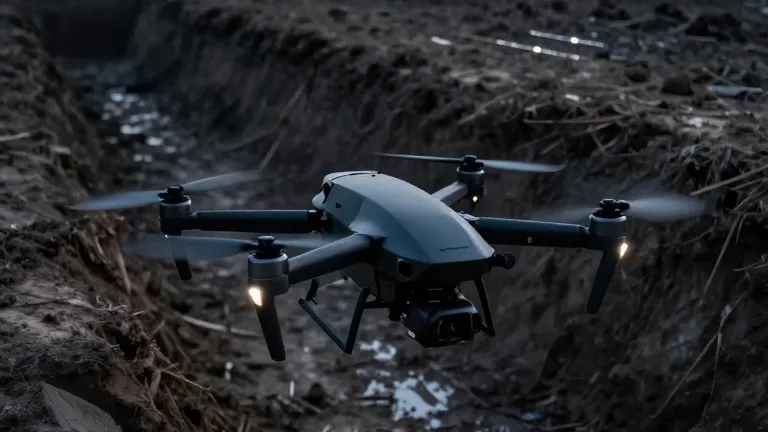
Ukraine’s Defence Minister Yevhenii Khmara announced on Saturday that the country has regained full access to Starlink satellite internet. The restoration ends several days of restricted connectivity that forced the military to operate under limited capabilities. Khmara stated that speeds exceeding 400km/h are now possible, marking a return to the network’s full technical capacity.
The minister described the fix as vital for the front line. "This result is above all important for our front, for our soldiers, for the operation of drones, for logistics and for communications," he said in a public statement. The Ukrainian military relies heavily on Starlink and its military-grade counterpart, Starshield, to pilot drones and coordinate operations across the battlefield, particularly in remote areas.
The disruption stemmed from a dispute between Kyiv and Washington. Ukrainian officials previously accused President Donald Trump of instructing Starlink owner Elon Musk to impose speed limits. Under those restrictions, drones reportedly lost signal when traveling at 161km/h or faster. Trump initially denied the order but later confirmed that Musk had resolved the issue by reverting the settings.
Musk indicated that the US military controls Starshield, suggesting the Pentagon may have been involved in the recent technical issues. Russia is not authorized to use the system, meaning the network does not function when Ukrainian long-range missiles or drones penetrate deep into Russian territory to target oil refineries.
The connectivity clash occurred amid a wider diplomatic disagreement over Ukrainian strikes on Russian energy infrastructure. With midterm elections approaching next month, Trump waived certain sanctions on Russia and agreed to import Russian diesel for the US market. Kyiv and its European allies criticized that move. Trump argued the strikes pushed global fuel prices higher, while Zelensky maintained the attacks were essential to reducing Moscow’s war revenue. Zelensky also claimed the US threatened to withdraw intelligence sharing if the strikes continued, an assertion Trump denied.
Combat operations continue regardless of the satellite status. The Russian defence ministry reported on Saturday that air defences shot down 616 Ukrainian fixed-wing drones across several regions, including the Russian-annexed territory of Crimea. Sergey Aksyonov, the Moscow-backed governor of Crimea, said electricity and water restrictions were introduced following power cuts caused by the drone strikes.
Ukrainian authorities detailed their own recent actions over the past 24 hours. They struck a missile component manufacturer, a chemical plant, and an aircraft at a military airfield inside Russia. Kyiv also recorded 88 air strikes by Russia on Friday, which included the use of 309 glide bombs and 10,270 kamikaze drones.
Source: BBC News