Serbia Heads to Sunday Vote as Student Bloc Rallies 150,000 in Belgrade
Aleksandar Vučić faces a student-led list in a parliamentary election analysts predict will be the closest in the country's recent history.
By Yuki Kaminski ·
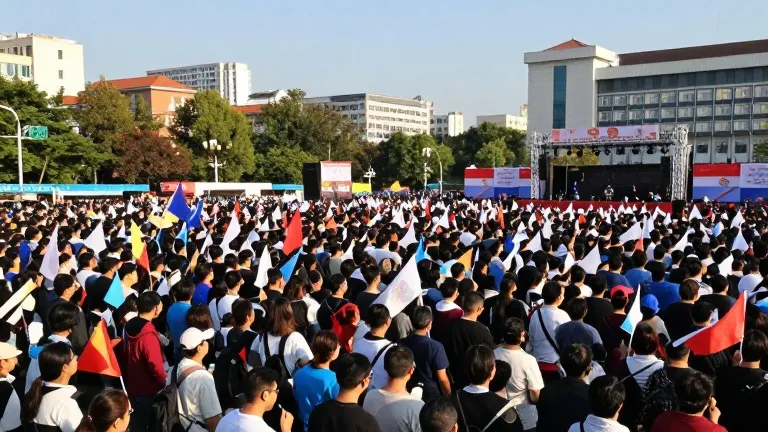
Serbia is set to hold parliamentary elections on Sunday, 25 October, with polls indicating a tight contest between incumbent leader Aleksandar Vučić and a student-led opposition list. Reliable polling data remains limited, but the race marks a distinct shift in the country's political dynamic, pitting a long-serving executive against a movement born from recent civic unrest.
The opposition list emerged from nearly two years of anti-corruption protests initiated by young citizens. The demonstrations began following a structural failure at a railway station in Novi Sad, where a collapsing canopy killed 16 people. Student assemblies at various university faculties selected 250 candidates for the ballot, bypassing traditional party hierarchies. Ilija Srdanović, a cardiologist and professor at Novi Sad University, tops the list. He stated, "It is absolutely normal to stand with my students to help them in their fair struggle." The group emphasizes that Srdanović is not a leader but a figurehead, and the candidate pool includes academics, engineers, and athletes with no prior political experience.
Vučić, who has held senior executive roles since 2012, stepped down as president last month to run for prime minister in this snap election. He cites a decade of economic growth and infrastructure development as key achievements. His supporters view him as a strong defender of national interests. However, he faces criticism for the Novi Sad disaster, which occurred during the renovation of a station linked to his flagship Belgrade to Budapest high-speed rail project. Magda Anastasijevic, an analyst at ACLED, noted that Vučić has typically survived crises by identifying scapegoats, but the station incident did not offer that option.
The opposition argues that Vučić’s Serbian Progressive Party maintains an unfair advantage through control of state institutions and media. An International Election Observation Mission report from the 2023 vote cited "bias in the media" and "misuse of public office and resources" as factors creating an overwhelming ruling party advantage. A pro-government camp has occupied a park in central Belgrade for 18 months, a presence Vučić describes as a symbol of resistance. Journalists have reported repeated attacks by residents of the camp.
Foreign policy remains a central campaign issue. Serbia is currently engaged in fitful EU membership talks while maintaining close ties with Russia and China, neither of which recognizes Kosovo's independence. Vučić has warned that a student-led government could jeopardize these relationships, asking at a rally if the opposition would impose sanctions on Russia. The final weekend of campaigning highlighted the differing styles of leadership. Vučić addressed a crowd at Belgrade Arena as the sole speaker, while a reported 150,000 people gathered in Slavija Square to listen to student speakers and candidates.
Source: BBC News