Myanmar Leader Speaks to Son After Six Years of Detention
A 20-minute phone call arranged by the military confirmed Aung San Suu Kyi is alive and in solitary confinement, though her health remains a concern due to tendonitis.
By Isabella Kaur ·
Aung San Suu Kyi spoke with her son Kim Aris on Thursday, ending a six-year silence that began when the Myanmar military seized power in a 2021 coup. The 20-minute call was their first direct conversation since she was removed from office.
Aris, a 49-year-old carpenter living in London, said his mother’s first words asked about his health. He confirmed her well-being to reporters, stating that hearing her voice was reassuring. She is 81 years old and currently serving an 18-year sentence after courts reduced her initial 33-year term for corruption and electoral fraud charges.
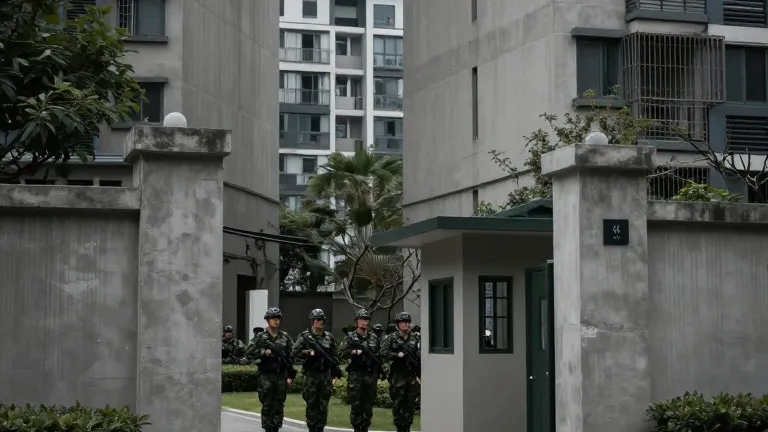
The call was arranged through Myanmar’s Embassy in London, according to Khaing Khaing Soe, a spokesperson for the military-backed president. Aris learned during the conversation that his mother is held at a residence near the capital, Naypyidaw. He described the location as fenced off with a nondescript garden, surrounded by police and military personnel.
Aris believes she is in solitary confinement, even though she is not in a prison cell. He said she can read books but does not have access to radio, television, or newspapers. Her health is a source of worry for the family, as she suffers from tendonitis in her hand that sometimes prevents her from using it. She told him she receives medical checkups every six months.
Aris plans to send a care package containing a mix of healthy food and treats, possibly including cookies from a brand founded in Oxford, England. He believes the military monitored the call and restricted sensitive topics like the ongoing civil war. He views the call as an image-building effort by the regime as President Min Aung Hlaing travels abroad seeking international legitimacy.
The coup triggered a civil war that has killed approximately 100,000 people, according to the monitoring group ACLED. The U.N. reports that millions have been displaced. ACLED states that military attacks on civilians have escalated since Min Aung Hlaing became president. He remains under U.S. sanctions for human rights abuses, including the 2016-2017 killings of Rohingya Muslims.
Nay Phone Latt, a spokesperson for the exiled National Unity Government, said the regime dares not release Suu Kyi because her strength would bolster the revolution. Richard Horsey of the International Crisis Group called her status a valuable card for the military, warning she could become a bargaining chip. The U.S. State Department urged the military to hold genuine dialogue and called for her immediate release in August.
Source: NPR