Political Strategy: Ardern calls for financial security to heal polarization
The former New Zealand prime minister told Australian audiences that leaders must move beyond blame and address economic anxiety to restore public trust.
By Yuki Kaminski ·
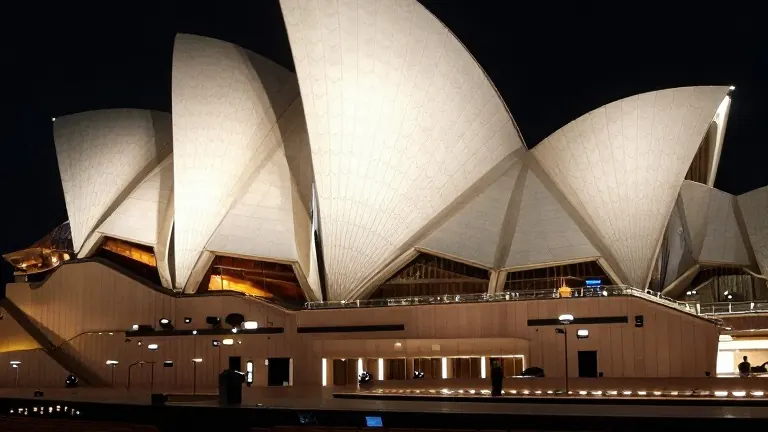
Global political discourse has increasingly fractured along partisan lines in recent years. Speaking from the stage of the Sydney Opera House on Sunday, Jacinda Ardern advised Australian politicians to focus on building financial security to counter rising societal division.
The former New Zealand prime minister, who now resides in Sydney, engaged in a forum with author Anna Funder. The event was framed as a discussion on whether society can disagree without becoming deeply divided. Ardern argued that political leaders have a duty to avoid binary thinking and the language of violence.
She stated that the path to rebuilding trust lies in establishing financial stability during periods of deep insecurity. Ardern noted that while various policy options exist, current political actions are often making conditions worse rather than better.
Ardern traced the roots of modern political instability to the global sense of insecurity that emerged as globalization expanded over the past few decades. She observed that citizens began challenging institutions such as the World Trade Organization in response to these feelings. Politicians responded by offering specific targets for public blame, a dynamic she said paved the way for the rise of leaders like Donald Trump.
The 46-year-old moved to Australia earlier this year. She purchased a property on the northern beaches in September. Last week, she announced her plan to lecture and mentor at the University of Sydney. Her presence in the Australian political scene has drawn attention to her evolving views on governance and media.
During the conversation, Ardern described the current state of public discourse as a situation where individuals hold opposing opinions with such moral certainty that meaningful engagement becomes difficult. She explained that this intensity makes it hard to create the dialogue necessary for problem-solving.
The talk took place two weeks after an alleged attack on independent MP Helen Haines. While Ardern did not explicitly reference that incident, she emphasized the need for politicians to monitor the tone they establish. She identified social media as a primary factor in making it harder for people to shift their views.
She noted that online platforms record opinions and hold them in time. This environment complicates the democratic process, which relies on the ability to debate and update views based on new evidence. Ardern entered politics in 2008 as the youngest sitting member of the New Zealand parliament and the first to possess an existing social media account.
Initially, she and many other politicians welcomed the direct access to voters that digital platforms provided. She described herself as naive about the potential for information manipulation at that time. Her perspective shifted on March 15, 2019, following the Christchurch mosque shootings.
Ardern said the domestic terror attack was committed by a person radicalized on YouTube who broadcast the violence on Facebook to incite other white supremacists. That event marked the moment she fully understood the weaponization of digital platforms. She argued that mistrust has built up over years, resulting in voter grievance and insularity that politicians have failed to address.
She described the current situation as a crisis of leadership rather than just a crisis of trust. Politicians have not fixed the core issues and have instead used blame to weaponize public distrust. Ardern suggested that empathy is a missing component in modern politics. She stated that empathy brings humility and curiosity, qualities she believes would make a substantial difference in political conduct.
Source: The Guardian