UK emergency services prepare for Bonfire Night unrest amid firefighter safety concerns
Police are deploying extra resources for 5 November as fire services warn about attacks on crews and pressure on staffing.
By Isabella Kaur ·
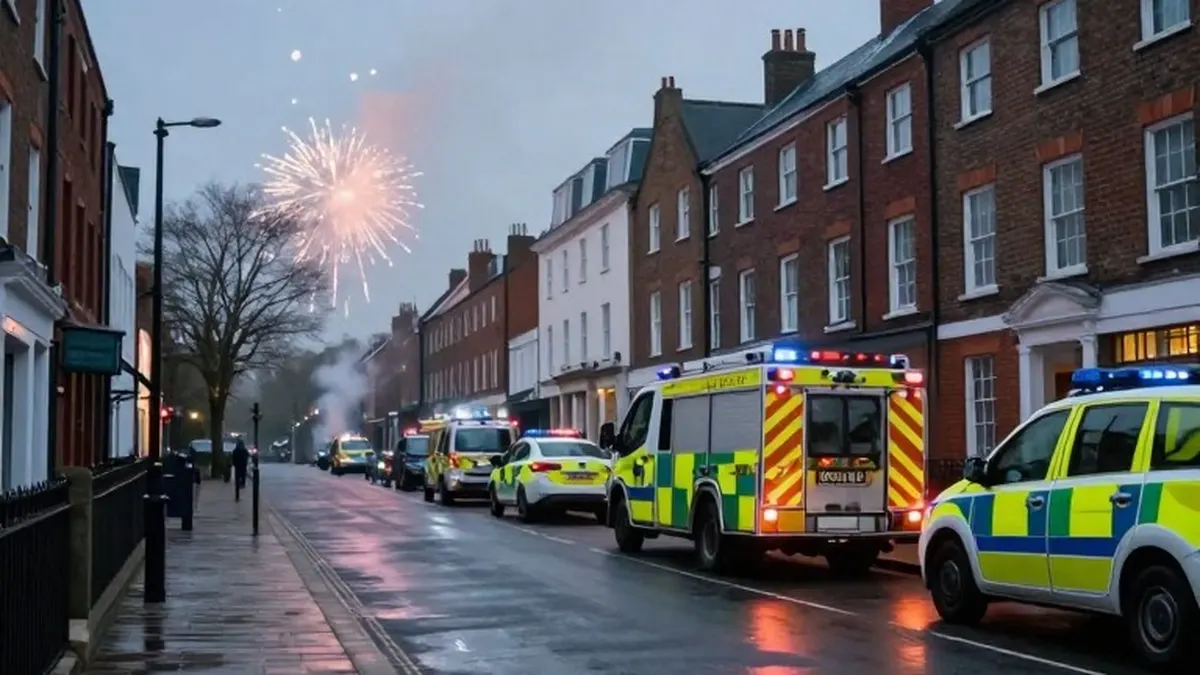
Police and fire services across parts of the UK are preparing for possible disorder on Bonfire Night, with recent incidents involving fireworks adding to concerns about attacks on emergency workers. Several forces have introduced additional powers, including dispersal orders, to deal with groups setting off fireworks in public spaces ahead of 5 November.
In Birmingham, seven people were arrested on Saturday after fireworks were discharged in the city centre on Halloween. In Salford, a pub landlady said roughly 60 teenagers surrounded her premises, fired fireworks at the building and harassed people passing by. Police in some areas identified as hotspots have promised a stronger presence, while fire chiefs have appealed for attacks on crews to stop.
Scotland is mounting its biggest policing operation since US president Donald Trump visited last year. English and Welsh forces will supply public order vehicles and drivers through a mutual aid arrangement. Preparations come amid rumours of far-right protest activity and as Celtic host Turkish club Beşiktaş in a Europa League match in Glasgow. Fireworks control zones in parts of Glasgow and Edinburgh prohibit pyrotechnics, as authorities seek to prevent a repeat of the disorder that injured dozens of officers on Bonfire Night in 2023.
West Yorkshire Police will also deploy additional officers during what the force describes as one of its busiest periods. In the Hyde Park area of Leeds, riot officers and police helicopters are regularly called in during the season because people use fireworks as missiles. Police hope the seizure of 30 tonnes of illegal fireworks in Bradford and Halifax before Halloween and Bonfire Night will help reduce misuse. The National Police Chiefs’ Council urged people enjoying celebrations to consider vulnerable residents and avoid antisocial behaviour.
The preparations follow attacks on firefighters attending a blaze at a Liverpool block of flats last year, when fireworks were directed at crews. Figures from the Ministry of Housing, Communities and Local Government record 129 firefighters injured in attacks in England in the year ending March 2025, up from 96 a year earlier. Thirteen suffered serious injuries. In Scotland, fire service figures for 2025-26 record 16 physical attacks and 20 attacks involving property or equipment.
Phil Garrigan, chair of the National Fire Chiefs Council, said firefighters risked their safety to protect others and should not experience violence or abuse from those they help. He warned that attacks endangered individual crew members and could undermine their ability to respond effectively to emergencies and protect communities.
The Fire Brigades Union said thousands of calls last Bonfire Night had pushed services beyond safe limits, with London recording a 10-year high. Its national officer, Adam Taylor, called for 5,000 additional firefighters to support safe and rapid responses. He said cuts since 2010, including station closures and the withdrawal of hundreds of frontline fire engines, would stretch services and lengthen response times.
Pressure for tighter fireworks controls has also grown, with more than 1.6 million people signing Change.org petitions seeking regulation. On Wednesday, the Scottish Greens called for private firework sales to be banned, arguing that this would prevent dangerous displays organised outside formal arrangements.
Animal welfare remains another concern. The Royal Zoological Society of Scotland attributed the death of Roxie, an endangered baby red panda at Edinburgh zoo, to stress caused by Bonfire Night fireworks in 2024. The National Sheep Association has urged people to consider nearby livestock, warning that sudden flashes and loud bangs can cause sheep to panic and bolt, and pregnant ewes to miscarry.
Source: The Guardian