Ukraine's battlefield data becomes a strategic asset for Palantir
Ukraine's systematic collection of battlefield data has created a strategic asset that benefits Palantir, raising concerns about private tech influence and data sovereignty.
By Hassan Okoye ·
Palantir, a Florida-based software company, has established a significant partnership with Ukraine since the start of Russia's full-scale invasion. The company's CEO, Alex Karp, visited Kyiv in June 2022, becoming the first chief executive of a major Western Big Tech firm to do so. President Volodymyr Zelenskyy expressed delight at receiving support from the tech giant on the digital front line. Since then, Ukraine has become the first nation in modern history to systematically collect battlefield data, a resource that is vital for training military artificial intelligence to recognize patterns and make predictions.
The collaboration allows Ukraine to monitor, predict, and respond to Russian attacks using real-world combat data gathered from video and sensor feeds over four years. However, observers note that this data also enhances the capabilities of Palantir, a corporation whose technologies have been linked to human rights issues. This dynamic raises questions about the increasing leverage that private tech firms hold over sovereign states. Palantir was founded after the 2001 attacks on the World Trade Center to help the US defense industry create a unified data environment for monitoring threats. The company name references a stone from The Lord of the Rings that grants near-omniscient powers.
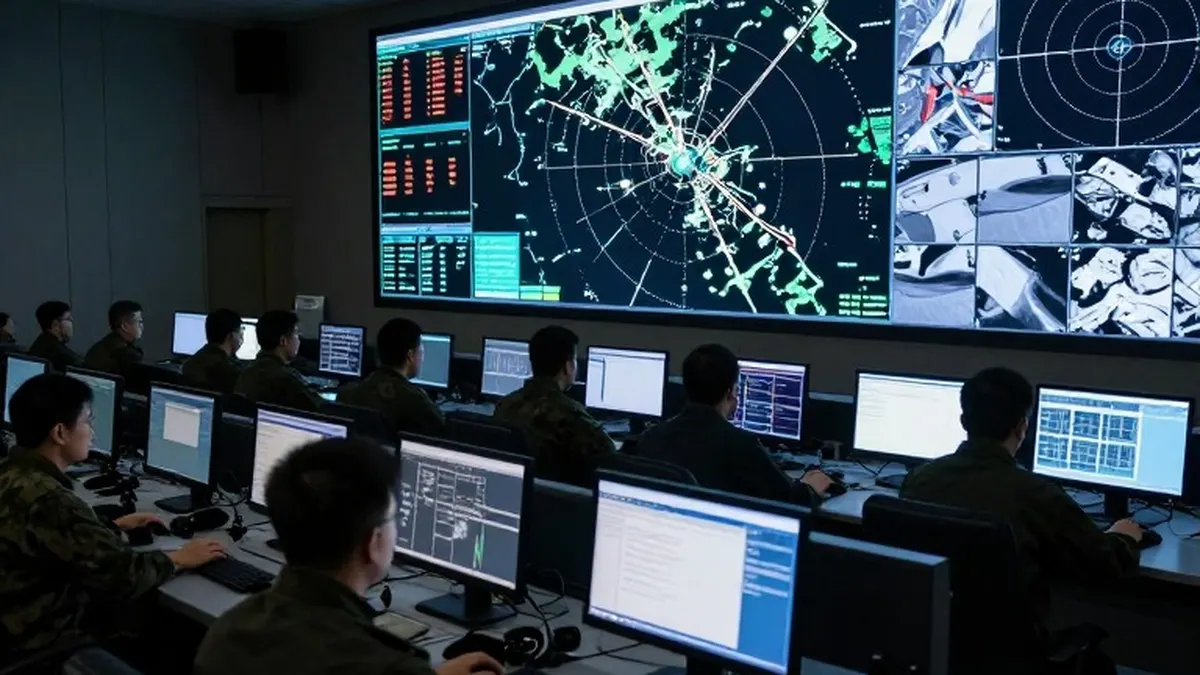
Yasir Atalan, deputy director of the Futures Lab at the Center for Strategic and International Studies, explained that Palantir enables different forms of data to interact. In military contexts, information from missiles, radars, and open sources is consolidated onto a single screen, providing a broader view of the battlefield. This statistical learning allows systems to make automated tactical decisions in split seconds. Elke Schwarz, a lecturer at Queen Mary University of London, noted that good battlefield data is rare and difficult to obtain. Consequently, those with access to such data hold a strategic advantage, even if the data is not directly applicable to other conflicts.
The pinnacle of the partnership was the launch of the Brave1 Dataroom in January, a specialized platform using battlefield data to train military AI. Despite this success, some figures in Ukraine's defense sector have questioned the decision to share the country's valuable assets with a private company under undisclosed terms. Valerii Markus, a former chief sergeant, wrote on Facebook that Ukraine is paying with blood for data that others may convert into capital and influence. Palantir maintains that customers own and control their data and that the company never uses or retains it for its own purposes. However, Schwarz argued that Palantir benefits from working with the data made available without needing to possess it outright.
Palantir’s technologies have been implicated in various human rights controversies. Its platforms, ICM and FALCON, assisted the US administration in detaining and deporting thousands of people, including asylum seekers, since January 2025. Amnesty International found that the company aggregated massive amounts of data to track migrants, contrary to its international law obligations. In the conflict in Gaza, which a United Nations inquiry found bears the hallmarks of genocide, Palantir provided AI platforms for battlefield data integration. UN Special Rapporteur Francesca Albanese found reasonable grounds to believe the company supported automated decision-making in the war.
In the United Kingdom, Palantir has signed multimillion-pound contracts with the National Health Service, police, military, and local councils. These agreements have faced public backlash, with nonprofit organization Corporate Accountability launching a campaign against a 330-million-pound contract with the NHS. Critics warn that the company is central to a mix of Big Tech and surveillance. In April, Palantir published a summary of a book coauthored by CEO Alex Karp, which was criticized for promoting an authoritarian worldview. Fatimah Shaikh, deputy campaigns director at Corporate Accountability, stated that Palantir is not a corporation that can be trusted with sensitive personal information.
Privacy International's senior legal officer, Ilia Siatitsa, argued that tech companies like Palantir blur the line between military and civil applications. She noted that the company is often opaque about data usage due to national security involvement. Siatitsa suggested that personal information could be used to train products without explicit consent. In June, Britain announced it was reviewing the NHS data contract with Palantir following parliamentary pressure. Experts warn that governments are becoming increasingly reliant on private tech companies for military and civil infrastructure, shifting the balance of power away from state armies.
Anna Nadibaidze, a researcher at the University of Southern Denmark, highlighted this growing dependency. She cited Elon Musk's SpaceX as an example, noting that Ukraine relied heavily on Starlink satellites for communications. In late September 2022, during a critical push to retake Kherson, SpaceX caused a communications blackout. Amid tensions between Washington and Europe, several countries are now avoiding Palantir's products to prevent strategic dependency. France's Prime Minister Sebastien Lecornu stated in June that domestic intelligence services would ditch the company's tools. Germany's military made a similar decision, and Spanish authorities instructed state-backed companies to avoid new contracts with Palantir in July.
Palantir's reliability as a partner has also been questioned in Ukraine after the company finalized a strategic partnership in September with Nebius, a Dutch company founded as an offshoot of Russian tech giant Yandex. Denys Shtilerman, co-owner of Ukrainian defense-tech firm Fire Point, expressed concern that Palantir had struck a deal with Yandex cofounder Arkady Volozh. Shtilerman wrote on X that Ukraine's combat data is a strategic asset of the state, not free raw material for Western corporations. He emphasized that Ukraine has paid for this data with blood and has no right to hand over its most valuable asset.