Iran Accelerates Underground Construction Near Key Military Sites
Satellite images reveal Iran is building new underground facilities and repairing damage at major missile sites following recent US and Israeli air strikes.
By Isabella Kaur ·
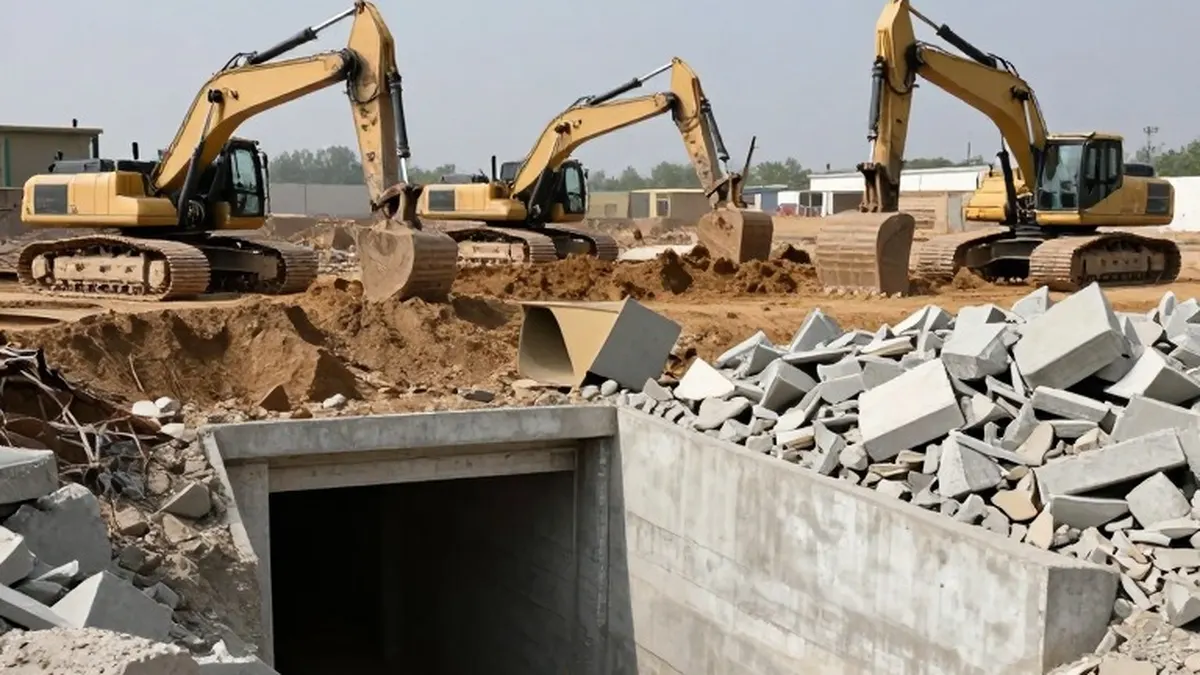
Satellite imagery analysis indicates that Iran is undertaking significant construction activities near at least two of its major missile facilities. The work appears designed to repair damage sustained during months of air strikes by the United States and Israel while also establishing new defensive infrastructure.
Analysts at the British intelligence firm MAIAR identified evidence of digging and new structures in photos taken in November. These changes are visible at the Garmdareh military base in Karaj, located near Tehran, and the Shahroud base in the north. The findings suggest a coordinated effort to enhance the resilience of these strategic locations.
Beyond these two primary sites, at least twelve other military installations show signs of repair work. At the Kermanshah missile base in western Iran, near the border with Iraq, new roofs have been installed on previously destroyed buildings. Similarly, debris and damaged structures at the Parchin military complex, east of the capital, have been cleared away.
The excavations near Shahroud may be linked to missile production, according to Jim Lamson, a former CIA analyst specializing in Iran. He noted that because the nearby air base has been targeted repeatedly, the Islamic Revolutionary Guards Corps is likely moving production facilities underground to protect them from future strikes.
This strategy aligns with a broader pattern of Iran moving infrastructure below ground to shield it from attacks. Mark Mellett, a defense analyst and former head of the Irish military, explained that underground facilities make it difficult for outside observers to assess the extent and operational status of Iranian military assets.
At the Taleghan 2 facility within the Parchin complex, satellite images suggest that major construction is complete. Damaged buildings have been leveled, and an underground bunker has been repaired and reinforced with concrete. In Karaj, multiple vehicles were spotted, and improvements have been made to the nearby airbase.
Sam Lair, a research analyst at the Foreign Policy Research Institute, stated that the images from Karaj appear to show a new portal for an underground facility. Meanwhile, Sean O'Connor, an analyst with the intelligence firm Janes, said the construction work is unlikely to be a deceptive measure intended to mislead foreign intelligence agencies.
O'Connor argued that such a project would be costly and might achieve little in terms of deception. The developments occur after the White House claimed that US and Israeli attacks had depleted the Iranian armed forces. A Pentagon spokesperson previously stated that the US had destroyed up to 90 percent of Iran's drone, ballistic missile, and naval industrial base.
Despite these claims, Iran maintains that it retains large stockpiles of missiles. State television broadcast footage this week showing dozens of missiles at the entrance to an underground facility in southern Iran. Earlier in August, similar footage displayed Khordad surface-to-air missiles emerging from a tunnel near Bandar Abbas.
Military analyst Mark Cancian of the Center for Strategic and International Studies said the activity shows Tehran is bracing for further attacks. He noted that the purpose is to better defend against future strikes, indicating a priority on rebuilding military capability rather than rehabilitating the economy.