Iran warns Europe of missile strikes if US uses regional bases for attacks
Tehran has signaled it may target European military sites if the United States launches operations from the continent, prompting new EU preparedness guidelines.
By Yuki Kaminski ·
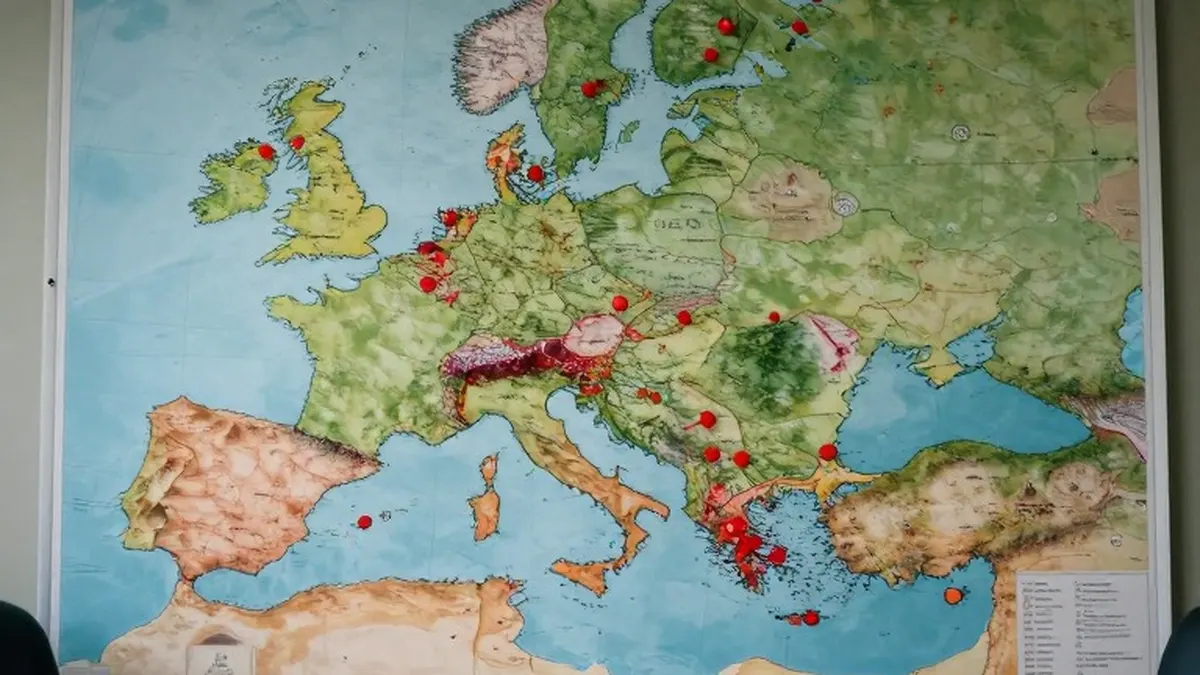
Iranian officials have issued a stark warning to European nations, stating that the regime intends to launch missile strikes if European countries allow the United States to utilize their military bases to attack Iran. This development marks a significant shift in the regional conflict, as European leaders had previously viewed the war as primarily a US and Israeli engagement rather than a direct European issue.
Ahmad Bakhshayesh Ardestani, a member of the Iranian parliament’s security committee, articulated this position in an interview with Euronews. He stated that if America uses its bases in Europe, including those in Italy and Germany, Iran’s missiles will be fired toward Europe. Ardestani noted that in previous conflicts, Iran had not targeted the continent, but this time it would not allow European assistance to the US to go without consequence.
The threat was visually underscored by the Tehran municipality-owned newspaper Hamshahri, which published a map of Europe on its front page on Wednesday. The map identified fifteen potential targets across countries ranging from Portugal to Romania. Notable military installations marked on the map included British, German, and Italian bases, such as the UK’s RAF Fairford, which was reportedly the target of an Iranian plot in recent months.
Dr. Lynette Nusbacher, a former head of the Strategic Horizons Unit in the UK Cabinet Office, spoke to The Jerusalem Post on Thursday. She acknowledged that Europe had not previously considered the prospect of a direct missile attack from Iran. However, she argued that the threat of an intercontinental ballistic missile should not be a major concern because Iran does not currently possess such weapons. She explained that a few months ago, Iran demonstrated its capability by launching two long-range ballistic missiles toward the joint US-UK base on Diego Garcia. One missile failed, while the other was intercepted after traveling beyond Iran’s self-declared range limit.
Nusbacher suggested that the narrative of the US and Israel fighting a war to solve a European problem was misleading. She noted that no one in Europe had expected Iran to attack NATO targets, which could potentially provoke an Article 5 response, or to damage its relationships across the continent. Nevertheless, she warned that even without intercontinental range, a missile with a 2,000-kilometer range could still reach parts of southeastern Europe, including Greece, Bulgaria, and Romania.
Fada Hossein Maleki, another member of the Iranian parliament’s security committee, told Euronews that Iran had prepared a new approach for any renewed conflict that would surprise both the US and European countries. Nusbacher added that the primary reason to view Iranian ballistic missiles as a threat now is the possibility that they might be fired at American bases in European countries and miss.
Alongside these missile threats, Europe has faced a series of cyberattacks in recent weeks. These incidents disrupted refrigerators in Belgian branches of Carrefour, Intermarche, and Ikea, as well as stores in Sweden, Luxembourg, Finland, Ireland, and Estonia. No group has yet claimed responsibility for these attacks, which followed a joint statement from more than thirty countries condemning Iran’s use of violent attacks, sabotage, and hybrid activities.
In response to growing concerns about complex crises, the European Civil Protection Forum and Commissioner Hadja Lahbib presented new guidelines earlier this week. They are urging citizens to prepare for the first seventy-two hours of an emergency. The recommendations include stocking emergency kits with three liters of drinking water per person per day, non-perishable food, manual can openers, battery-powered radios, flashlights, charged power banks, and printed emergency contacts.
The guidelines also advise households to keep a first-aid kit, a three-day supply of prescription medications, hygiene products, cash, identification documents, and thermal blankets. Lahbib announced plans to establish an annual EU Preparedness Day, with the first edition scheduled for October 2027. These initiatives build on a recently adopted European Commission recommendation aimed at strengthening the resilience of national civil protection contact points.
Lahbib emphasized that the first hours of a disaster can make all the difference. She stated that every European should know how to protect their family and help others, noting that preparedness starts in homes, schools, and communities. By providing practical tools for crisis preparation, the EU aims to strengthen the systems that citizens rely on when emergencies strike.