Israel's Herzog Holds Talks With Netanyahu and Eisenkot as Coalition Decision Looms
President Isaac Herzog is consulting both rivals for power days before choosing who gets the first chance to form Israel's next government, with Arab parties holding the balance.
By Yuki Kaminski ·
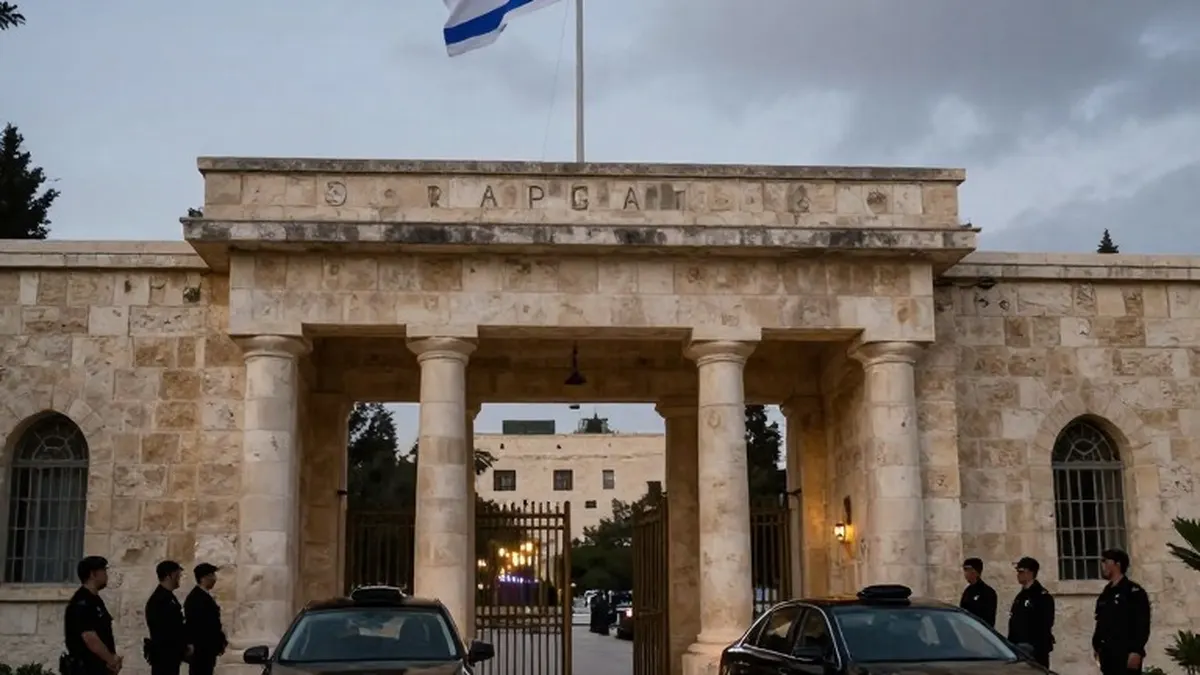
Israeli President Isaac Herzog was set to hold meetings on Thursday with Benjamin Netanyahu and his main challenger, Gadi Eisenkot, as the window narrows on his decision over which man should be given the first opportunity to assemble a governing coalition.
The consultations come less than a week before Herzog must make his choice, following last month's hard-fought election, a contest widely viewed as among the most significant in Israel in decades. Neither Netanyahu nor Eisenkot, a former military chief of staff, emerged with an obvious route to a majority.
Under Israel's system, the president, whose role is otherwise mostly ceremonial, determines which candidate stands the best initial chance of putting together a stable coalition.
The results upended the balance of power in the 120-seat Knesset. Netanyahu's coalition shed its majority, falling from 68 seats to 53. The Change bloc of Zionist parties headed by Eisenkot controls 48 seats. That arithmetic has turned parties representing Israeli Palestinians into possible kingmakers after they captured an unprecedented 19 seats, 11 for the Joint List and eight for the more conservative, Islamist Ra'am.
A surge in participation drove the shift. Turnout among Arab Israelis, Palestinians holding Israeli citizenship who make up 20% of the population, more than doubled to roughly 80%. Palestinians in the occupied West Bank and Gaza could not vote.
Yousef Jabareen, who leads Israel's main Palestinian coalition, acknowledged "disagreements with Eisenkot on many issues" but said on Thursday that Palestinian voters sought change after what he described as intensified racism, discrimination, crime and exclusion under the current government. "We are not choosing between good and better but between what we see as bad and even worse," he said, according to Israeli media. Jabareen told the Guardian last month that the priority for Arab Israeli voters was removing the Netanyahu government, especially its most extreme figures: national security minister Itamar Ben-Gvir and finance minister Bezalel Smotrich.
Eisenkot has set his own conditions for partnering with Arab parties: recognition of Israel as a Jewish state, acceptance of mandatory national service, whether civil or military, and condemnation of Hamas as a terrorist organisation. Jabareen and the Joint List have floated backing an Eisenkot government from outside through tactical Knesset votes, while Ra'am has said it would enter a coalition he leads.
Herzog, who also received delegations from the Palestinian Israeli parties and other smaller factions, has urged all sides to prevent yet another election. "Any reasonable person need only look at the security and diplomatic challenges before us, at the changing region around us, and remember the issues tearing us apart from within, to understand that an immense responsibility rests upon us," he said. Netanyahu stays on as caretaker prime minister until a coalition is formed, and a fresh vote is mandatory if no candidate succeeds.
Netanyahu, 77, outperformed expectations and his Likud party took the largest share of seats, but his nationalist-religious alliance, described as the most rightwing government in Israel's history, forfeited its majority. He has responded by pointing to an official inquiry into possible vote tampering, accusing Palestinian-led parties of stealing the vote. Critics say he and his allies are attempting to delegitimise the outcome, which he denies.
Israel's Central Election Committee stated on Wednesday that the election's integrity was not compromised. Its chairman, supreme court justice Noam Sohlberg, appealed to elected officials to safeguard public confidence. "This is a real danger. One of the foundations of democracy is the peaceful transfer of power," Sohlberg told Herzog at the president's residence, calling the high turnout, including among the Arab minority, a blessing. Far-right figures aligned with Netanyahu, among them Ben-Gvir, have demanded the immediate arrest and interrogation of Arab party leaders.