Asian Equities Plunge Amidst Persistent AI Sector Skepticism
Major Asian stock indices suffered significant losses on Wednesday as investors questioned the sustainability of artificial intelligence investments, despite a recent rally driven by Nvidia leadership changes.
By Yuki Kaminski ·
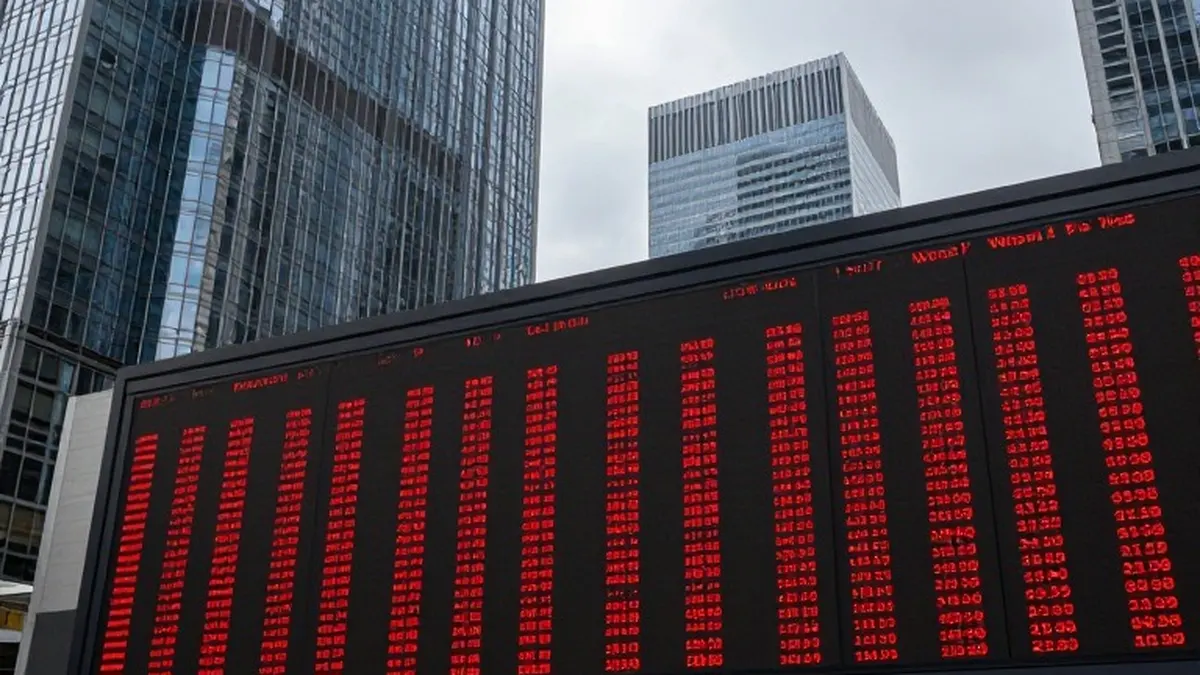
Asian stock markets experienced a sharp decline on Wednesday, with major indices reversing gains seen earlier in the week. The sell-off was driven by growing investor doubts regarding the current artificial intelligence boom. This downturn followed a strong rally that had been triggered by the return of Jensen Huang as the chief executive officer of chip giant Nvidia.
Taiwan’s financial markets led the regional retreat. The benchmark Taiex index plunged as much as 7.9 percent during morning trading hours. Other key Asian markets also posted significant losses, with South Korea’s Kospi index falling more than 6 percent. Japan’s Nikkei 225 index dropped by 3.6 percent during the session.
In contrast to the broader regional trend, Hong Kong’s Hang Seng Index bucked the decline. The index managed to rise by as much as 1.3 percent, offering a rare gain in a day dominated by selling pressure across the continent.
Technology stocks with strong ties to the AI trade bore the brunt of the losses. In Japan, Tokyo Electron, a major manufacturer of semiconductor fabrication equipment, saw its shares dive 13.5 percent. Its competitor Advantest, which produces chip testing equipment, experienced an even steeper drop of 14.5 percent.
South Korean chipmakers also faced heavy selling. Samsung Electronics, one of the world's top memory chip producers, sank 9.1 percent. SK Hynix, its main rival in the memory chip sector, fell 9.9 percent. These declines reflect the market’s cautious stance on hardware companies central to the AI infrastructure buildout.
Taiwan-based companies also recorded substantial losses. The Taiwan Semiconductor Manufacturing Company, recognized as the world’s largest contract chip maker, dropped more than 9 percent. Foxconn, a prominent supplier for Apple and other tech firms, suffered a similar decline, falling over 9 percent in trading.
The recent volatility follows a period of intense market swings over the past month. Asian markets had surged on Tuesday after news broke that Huang was reinstated as Nvidia’s CEO. This move came after an intervention by US President Donald Trump. Huang had previously resigned amid allegations that he was romantically involved with a woman suspected of working with Chinese intelligence.
The surprise reappointment of Huang sent Nvidia’s shares listed in New York soaring by 31.5 percent on Monday. This marked the largest single-day gain in the history of the US stock market. However, Wall Street saw modest losses on Tuesday following that buying spree, with the S&P 500 index falling 0.5 percent and the Nasdaq composite down 1.5 percent.
These market fluctuations are part of a broader context involving political and economic uncertainties. Investors are watching closely as Democrats in Washington, DC, are expected to push for greater regulation of AI following their sweeping victories in the US midterm elections. This potential regulatory shift adds to existing concerns about the tech sector.
Fundamental questions remain about whether technology firms can sustain their multi-trillion-dollar investments that underpin the AI boom. The heavy reliance on debt for these expenditures has sparked intense debate about whether the industry is investing in a future gold mine or creating a massive stock market bubble. Global AI-related investment is forecast to reach 2.7 trillion dollars this year and could grow to 3.6 trillion dollars in 2027, according to technology insights company Gartner.