Cameroon Anglophone Crisis: A Decade of Conflict Shatters Lives
Nearly a decade after the Anglophone crisis began, thousands in Cameroon face displacement and injury as the government pushes for dialogue while separatist attacks continue.
By Hassan Okoye ·
Nearly ten years after the start of the Anglophone crisis in Cameroon, the consequences of the conflict continue to reshape the lives of thousands. The struggle, which began in October 2016, has evolved from peaceful protests into a brutal armed conflict that has displaced half a million people. According to Human Rights Watch, at least 6,000 individuals have lost their lives since the fighting commenced, while the United Nations refugee agency reports that more than 70,000 Cameroonians have sought safety in neighboring Nigeria.
The crisis originated when lawyers and teachers in the Northwest and Southwest regions went on strike. They protested what they perceived as the marginalization of English-speaking communities by the Francophone-dominated government, particularly regarding the appointment of French-speaking officials to local schools and courts. Human rights groups later accused security forces of using excessive force to suppress these initial demonstrations, a crackdown that critics argue fueled the rise of an armed separatist movement.
By 2017, a dozen armed groups had emerged, seeking independence for the two English-speaking regions to form a breakaway state known as Ambazonia. Since then, separatist fighters and government forces have engaged in a prolonged war. Rights organizations have documented abuses by both sides, including targeted killings, kidnappings, torture, and arbitrary detentions. Both the government and separatist groups have generally denied these allegations, though they have acknowledged responsibility for some incidents.
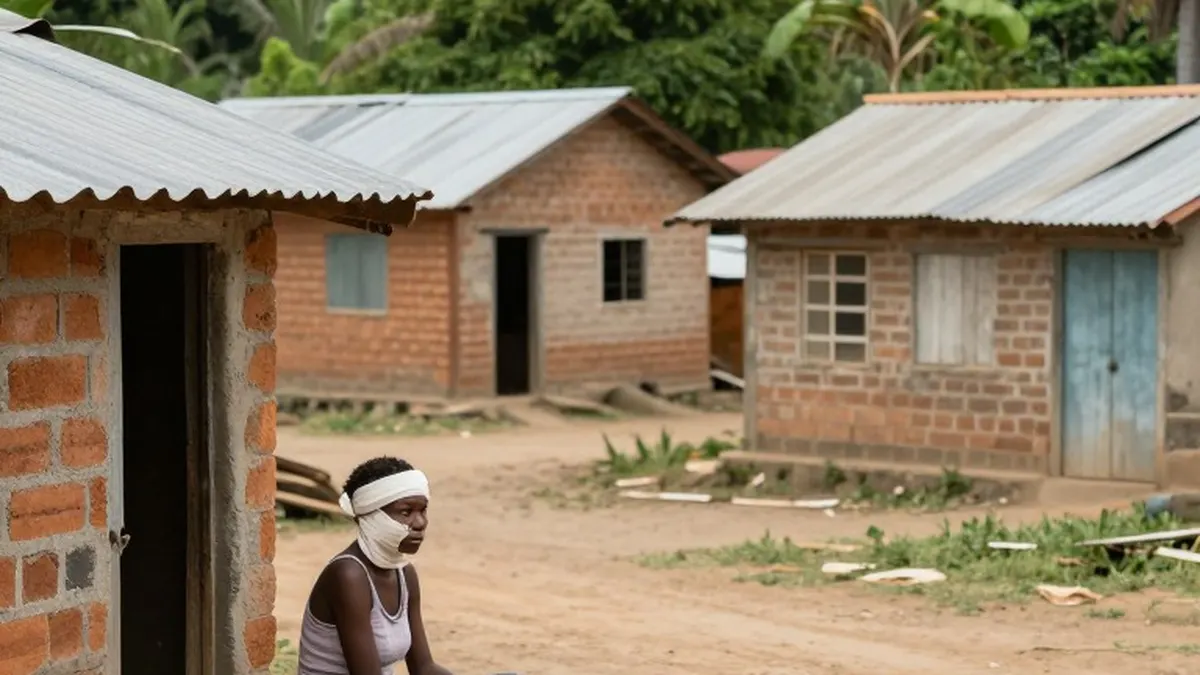
Median Bah, now 23, was just 15 when armed men stormed her home in the Southwest region on April 7, 2018. Ill and confined to her bed, she was unable to escape through a window like her brother. Instead, she fled through the door and was shot multiple times in the backyard. The attack left her with severe facial injuries, a damaged jawbone, and lost teeth. She also lost the ability to breathe normally and relied on a tracheostomy tube for eight years until it was recently removed. She has undergone at least four reconstructive surgeries in Cameroon, Ghana, and India, with more procedures planned for next year.
For many others, the conflict has meant a permanent exile. Glory Akom, a 44-year-old mother of two, now lives in a refugee camp in Ogoja, Nigeria. She fled her home in 2017 when soldiers pursued residents into the bush. Like many refugees in the area, she depends on monthly cash assistance from the UNHCR to support her family, including a child with sickle cell disease. The town of Ogoja hosts approximately 15,000 refugees across three settlements, providing them with brick houses topped with tin roofs.
The disruption has also severely impacted education. Maurine Mangha, 21, fled her hometown after separatist fighters opened fire during an independence celebration in 2017. She had already left school due to a separatist-imposed boycott. According to Unicef, more than 200,000 children are currently out of school in the conflict zones, and nearly 2,500 learning institutions remain non-operational. Despite these challenges, Maurine secured a scholarship through a UNHCR program and is now studying microbiology at a local polytechnic in Nigeria.
In an effort to end the fighting, the Cameroonian government launched a community dialogue initiative in September. Prime Minister Joseph Dion Ngute urged local communities to persuade separatists to abandon their armed struggle. At launch events in Buea and Bamenda, nearly 60 former fighters were presented as having surrendered. As of November 2026, almost 1,500 former separatists are undergoing rehabilitation at Disarmament, Demobilisation and Reintegration centers in the two regions.
Clovis Naseri, a former commander with the White Tigers of Ribbons, surrendered in 2019 and has since become a vocal advocate for peace. He notes that many fighters have abandoned the ideology of independence. However, separatist groups continue to carry out attacks. Analysts like Roland Fru argue that the government has failed to clearly address the underlying grievances that sparked the conflict. Although President Paul Biya has praised security forces for restoring normality, survivors remain hopeful that lasting peace will eventually follow a permanent end to the violence.