Israel Ganz calls on Argentine leader to reject West Bank sanctions
The head of the Yesha Council met with President Javier Milei to strengthen ties and urge support against international measures targeting settlements.
By Isabella Kaur ·
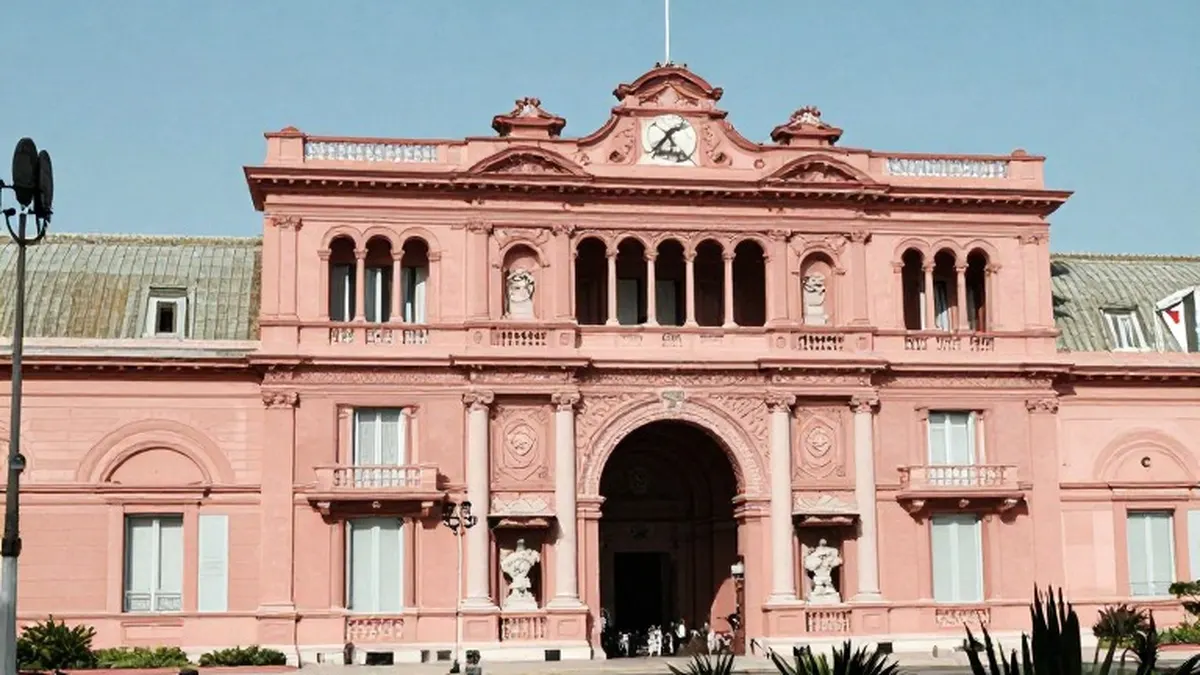
Israel Ganz, the chairman of the Binyamin Regional Council and the Yesha Council, held a significant meeting with Argentine President Javier Milei at the Casa Rosada in Buenos Aires. This encounter took place during a broader diplomatic tour of South America that Ganz is currently conducting. The primary objectives of this trip are to establish new international partnerships, expand global support for the West Bank, and find allies in the effort to counter boycotts and sanctions aimed at the settlements.
The context for this diplomatic push includes recent coordinated actions by several Western nations. In June, the United Kingdom, acting alongside Australia, Canada, France, New Zealand, and Norway, announced sanctions against specific networks. These entities were accused of financing and executing violence associated with settlers. The British government specifically targeted six organizations and one individual as part of this initiative.
During their discussion, Ganz drew a parallel between the long-standing dispute over the Malvinas Islands and the current sanctions on the West Bank. Argentina asserts sovereignty over the islands, which are known as the Falkland Islands in British terminology, and has historically demanded their return. Ganz argued that the same logic applied to the island dispute should influence how the West Bank issue is handled.
Ganz expressed strong views on the role of Britain in global affairs. He stated that Britain must be cut down to size and noted that the era of the White Paper and British imperialism has come to an end. This reference alludes to the 1939 British White Paper, which restricted Jewish immigration to Mandatory Palestine. He further argued that European countries should no longer dictate the future or control the sovereign territory of other nations, citing both Israel and Argentina as examples.
The Binyamin leader specifically called for Britain to end its occupation of the Malvinas Islands and to cancel what he described as shameful sanctions on Judea and Samaria, the biblical name for the West Bank. The meeting itself was facilitated by Rabbi Richard Kaufman, a personal friend of the Argentine president. According to Ganz's associates, the hour-long conversation was warm and productive.
This was the third meeting between Ganz and Milei, following previous encounters at various conferences, but it was the first time they met in this formal setting at the presidential palace. The two leaders agreed to significantly strengthen their relationship. As part of this renewed bond, Ganz extended an invitation to Milei for a state visit to the Binyamin region and the West Bank.
Following the meeting, Ganz addressed the media outside the Casa Rosada. He described the session as historic and expressed gratitude to Milei for his warm welcome and his courageous stance alongside Israel and the Jewish people. Ganz stated that he had made a clear request to the president: to recognize Judea and Samaria as part of the Land of Israel and to oppose the boycott and sanctions affecting the settlements.
In his closing remarks, Ganz issued a call to other nations around the world. He urged them to recognize Israel's right to Judea and Samaria, describing the area as the cradle of their forefathers and the future of the state. He emphasized that the Jewish people are not foreigners in the region and that no sanctions could erase this connection. Ganz concluded by stating that against boycotts, new markets will be opened, and against sanctions, new partners will be recruited, allowing for continued building and growth.
The diplomatic efforts highlight a growing alignment between certain South American leaders and Israeli regional authorities. By linking the Falklands dispute with West Bank sanctions, Ganz aimed to create a unified narrative against perceived imperial overreach. The meeting marks a notable step in the ongoing diplomatic strategy to secure international backing for the Binyamin region and its residents.