White House Proposes European Security Framework Ahead of Abu Dhabi Talks
The Trump administration has unveiled a new security initiative for Europe as trilateral peace negotiations with Ukraine and Russia approach next week.
By Isabella Kaur ·
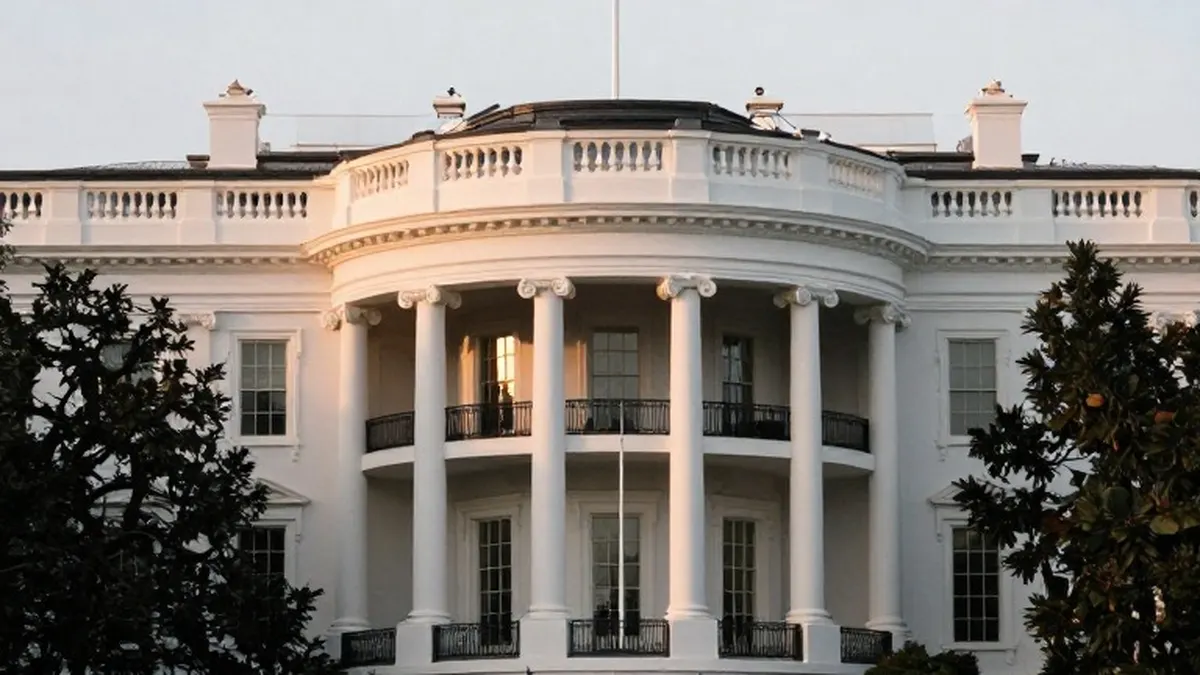
The White House has detailed a proposed framework for European security that includes specific guarantees for Ukraine. This initiative was announced as the administration prepares for trilateral peace talks involving the United States, Ukraine, and Russia in Abu Dhabi next week. Jared Kushner, the president's envoy, outlined the plan in a social media post on November 5. This followed recent discussions held in Brussels with Ukrainian, NATO, and other European officials.
The proposed framework includes several key components. These include permanent security consultations, improved crisis communications, and greater military transparency. It also proposes reciprocal measures to reduce the risk of escalation and a long-term arrangement for stability. Kushner stated that the initiative would respect the sovereignty and territorial integrity of all nations. He emphasized that no state would have a veto over another's security choices or alliances, while noting that NATO would remain central to collective defense in Europe.
The announcement came shortly after President Donald Trump met with Kirill Dmitriev, a special envoy from Russian President Vladimir Putin. Trump expressed optimism that a significant agreement was near. He suggested the deal could involve not just Ukraine, but the broader continent. He told reporters that everyone would be thrilled by the outcome, which he described as a big, beautiful agreement.
Kushner indicated that consultations would continue through a format involving Ukraine, NATO, the European Union, and other partners, with Russia also participating in the peace negotiations. However, the link between Ukraine's security and a wider European architecture has raised questions among Russia specialists. Glen Howard, president of the Saratoga Foundation, suggested the move aims to reassure allies while pressuring Russia. Yet, he expressed concern over the broader scope, noting that Russian officials have previously called for NATO to return to its pre-1997 posture.
Howard warned that discussing NATO's posture could set a precedent for future administrations. He compared the approach to the 1938 Munich agreement, citing concerns about the administration's posture toward Russia. He also noted that French and British preparations for potential peacekeeping deployments and discussions on gas routing through Ukraine may be part of a wider strategy. John Herbst, a former US ambassador to Ukraine, expressed little optimism about the upcoming talks, pointing to Russian Foreign Minister Sergei Lavrov's statement that Russia would make no compromises.
Herbst also highlighted the appointment of Vladimir Medinsky to head the Russian delegation in Abu Dhabi. Medinsky has led previous negotiating teams without securing a breakthrough. While Herbst believes European involvement could help sustain support for Ukraine, he cautioned that European efforts to influence the administration have had limited impact compared to the Kremlin's sway over Trump. He questioned the focus on postwar security before obtaining a meaningful Russian commitment to stop fighting, calling the task of devising appropriate guarantees difficult.
The trilateral discussions are scheduled for November 10 and 11. This will be the first such peace talks since February. Mark Temnycky, a fellow at the Atlantic Council's Eurasia Center, expects incremental progress but not a major breakthrough. He identified territorial disputes and Ukraine's postwar security as the main obstacles. For security guarantees to be credible, Washington and European capitals must agree on enforcement mechanisms and who will finance Ukraine's reconstruction, which is estimated at nearly $588 billion over the next decade.
Temnycky also noted that Washington cannot simply offer Ukraine EU membership as part of a settlement, as that decision rests with all 27 EU member states. Two senior European diplomats in Washington stated on November 5 that they do not believe Russia is prepared to make genuine concessions. This diplomatic activity coincides with other initiatives aimed at building momentum. On November 5, First Lady Melania Trump hosted Russian and Ukrainian representatives at the White House to mark a cease-fire in the occupied city of Oleshky in Ukraine's Kherson region. Nearly 800 people were evacuated during this pause in fighting.
Melania Trump said the parties had chosen humanity over war, urging them to find common ground through concern for civilians. Meanwhile, President Volodymyr Zelenskyy arrived in Spain for talks on strengthening Ukraine's air defenses and meetings on the sidelines of the Ibero-American summit. He stated that further contacts with US officials were planned before the Abu Dhabi negotiations. Trump's meeting with Dmitriev also drew attention because the Russian envoy remains under US Treasury sanctions. A US official confirmed that waivers had been issued to facilitate the visit, though no official decision to remove him from the sanctions list has been announced.