Ukrainian strikes leave 15 major Russian oil refineries inoperable
Ukrainian intelligence reports that strategic attacks have reduced Russian oil refining capacity by over 55 percent, forcing the Kremlin to rely on remote facilities to meet domestic demand.
By Hassan Okoye ·
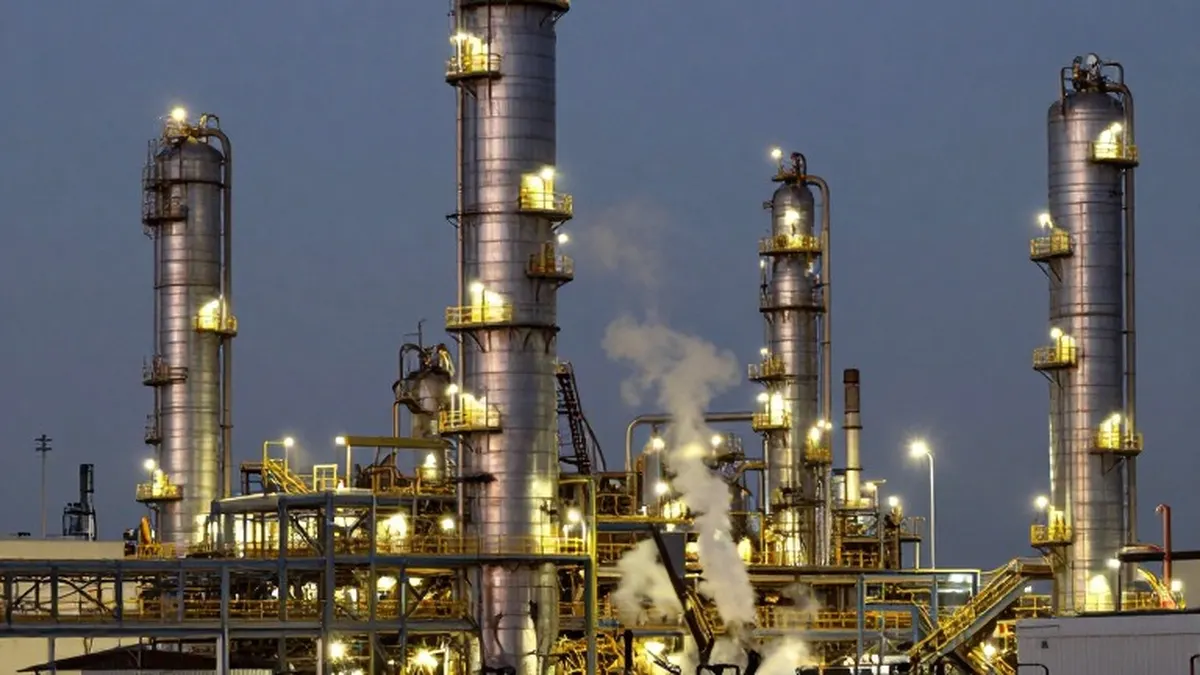
Ukrainian military intelligence has disclosed that a significant portion of Russia's oil processing infrastructure has been damaged or disabled as of late September 2026. According to the Defence Intelligence of Ukraine, 15 of the country's 38 main oil refineries are currently inoperable. Additionally, another 12 facilities have seen a reduction in their output of oil products.
The cumulative effect of these disruptions has led to a sharp decline in national refining activity. Total oil refining volumes at these major companies have dropped by 55.4 percent compared to the beginning of the year. This substantial decrease marks a significant shift in Russia's energy production capabilities over the past several months.
The most severe impact has been felt in the Volga, Central, and Southern federal districts. Several key facilities in these regions, including Slavneft-YANOS, Kirishineftegazsintez, the Ryazan Oil Refinery, Gazpromneft-Moscow Oil Refinery, and Lukoil-Permnefteorgsintez, have suffered from shutdowns. These specific companies collectively account for approximately 33 percent of Russia's total oil refining volumes.
In contrast, refineries located in more remote regions of Russia continue to operate. Notable active facilities include the Gazpromneft-Omsk Oil Refinery, Achinsk Refinery, Neftekhimservis, NNK-Khabarovsk Oil Refinery, Mariysky Oil Refinery, and Vaninsky Oil Refinery. These distant plants have become critical for maintaining the country's fuel supply chain.
During September 2026, the total refining volume at these remote companies reached 906,000 barrels per day. This figure represents an increase of 147,000 barrels per day compared to the start of the year. Consequently, these facilities now account for around 24 percent of all oil refining in Russia.
While the operation of these remote refineries allows the Kremlin to temporarily compensate for fuel shortages, experts note that this strategy has limitations. The geographical distance of these plants complicates the logistics of delivery. Intelligence assessments indicate that the transport of oil products is further hindered by a shortage of railway rolling stock and road tankers.
Looking ahead, data from the Defence Intelligence of Ukraine suggests that production volumes at these remote refineries may decline in 2027. This potential drop is attributed to the postponement of maintenance work that was originally scheduled for the current year, which has now been pushed to the following period.
The economic toll of these operations has been substantial. Ukrainian forces have inflicted damage exceeding 23.2 billion US dollars on the Russian oil sector, an amount that nearly matches the industry's total revenue for 2025, which was reported at 26.6 billion US dollars. Despite efforts to redistribute the workload among surviving companies, Russia is struggling to meet its own domestic needs for oil products while also fulfilling its export commitments.
To address the growing shortfall, Russian authorities have begun importing fuel from other countries. These imports are often conducted using grey schemes designed to bypass international sanctions, highlighting the increasing difficulty of managing the energy sector under the current conditions.