Trump signs executive order designating Oval Office a national monument
The president aims to preserve the room's current design, including recent gold additions, by invoking his authority to create protected sites.
By Yuki Kaminski ·
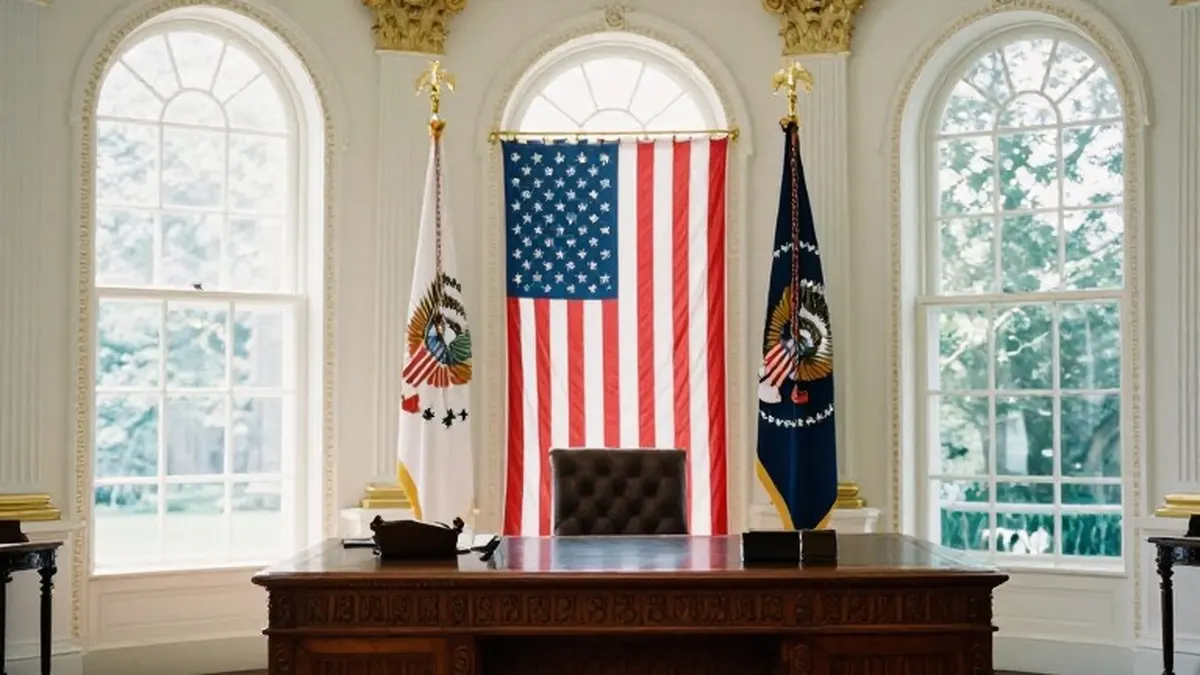
US President Donald Trump signed an executive order on Thursday that declares the White House Oval Office a national monument. The move is intended to limit the ability of future presidents to make significant alterations to the room, particularly in response to the extensive changes made during Trump's second term.
The president has modified the official workspace, most notably by adding numerous gold features to the walls. In remarks to reporters, Trump described the decision as a way to protect the space from being "destroyed, ripped down by stupid people" for minor redesigns. He emphasized that the Oval Office serves as a powerful symbol of the nation's greatness.
Under the new order, the Oval Office and several surrounding rooms are granted national monument status. This designation is similar to the status of national parks. The document specifies that the National Park Service will be responsible for maintaining the site in a manner that preserves its historic character and architectural integrity.
Despite the new protections, the executive order clarifies that the president retains the authority to redecorate the room. It allows for the selection of furnishings and ordinary operational or security modifications, provided these changes do not substantially impair the historic structure or architectural character of the monument.
The Oval Office has existed in its current form since the early 1930s, following a design concept by President Franklin D. Roosevelt. The entire White House building is already designated as a National Historic Landmark, a status intended to prevent sudden changes. However, Congress has created an exemption to the National Historic Preservation Act to allow presidents to make necessary updates to the residence.
Greg Werkheiser, a specialist in historic preservation from the law firm Cultural Heritage Partners, noted that temporary alterations like furniture and decor remain at the president's discretion. He stated that as long as permanent art and architecture are not damaged, presidents generally have wide latitude to make changes.
Werkheiser, however, argued that the Trump administration has shown a disregard for other historic sites in Washington. He pointed out that the administration has used lawsuits to challenge preservation laws while simultaneously undertaking a massive beautification project in the capital. These efforts include renovating the Kennedy Center, building a new triumphal arch, and painting the granite exterior of the executive office building.
The president has held three events in the past week to highlight these construction projects. This occurred even as his Republican party faced significant losses to Democrats in the midterm elections. In October, Trump had suggested in an interview with Time magazine that the Oval Office might need to be torn down for security reasons, a claim he later rejected in his remarks on Thursday.
The redesigns have drawn criticism from political opponents. During the midterm campaign, Democrats targeted the changes to the White House. Former President Barack Obama remarked that the golden aesthetic changes gave the White House a distinct look, comparing it to a specific commercial establishment.