SpaceX Turns Down Three Space Force Launch Offers as Spain Readies Miura 5
A NASA panel separately estimated Starship could require up to 22 refuelings for a lunar landing.
By Yuki Kaminski ·
SpaceX has walked away from three launch contracts put forward by the US Space Force, declining the work even as a Spanish rival moves its own rocket toward the pad. The refusal, reported in the October 23 edition of the Rocket Report from Ars Technica, places a question mark over how the company is weighing military business against its civil and commercial schedule.
The company told the Space Force "thanks, but no thanks" on the three offers, according to that report. No reasons for the declines were given, and neither SpaceX nor the Space Force has disclosed the value or payload details of the bids. The refusal came alongside a separate development on the civil side: a NASA safety panel said Starship could require as many as 22 refueling flights to support a lunar landing, a number that raises questions about the cadence such a mission would demand.
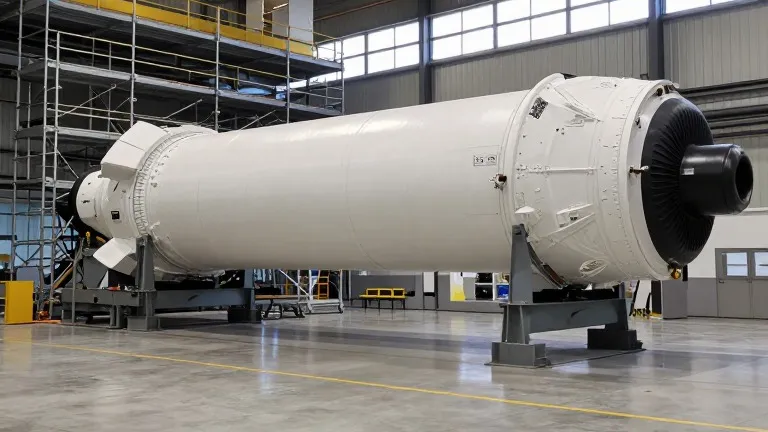
In Spain, PLD Space is moving in the opposite direction. The company says its Miura 5 small-lift rocket is entering final integration, with a first flight targeted before mid-2027, according to Aviation Week. CEO Raúl Torres said in an October 19 program update that the vehicle now undergoing integration is one of three Miura 5 rockets the company has built; the other two exist to qualify key system elements.
PLD's approach rests on parallel work. "Manufacturing these three vehicles has allowed our teams to work continuously across different stages of production and integration, applying the lessons learned from each qualification campaign directly to the launch vehicle," Torres said. One Miura 5 second stage is fully integrated, which lets system-level testing begin under representative operating conditions. That stage sits at PLD's Teruel facility for a qualification campaign that includes a wet dress rehearsal and a static hot-fire test.
The picture is not uniform across the sector. In Canada, Reaction Dynamics says it is seeking $350 million to grow its headcount from 68 people to more than 350, according to spaceQ. The company is building the Aurora small-lift rocket, which it wants in orbit in 2028, and has announced a medium-lift vehicle called Borealis targeted for 2031.
Three separate trajectories now sit side by side: SpaceX declining military work it was offered, PLD Space assembling flight hardware toward a 2027 debut, and Reaction Dynamics raising capital to scale. The terms SpaceX declined, and the reasons behind them, remain undisclosed.
Source: Ars Technica