Leaked Papers Reveal Russian Plan to Supply Iran With Helicopter Missile Systems
Newly obtained documents show that Russia contracted to provide Iran with 90 advanced missile launchers, highlighting the deepening military ties between Moscow and Tehran.
By Yuki Kaminski ·
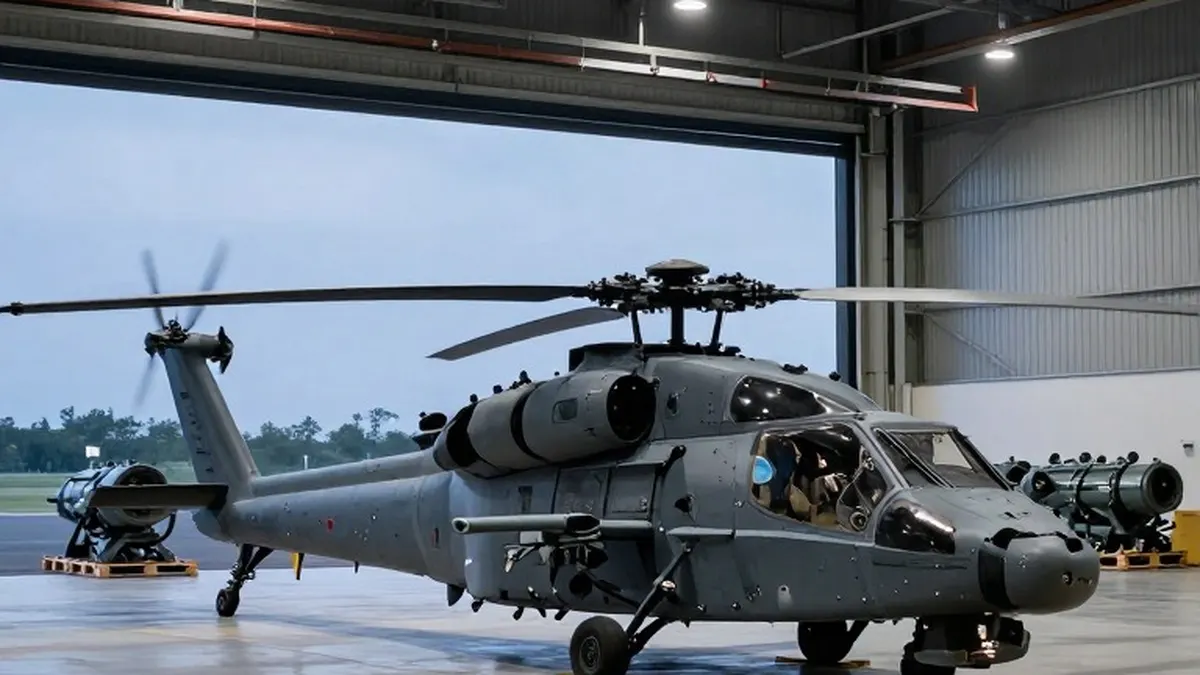
Leaked defence industry documents have revealed that Russia arranged to supply Iran with 90 launchers for advanced guided missiles. The files, which were obtained by the Ukrainian private intelligence firm Dallas Analytics and shared with The Guardian, provide detailed insight into the extensive military cooperation between Moscow and Tehran.
The paperwork outlines plans to deliver launchers for the LMUR, a guided missile system fired from attack helicopters. Russian forces have used this weapon extensively against Ukrainian targets since the full-scale invasion began in 2022. A production schedule created by Vympel, a major Russian designer of missiles and launch systems, lists an order for 90 of these launchers under an export contract labeled K-10.
According to the schedule, deliveries were planned to take place between late 2024 and December 2025. While the specific records do not confirm whether the launchers were actually delivered, separate internal documents explicitly identify the K-10 contract as being for Iran. The authenticity of these files is supported by a related production schedule for six Yak-130 jet trainers destined for Iran in 2023, a delivery that aligns with publicly reported information.
These findings emerge at a critical time as Washington considers its next moves in the ongoing war with Iran following the US midterm elections. Many observers view Moscow as a primary beneficiary of the prolonged conflict in the region. Disruptions to shipping through the strait of Hormuz and attacks on Gulf energy infrastructure have driven up global energy prices, providing the Kremlin with additional revenue to support its war effort in Ukraine and ease pressure on its budget.
Beyond economic gains, the war in the Middle East has diverted international attention and Western military resources away from Ukraine. This shift has further strained Kyiv’s access to crucial US-made Patriot air defence interceptors. Despite these benefits, President Donald Trump has repeatedly downplayed the extent of Moscow’s support for Tehran. Last month, he stated that Russia was doing very little, if anything, to help Iran, a position he maintained to avoid pushing Moscow away from negotiations to end the war in Ukraine.
Trump’s assessment contrasts with findings from European intelligence agencies, which report that Russia has provided Iran with key data and satellite imagery to help target US forces in the Middle East. These agencies have also warned that Moscow is preparing to supply Tehran with explosive-laden drones for use against the US and Israel. The military partnership between the two nations has expanded significantly since 2022, when Iran became a vital supplier of Shahed attack drones for Russia.
Although Moscow has denied reports of supplying military equipment to Iran for the current conflict, the two countries signed a strategic partnership agreement in 2025. This pact includes provisions for countering shared threats, though it does not contain the mutual defence commitments found in Russia’s security agreement with North Korea. In recent months, cooperation has intensified, with senior officials from both nations holding three high-level meetings in October alone.
Russia has remained cautious in publicizing its military ties with Tehran to protect President Putin’s relationship with President Trump. Additionally, Moscow faces constraints on its ability to supply weapons to Iran, as much of its military production is already stretched thin by the demands of the war in Ukraine. The leaked documents highlight these pressures, with Vympel warning in May 2024 that delays in receiving essential components threatened the assembly of missile launchers and risked disrupting other state defence contracts.