India's costliest film takes the Ramayana epic to the world, and critics are split
Nitesh Tiwari's reported $500m production Ramayana: Rise of a Legend has opened in cinemas worldwide ahead of Diwali, earning praise for its scale alongside sharp criticism of its effects and storytelling.
By Isabella Kaur ·
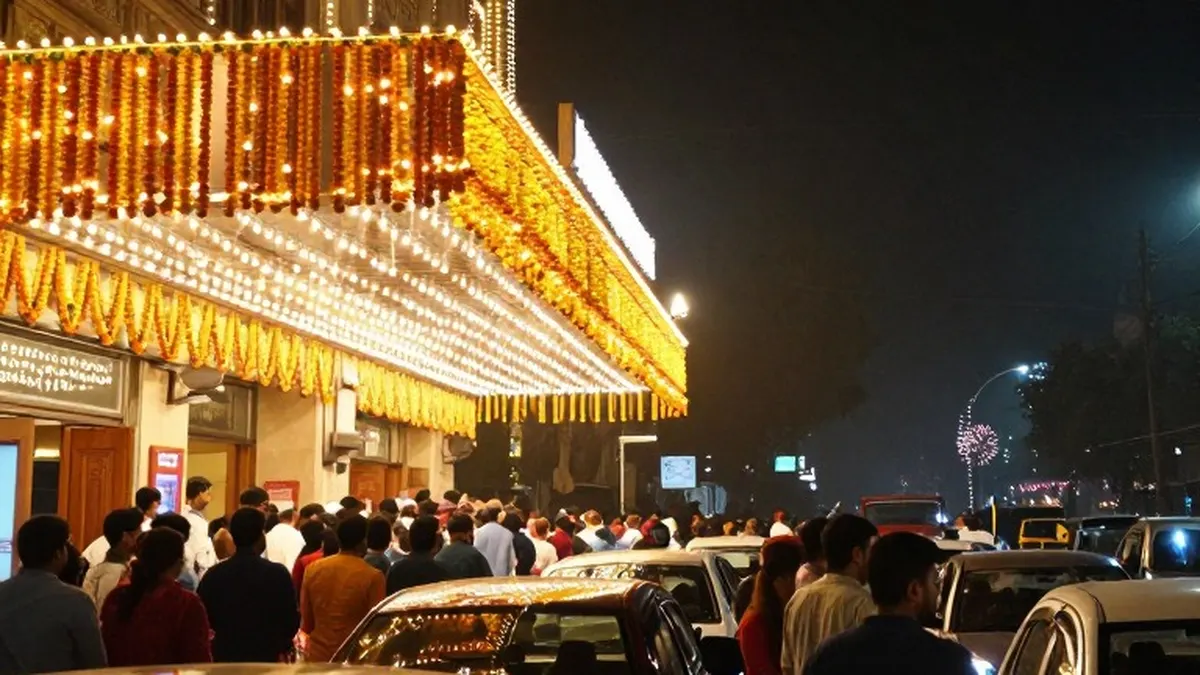
India's most expensive film, a lavish two-part retelling of the Hindu epic Ramayana made for a reported $500m (£370m), has opened in cinemas worldwide, carrying enormous expectations and drawing mixed reviews.
Ramayana: Rise of a Legend, directed by Nitesh Tiwari, is the first of two planned instalments. The production unites some of India's biggest stars, Hollywood visual effects expertise and two Oscar-winning composers, all aimed at taking one of the country's most revered stories to a global audience.
One of Hinduism's foundational epics, the Ramayana has been retold for centuries through poetry, temple sculpture, shadow puppetry, folk theatre and countless screen versions. Tiwari's take returns to the familiar themes of love, duty, exile and war. Ranbir Kapoor plays Lord Ram, the virtuous prince of Ayodhya, who is banished for 14 years and retreats to the forest with his wife Sita, played by Sai Pallavi. Her kidnap by Ravana, the 10-headed king of Lanka portrayed by southern Indian star Yash, sets up an epic battle reserved for part two, due next year.
Producer Namit Malhotra heads DNEG, the visual effects company behind Hollywood blockbusters including Dune and Interstellar. The score pairs AR Rahman, the Oscar-winning composer of Slumdog Millionaire, with Hans Zimmer, known for Gladiator, The Dark Knight and Dune. The film opened days ahead of Diwali, the Hindu festival of lights that celebrates Ram's return to Ayodhya after exile.
The critical response has been divided. Saibal Chatterjee of NDTV gave it three stars out of five, writing that its enormous scale "remains, for the most part, the only thing that stands out" and calling the acting "wildly inconsistent". Rishabh Suri of the Hindustan Times awarded four stars: "all that money shows on screen," he wrote, though he found the first half sluggish and the music underwhelming. Shubhra Gupta of The Indian Express, also at three stars, said her initial misgivings about the extravagant scale gave way as the "perfect epic" gradually won her over.
International critics were just as split. The Guardian's Peter Bradshaw gave four stars to a "thoroughly engaging, rousing and spectacular Indian epic melodrama", finding echoes of Shakespeare in its royal intrigue and of Homer in Ram's quest to rescue Sita. Siddhant Adlakha of IGN scored it four out of 10, criticising "clunky" action and computer-generated imagery he called an "eye-sore". Giovanni Lago of Next Best Picture, at five out of 10, praised Yash's magnetic Ravana and the score but felt the vast narrative might have been better served by a Game of Thrones-style series.
The use of artificial intelligence to adjust actors' lip movements for the English-language version also drew fire. Tiwari said it was meant to make the film more accessible to international audiences, but Adlakha likened the result to "exaggerated mouth movements superimposed on still images for comedy sketches".
In India, the film has invited comparisons with Ramanand Sagar's Ramayan, the television series that gripped the nation from 1987, when streets emptied, shops lowered their shutters and some viewers lit incense and garlanded their sets before broadcasts. The 78-episode series on state-run Doordarshan drew an estimated 80 to 100 million viewers for its most popular parts, at a time when owning a television was a luxury. Arun Govil, whose Ram was so revered that people wept and touched his feet, returns in the new film as Dasharatha, Ram's father.
The release comes at a politically charged moment, with Ram now a powerful symbol of Hindu identity and recent retellings landing in controversy. Adipurush, a big-budget 2023 version, drew calls for a ban from Hindu groups accusing it of disrespecting religious figures, while some critics said its depiction of Ravana drew on Mughal imagery and reinforced stereotypes about Muslims. Kapoor told the BBC Asian Network's Haroon Rashid he was "filled with fear", calling the role "an opportunity of a lifetime" but one that left little room for creative freedom when playing a figure worshipped by millions. Sai Pallavi, raised in a religious household, described the experience as as much spiritual as artistic.
How audiences respond will become clearer in the days ahead. Whatever the verdict, the release marks a major cultural moment for India, bringing a story loved for generations to the big screen on an unprecedented scale.