Delhi Braces for Toxic Winter as New Action Plan Faces Scrutiny
Delhi implements an early Winter Action Plan to combat severe air pollution, but experts warn that enforcement gaps and regional challenges continue to threaten residents' health and daily life.
By Hassan Okoye ·
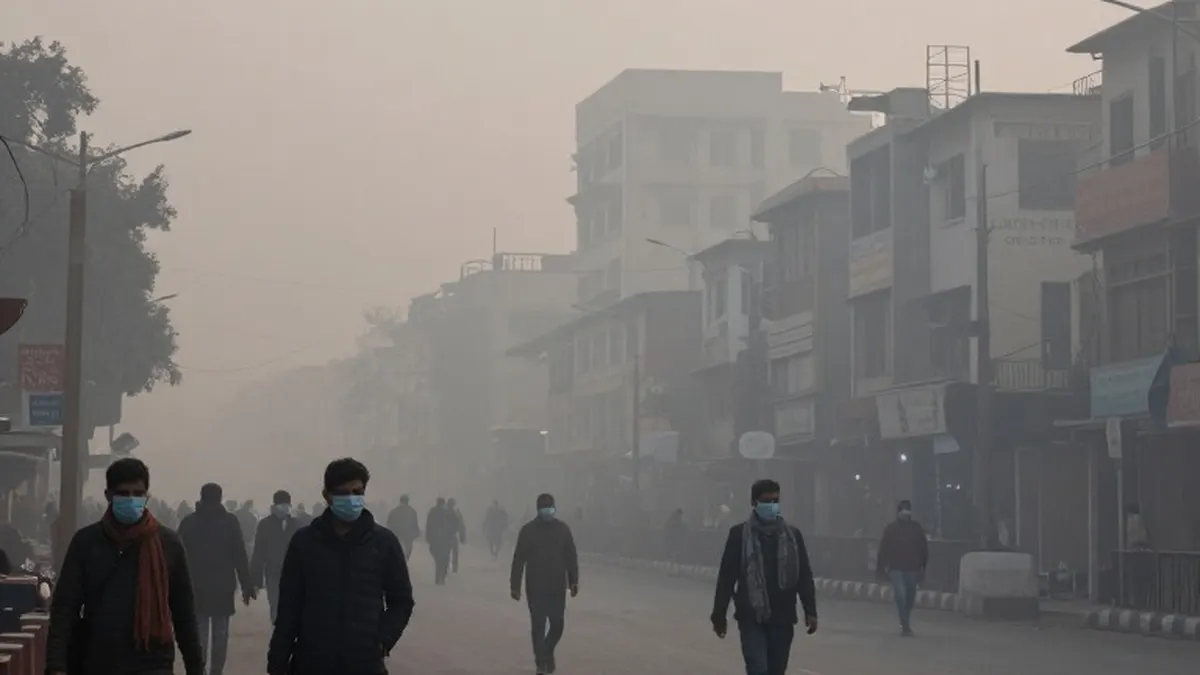
As winter settles over India's capital, residents are once again preparing for months of severe air pollution. In the living room of Meenu Rana, a 43-year-old teacher in Delhi, two cardboard boxes sit side by side. One contains Diwali decorations and lights, while the other holds air purifiers, a symbol of the city's dual reality of celebration and environmental strain. Rana notes that the mornings already feel stuffy, prompting her to prepare for the worsening conditions expected in the coming weeks.
This annual pattern is familiar to millions in Delhi and its surrounding satellite cities, which consistently record some of the highest pollution levels globally. The onset of winter exacerbates the problem as falling temperatures and slower winds trap pollutants close to the ground. Emissions from vehicles, factories, and construction dust are compounded by smoke from crop residue burning in neighboring states. Festival firecrackers further degrade air quality, leading to a noxious haze that has become a defining feature of the season.
This year, the Delhi government has implemented its Winter Action Plan earlier than in previous years. Effective from November 1 to February 28, the strategy aims to address pollution before it reaches critical levels. While experts view this proactive approach as a positive step, many argue that it is insufficient without more comprehensive and long-term structural changes. Despite the early rollout, the city has already begun to experience a familiar grey haze, accompanied by a distinct smoky odor that residents recognize all too well.
The immediate health impacts are evident across the city. People report eye irritation, difficulty breathing, and persistent coughing. For those who can afford the equipment, air purifiers have become essential household items, while outdoor commuters rely on masks or cloth coverings for protection. The governing Bharatiya Janata Party, which promised to tackle pollution during its recent election campaign, now faces a significant test of its pledges through the execution of these new measures.
The current action plan includes several strict restrictions. Older, more polluting vehicles registered outside Delhi are barred from entering the city, and vehicles lacking valid emission certificates are denied fuel. To reduce dust, outdoor construction work and demolitions have been temporarily banned. The government is also discouraging private vehicle use by allowing half of office employees to work from home, introducing staggered work hours, and doubling parking fees. These efforts are complemented by plans to strengthen pollution monitoring, enforce regulations more strictly, and promote public transport and electric vehicles.
Separate from the state's plan, the federal Commission for Air Quality Management oversees the Graded Response Action Plan. This framework introduces restrictions in stages, with stricter measures activated as pollution levels rise. Currently, the second stage is in force, limiting the use of diesel generators and the burning of coal and firewood. While these measures provide a roadmap on paper, their effectiveness hinges on consistent enforcement, a challenge that has persisted for years.
Parthaa Bosu, a strategic adviser at the Environmental Defense Fund, acknowledges the positive changes in planning but warns that execution levels remain largely unchanged. He highlights the often-overlooked issue of secondary pollutants, which form when gases react with sunlight and water vapor to create harmful particles. Sources such as dust, coal, fly ash, brick kilns, and urban waste burning contribute significantly to this problem but are not always adequately addressed.
Manoj Kumar, an analyst at the Centre for Research on Energy and Clean Air, argues that the solution requires setting specific emission reduction targets for every sector, including power generation, industry, and transport. He emphasizes that data exists to determine how much each state and sector contributes to pollution, allowing for targeted five-year reduction goals. Bosu adds that because pollutants travel into Delhi from neighboring regions, a coordinated effort across the wider northern region is essential for lasting improvement.
The health consequences of this pollution are severe. Government monitoring stations frequently record Air Quality Index readings above 300, classified as very poor. On the worst days, readings hit the domestic scale's maximum of 500, though international trackers have recorded levels close to 1,000. The World Health Organization recommends that average PM2.5 levels over 24 hours should not exceed 15 micrograms per cubic meter. In Delhi, levels often surpass this limit by more than 25 times during the pollution season.
Dr. Manoj Goel, a pulmonologist at Fortis Memorial Research Institute, explains that these tiny particles can penetrate deep into the lungs and enter the bloodstream, triggering inflammation and affecting multiple organs. Even short-term exposure can cause throat irritation, wheezing, and breathlessness, while also worsening existing heart and lung conditions. A 2025 report by the Energy Policy Institute at the University of Chicago estimated that air pollution could reduce life expectancy in Delhi by up to 8.2 years.
Beyond health, the pollution crisis disrupts daily life. Commuters traveling between Delhi and satellite towns like Noida and Gurugram face long queues at city borders as vehicles are checked, leading to hours of traffic congestion. While the new rules offer some hope, frustration is growing among residents. Protests, political debates, and court interventions have become part of the annual cycle, yet the pollution persists. For many, like Rana, leaving the city is not a practical option due to school, job, and family ties. She keeps her windows closed and curtains drawn, adding more indoor plants, but admits that the arrival of winter brings dread. As she puts it, while it is unfair, they must live with the situation.