NATO Deputy Commander Offers Positive View of Canada Amid U.S. Criticism
British Air Chief Marshal Sir John Stringer praised Canada's military investments, contrasting his remarks with recent criticisms from the U.S. Department of War.
By Hassan Okoye ·
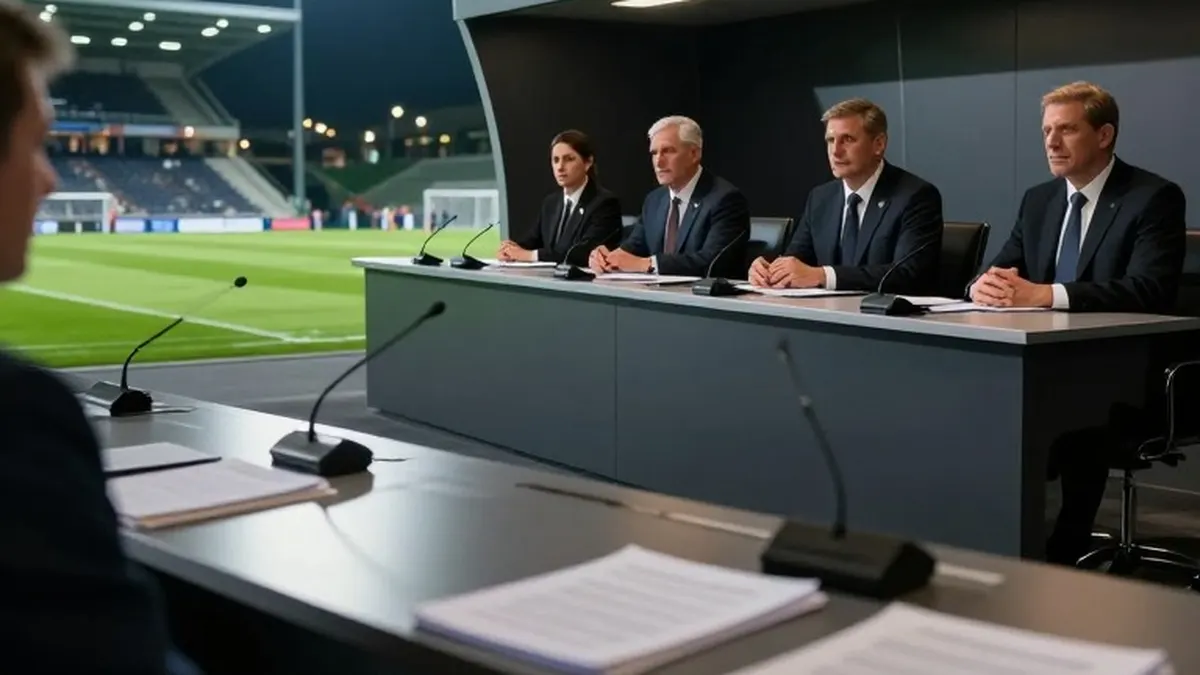
British Air Chief Marshal Sir John Stringer, the deputy commander of NATO, expressed satisfaction with Canada's contributions to the alliance's deterrence mission in Eastern Europe. Speaking in an exclusive interview with CBC News in Ottawa on Wednesday, Stringer offered qualified praise for the country's efforts to rebuild its military forces. His comments come at a time of heightened tension between the Pentagon and the government of Prime Minister Mark Carney regarding defence spending and military readiness.
Senior officials at the U.S. Department of War have recently intensified a public campaign urging Canada to increase short-term defence expenditures. They argue that the country is failing to meet its commitments to NORAD and NATO due to poor force readiness. One senior U.S. official, speaking on background, warned that the Pentagon was prepared to increase pressure on recent restrictions concerning military interactions unless Ottawa addressed Washington's concerns more seriously.
Stringer, who is next in line to become NATO Supreme Allied Commander Europe, stated that he views Canada as a nation making significant investments in its forces. He highlighted the deployment of Canadian troops in Europe, specifically noting the multinational brigade in Latvia. When asked about the readiness of the Canadian-led brigade, Stringer said, 'I'm happy when I look at Canada.'
Currently, approximately 2,200 Canadian troops are stationed in Latvia, with plans to increase that number to 2,600 in the near future. Canada not only contributes a battle group but also commands the 3,000-strong NATO multinational brigade. Prime Minister Carney recently extended this deployment, known as Operation Reassurance, until 2031. The federal budget indicates that this commitment will cost $7 billion over that period.
Stringer noted that Canada is not alone in the process of rebuilding its military capabilities. He observed that many nations experienced both physical and conceptual disinvestment after the end of the Cold War. 'A bunch of nations now are coming out of some relatively low spends and I look at Canada as one of those nations that's spending well,' he said.
This positive assessment contrasts with a 'fact sheet' released by the Pentagon on Monday. The document stated that Canada is not a credible defence partner and that its military spending is unfocused, citing subpar readiness statistics and delayed modernizations. The fact sheet also suggested that Ottawa's focus on economic interests introduces uncertainty for NORAD and burdens the American taxpayer.
However, military readiness challenges are common among NATO allies. The U.S. Government Accountability Office reported in March that American military readiness had deteriorated over the past two decades. In 2024, 25 of 27 types of U.S. Army and Air Force aircraft failed to meet operational availability targets. A separate audit found that the mission-capable rate for the F-35 fleet dropped from 67 per cent in 2021 to 44 per cent last year.
Other allies face similar issues. Britain does not publicly disclose detailed readiness figures, while parliamentary research showed all three branches were below trained personnel targets. France reported operational availability rates of 69 per cent for combat aircraft and 59 per cent for frigates in 2023. Germany has also classified detailed equipment readiness figures, making direct comparisons difficult.
Stringer emphasized that readiness can always be improved and that Canada's situation mirrors that of many other nations. He said, 'If I look at where Canada is in that mix, it looks a lot like a lot of other nations.'
Prime Minister Carney dismissed the controversy during a Liberal caucus meeting on Wednesday. He stated that in his discussions with the U.S. president, the focus remained on global conflict resolution and that the recent reported issues had not been raised. Carney affirmed that Canada is taking responsibility for its defence and working closely with NATO partners, including the U.S., the Nordics, Germany, and France, particularly in the High North and Arctic regions.