Israel, Greece and Cyprus declare Turkey-Libya maritime pact void
Senior defense officials from three Eastern Mediterranean nations met in Athens to establish a joint industrial group and formally reject a recent maritime agreement between Turkey and Libya.
By Yuki Kaminski ·
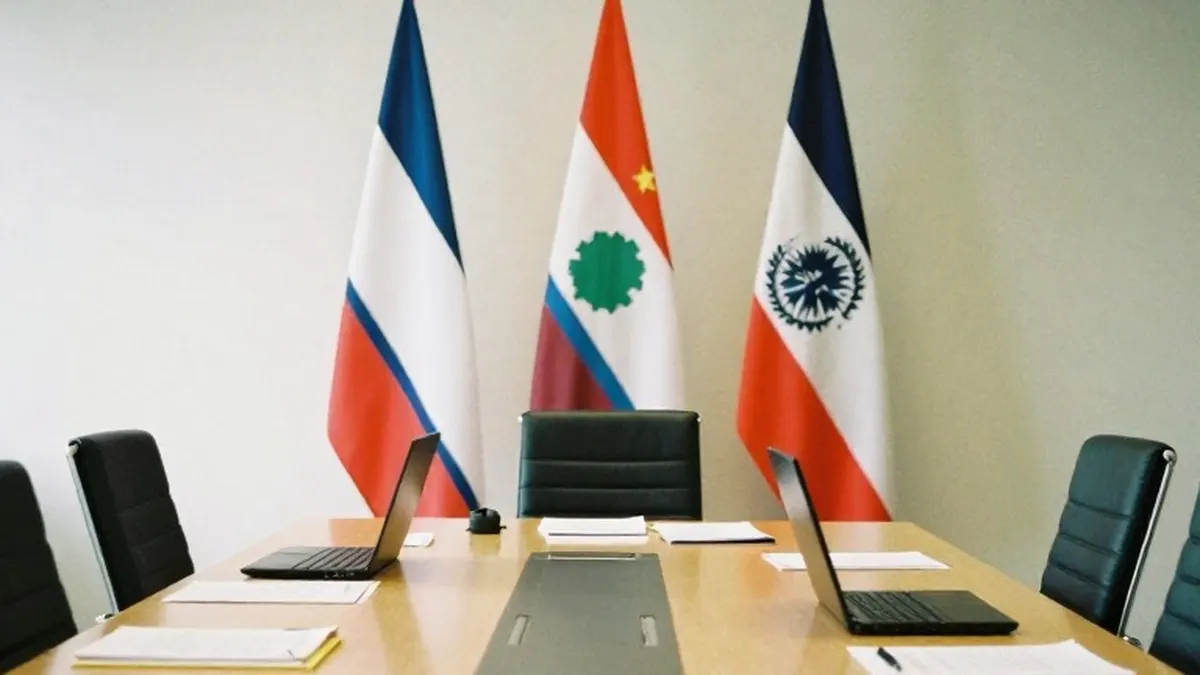
Senior defense representatives from Israel, Greece and Cyprus convened in Athens on Thursday to advance military collaboration. During the trilateral meeting, the officials reached a consensus to create a joint working group dedicated to their respective defense industries. The gathering also produced a significant diplomatic statement in which the three nations declared a recently ratified maritime agreement between Turkey and Libya to be legally void.
The Israeli Defense Ministry announced that the meeting included heads of defense policy from all three ministries, alongside other senior officials. Their discussions centered on broadening military cooperation and addressing common security challenges in the Eastern Mediterranean. A joint statement released by the ministry’s spokesperson detailed the outcomes of these high-level talks.
The participating countries emphasized that defense cooperation serves as a central pillar of their bilateral and trilateral partnerships. This stance builds upon a joint declaration adopted when the national leaders met in Jerusalem on December 22, 2025. The officials reiterated the previous invitation extended by the leaders, encouraging other nations with similar strategic interests to join the existing framework.
The agenda for the talks was extensive, covering regional security assessments and defense-industrial innovation. Specific topics included maritime security, with a focus on protecting sea lanes and critical infrastructure. The delegates also discussed disaster preparedness and civil protection measures to enhance regional resilience.
A key outcome of the meeting was the agreement to establish a trilateral defense-industrial working group. This body is intended to foster partnerships among the three countries' defense sectors. It will explore opportunities for joint development and production of military equipment while also working to improve interoperability between the armed forces of the three nations.
The three ministries issued a sharp critique of the maritime memorandum between Turkey and Libya. They noted that Libya’s House of Representatives ratified the pact on October 20. The Israeli, Greek and Cypriot officials argued that the agreement infringes upon the sovereign rights of third countries. They further stated that the pact ignores established international norms regarding maritime jurisdiction and cannot impose legal effects on other states.
In their joint statement, the officials voiced opposition to unilateral claims and the use of coercion or threats of force. They also criticized destabilizing military buildups in the region, asserting that no single country should serve as a platform for actions that threaten broader regional security. The trio reaffirmed their support for Cyprus’s sovereignty and territorial integrity, aligning with United Nations Security Council resolutions. They stressed the importance of adhering to the law of the sea as defined by customary international law.
Energy cooperation was described as a fundamental pillar of regional stability. The officials expressed opposition to any attempts to obstruct this cooperation in violation of international law. They highlighted the critical importance of freedom of navigation, particularly for protecting infrastructure and energy supply routes that serve Europe, the Eastern Mediterranean and the Middle East.
The sides identified several shared threats, including terrorism and the proliferation of advanced weapons. They also pointed to destabilizing activities conducted by both state and non-state actors across the region. Consequently, the three nations agreed to step up their coordination to address these emerging challenges effectively.
The statement concluded by noting that the partnership is rooted in shared democratic values and complementary strategic interests. This alignment helps strengthen the links between Europe and the Middle East. The three ministries expressed the view that cooperation, dialogue and respect for international law will allow the Eastern Mediterranean to become a region of security, connectivity and sustainable prosperity.