Midterm Elections Reveal Deep Divisions Among Jewish Lawmakers in Congress
The 2026 midterm results demonstrate that the Jewish caucus in Congress has fractured, with newly elected members holding sharply different views on Israel and the path to peace.
By Hassan Okoye ·
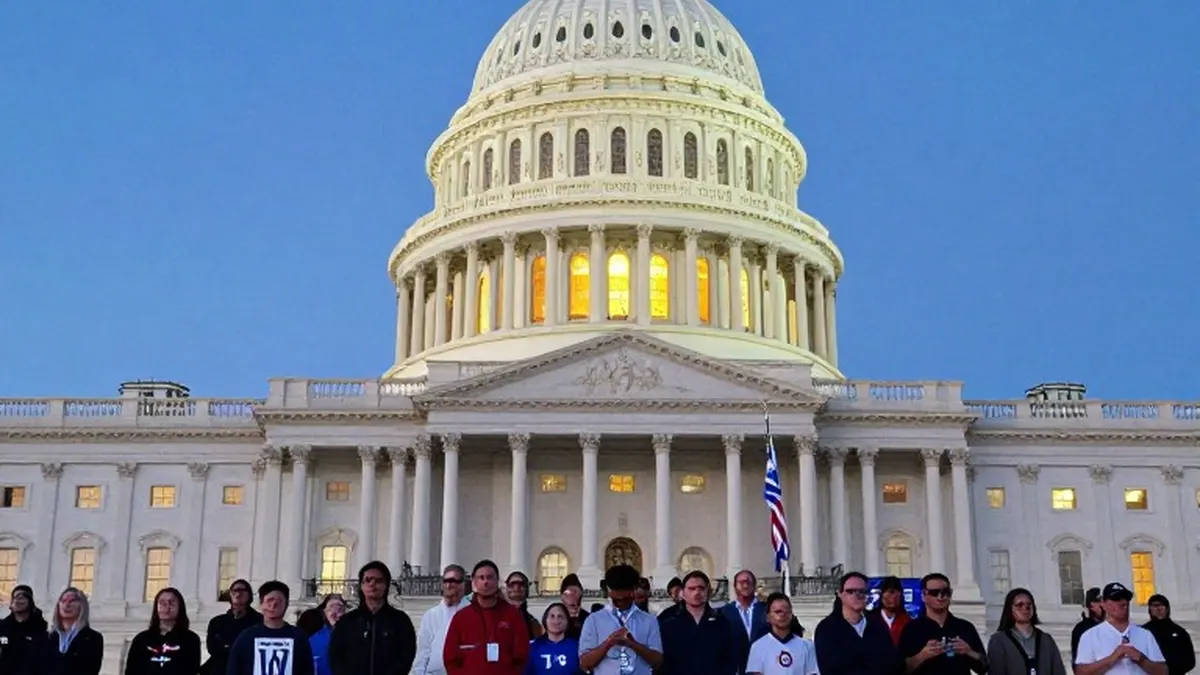
The traditional consensus among Jewish members of Congress has effectively dissolved, as the 2026 midterm elections highlighted a deep schism within the community regarding Israel. For decades, the Jewish caucus operated as a cohesive unit that party leaders and lobbies could rely upon for unified positions on issues affecting Jewish Americans. However, the eight newly elected Jewish Democrats represent a wide spectrum of opinions, making the old model of a singular Jewish voice a thing of the past.
This fragmentation is evident in the stark differences between new arrivals to the House of Representatives. Brad Lander, the newly elected Democrat from New York, opposes Israel obtaining offensive weapons. In direct contrast, Elaine Luria, who reclaimed her Virginia district, advocates for such arms. Luria's return was particularly significant for pro-Israel groups, as she is a vocal supporter of a robust United States-Israel relationship.
The election cycle also saw the decline of traditional lobbying influence. Lander defeated incumbent Daniel Goldman in the Democratic primary partly because Goldman refused to label Israel's conduct in Gaza as genocide. Lander also leveraged the American Israel Public Affairs Committee's endorsement of Goldman against him, signaling how divisive that support has become among progressive voters. Ira Forman, a former leader of the National Jewish Democratic Council, noted that the level of consensus required for decision-making in the 1990s and 2000s is now unattainable.
Various advocacy groups claimed the election results validated their specific perspectives. IfNotNow, a non-Zionist activist group, celebrated Lander's victory as proof that Jewish voters support their vision for justice and equality for Palestinians and Israelis. Conversely, the Democratic Majority for Israel touted the wins of its endorsed candidates, including Luria, Brad Schneider, Kim Schrier, and several returning lawmakers from California, Florida, and other states.
The Jewish Democratic Council of America counted 38 Jewish lawmakers in the current Congress, including 25 Democrats in the House and 10 in the Senate. While none of the Jewish winners rejected Israel's existence as a Jewish state, their policy differences remain significant. A group including Lander, Bernie Sanders, and Becca Balint accuses Israel of genocide and favors banning most weapons sales. Another faction, led by Senator Jon Ossoff, opposes some offensive weapons but supports Israel's right to self-defense.
On the Republican side, the three elected Jewish lawmakers also display varied positions. David Kustoff and Craig Goldman do not oppose a two-state outcome, while Randy Fine favors Israeli control of disputed territories. Halie Soifer, CEO of the Jewish Democratic Council of America, described this diversity as a natural reflection of a community that no longer speaks with one voice on Israel.
The shift in influence is also visible in the lobbying landscape. J Street, a lobby that advocates for pressuring Israel toward a two-state solution, declared victory after AIPAC folded one of its political action committees. J Street's president stated that the organization is now the center of gravity on Israel and Palestine within the Democratic Party, with nearly two-thirds of Democrats holding J Street endorsements.
AIPAC, which dropped direct endorsements for strategic reasons, congratulated hundreds of pro-Israel candidates but did not specify how many were Democrats. The end of the era of Jewish consensus is attributed to the Democratic Party's accommodation of divergent factions and the rise of new political voices. Forman suggested that the organized Jewish community no longer has a single center that can provide a majoritarian consensus view on major issues.
Historical context shows that while Jewish lawmakers have consistently served since World War II, a formal caucus did not exist until recently. The 2007 peace talks were secured with the backing of key Jewish Democrats, a feat that may have marked the last gasp of unified consensus. Since then, the emergence of J Street and other groups has created a competitive environment where multiple lobbies vie for influence, reflecting the broader diversity of opinion within the Jewish American community.