Strong El Nino Triggers Severe Flooding and Emergency Response in Peru and Ecuador
Intense rains linked to a record-strong El Nino have caused major flooding in Peru and Ecuador, resulting in deaths, displaced families, and national emergency declarations.
By Hassan Okoye ·
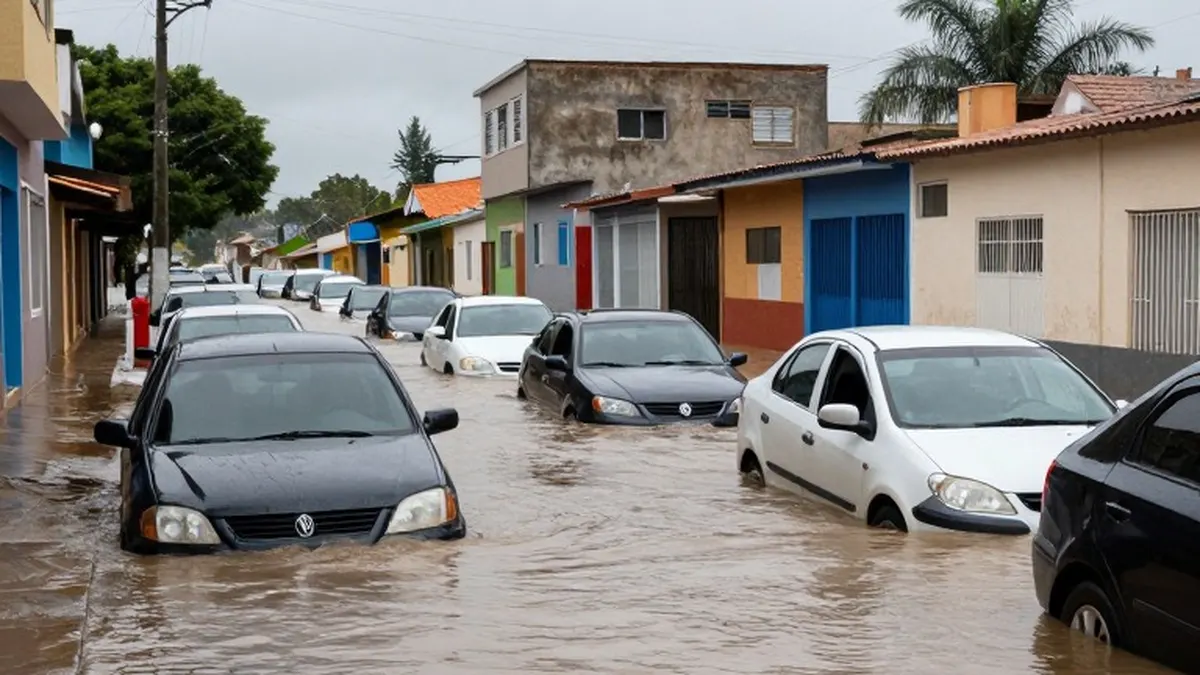
Cities across northern Peru and Ecuador are grappling with significant flooding after experiencing intense rainfall linked to an exceptionally powerful El Nino event. The downpours have overwhelmed urban infrastructure, leading to widespread disruption in major population centers and prompting urgent government responses.
In Piura, the capital of Peru's northern Piura region, streets were submerged in waist-high water after twelve hours of heavy rain that began on Thursday. Preliminary reports indicate that approximately 2,000 families have been affected by the deluge. Luis Vasquez, the chief of Peru's National Institute of Civil Defense, provided these figures in an interview with RPP radio station.
Residents described the devastation in stark terms. Pierre Garavito, a local resident in the Santa Margarita neighborhood, noted that a refrigerator was floating inside his home. He stated that this was the first major rain event from the El Nino phenomenon and expressed that he had lost everything, a sentiment shared by many neighbors in the area.
The impact on public services has been notable. Authorities were forced to relocate patients from the respiratory infection ward at the Jose Cayetano Heredia Hospital to the facility's auditorium. Those in more critical condition were moved to intensive care units. The Plaza de Armas in central Piura, along with numerous businesses and public buildings, also suffered from the floodwaters.
Peru's armed forces have deployed personnel and pumping equipment to clear accumulated water from the affected districts. However, some residents have voiced complaints about delays in the operation, citing reports that certain machines stopped working due to a lack of fuel. The National Meteorology and Hydrology Service has warned that moderate to heavy rainfall may continue in parts of the region for the next four days.
The Peruvian navy has attributed recent heavy ocean swells, which damaged coastal infrastructure and forced the temporary closure of dozens of ports, to the El Nino conditions. In response to the crisis, President Keiko Fujimori postponed a scheduled trip to Colombia. She announced plans to visit the affected areas to oversee relief efforts personally.
In neighboring Ecuador, the National Secretariat for Risk Management reported on Friday that 34 people had died and 47,000 had been affected by El Nino-linked heavy rains. The western city of Manta was particularly hard hit, with residents wading through chest-deep water and floating on mattresses after two rivers breached their banks.
Fernanda Navarrete, a resident of Manta, reported that she had been soaked in mud for four days and lost her furniture, clothes, and appliances. She added that the situation was exacerbated when the sewers burst, creating an awful stench in the community.
Both Peru and Ecuador have declared national emergencies, joining several other Latin American nations in doing so due to the El Nino phenomenon. This natural event involves rising sea surface temperatures in the central and eastern equatorial Pacific, which alters global wind and rain patterns. This year's episode is projected to be the strongest on record, with severe weather already observed across the continent and beyond.
On Friday, United Nations agencies warned that hunger is expected to worsen significantly in 16 global hotspots over the next six months. The Food and Agriculture Organization and the World Food Programme identified Sudan, South Sudan, Somalia, northern Nigeria, and Yemen as facing the greatest danger, driven mainly by armed conflict and extreme weather events including El Nino.