4,400-year-old shipwreck found off Turkey's Kekova coast
Divers recovered 30 amphorae and three stone anchors from the seabed, offering rare physical evidence of Bronze Age maritime trade in the Mediterranean.
By Hassan Okoye ·
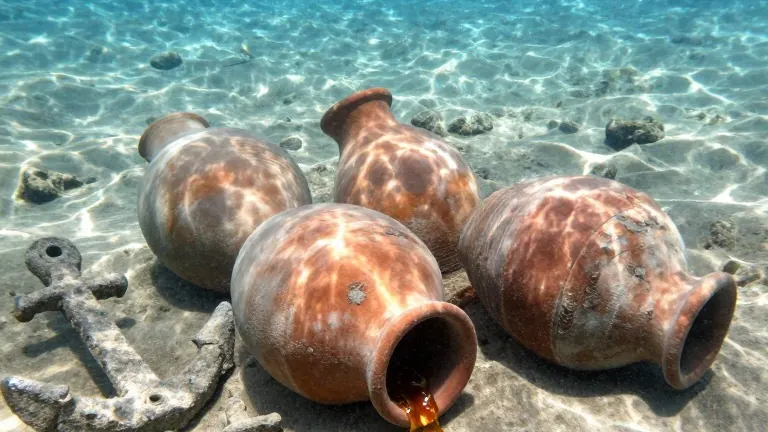
The discovery of 30 ancient jars and three stone anchors off the coast of Kekova provides the most tangible evidence yet of trade routes connecting the Mediterranean region more than four millennia ago. Turkish Tourism and Culture Minister Mehmet Ersoy announced the find on X/Twitter, describing the site as a time capsule at the bottom of the sea.
Prof Hakan Öniz from Akdeniz University led the Mediterranean Archaeology Association expedition that uncovered the artifacts. Öniz stated that comparing the decoration techniques confirms the wreck is from the Early Bronze Age with 100% certainty. The amphorae date back approximately 4,400 to 4,700 years, a period when maritime activity along the coasts of Anatolia was active but rarely documented by physical remains.
Analysis of the vessel shapes suggests they were produced in workshops in the Jordan Valley. This finding aligns the Kekova find with similar artifacts previously discovered in Egypt, Troy, and Crete. The geographic spread of these objects indicates a network of exchange that extended far beyond local waters, linking communities across the eastern Mediterranean.
One specific amphora stands out for its unique features, including nine distinct markings and two holes in its body. Ersoy noted this particular vessel likely served a different function than the others. The presence of these holes and the markings suggests it may have been used as a cheese or butter churn, implying that Bronze Age sailors prepared their own food during long voyages rather than relying solely on shore-based provisions.
Dr. Karin Sowada, an archaeologist at Macquarie University, examined the interior of several jars and reported finding a substantial amount of glossy residue. She described the material as extensive rather than just small spots, noting it could be olive oil, wine, or tree resins. Sowada suggested the residue might result from the reuse of the jars, as large vessels were valuable assets that people would empty on arrival and repurpose for years rather than discard immediately.
Kekova is a small, uninhabited island in the western Mediterranean Sea. The site remains a focal point for researchers seeking to understand daily life aboard ancient vessels. Öniz reflected on the human element of the discovery, thinking of the sailors, the producers, and the families waiting on shore for their return. The excavation continues to shed light on the maritime history of Anatolia.
Source: The Jerusalem Post