22,000 Officers Guard Israel's Knesset Vote
Police are deploying a record force to manage the high risk of public disorder and challenges to results following the release of exit polls.
By Isabella Kaur ·
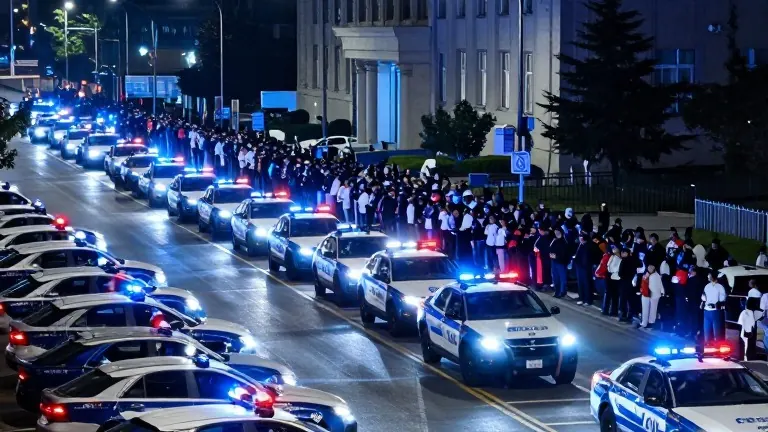
Twenty-two thousand police officers will secure the polls for the election of the 26th Knesset, a number that marks a sharp increase in security resources compared to the last cycle. This deployment represents an addition of roughly 5,000 personnel over the previous election, which utilized approximately 17,000 officers. The expanded force is designed to address specific concerns about public order disruptions that may occur after the voting period concludes.
The primary focus of the security plan is the period following the publication of exit polls at 10:00 p.m. A senior police official stated that while voting day itself is expected to pass quietly, the hours immediately after polls close are the most sensitive. The official noted that the release of results could lead to celebrating or angry citizens taking to the streets, creating potential for friction and confrontations throughout the night and into the following weekend.
Police preparations extend beyond the polling stations to include the security of five major party gatherings scheduled for election night. Four of these events are located in Tel Aviv, while the Likud party will hold its gathering at the International Convention Center in Jerusalem. The senior official emphasized that such setups require a very large number of police forces to manage crowds and maintain order effectively.
A comprehensive security briefing was presented to Prime Minister Benjamin Netanyahu, with National Security Minister Itamar Ben-Gvir in attendance. The meeting covered intelligence assessments, threats from hostile terrorist activity, and the operational readiness of the police force. Police have been preparing for this election for about three months in coordination with the Shin Bet and the Israel Defense Forces. During the session, Netanyahu focused his questions on security threats and the readiness of the forces.
The defense establishment has also prepared for a specific contingency referred to as Operation Capitol. This scenario was developed following the events of January 6, 2021, in the United States, when supporters of Donald Trump stormed the Capitol building after his loss in the November 2020 presidential election. The plan addresses a situation where one of the two competing political blocs claims the results were forged and acts to undermine public order, potentially involving tens of thousands of people attempting to storm the Knesset building.
Former police and Shin Bet officials argue that this scenario must be placed at the top of the priority list for preparations. They contend that an organized order must be issued detailing police force allocations and reinforcement units, with exercises conducted at the National Headquarters and across all districts. One former security official stated that it would be a massive failure if this scenario was not prioritized, requiring commanders to participate in war games to ensure readiness for such an extreme event.
Retired officials have expressed concern over the potential for a leader of one of the two political blocs to declare they do not accept the election results. In such a case, the opposing camp might also mobilize supporters to safeguard the democratic process. A senior retired police officer noted that police would likely require assistance from additional bodies, chief among them the IDF, to manage the situation if both camps take to the streets.
One retired police major general criticized the conduct of figures in the public and security arenas, stating that it is currently difficult to rely on the Shin Bet to act in a professional and statesmanlike manner. He pointed to weekly polls with figures that do not align with other surveys as a form of preparation for a narrative of stolen elections. This is compounded by what he described as a campaign of delegitimization against the Central Elections Committee and the Supreme Court.
The major general also highlighted the risk posed by the large number of firearms in civilian hands. He referenced armed militias established in Israel over the past four years, including regional defense units in Judea and Samaria and standby security squads across the country. He described the distribution of tens of thousands of weapons to civilians as a dangerous platform for a civil war, framing the upcoming election as a test of whether leaders will act with public responsibility even if they lose.