Food Prices Soar in Northern Yemen Despite Market Availability
Rising costs and reduced aid are making food unaffordable for many families in northern Yemen, despite continued market supply.
By Isabella Kaur ·
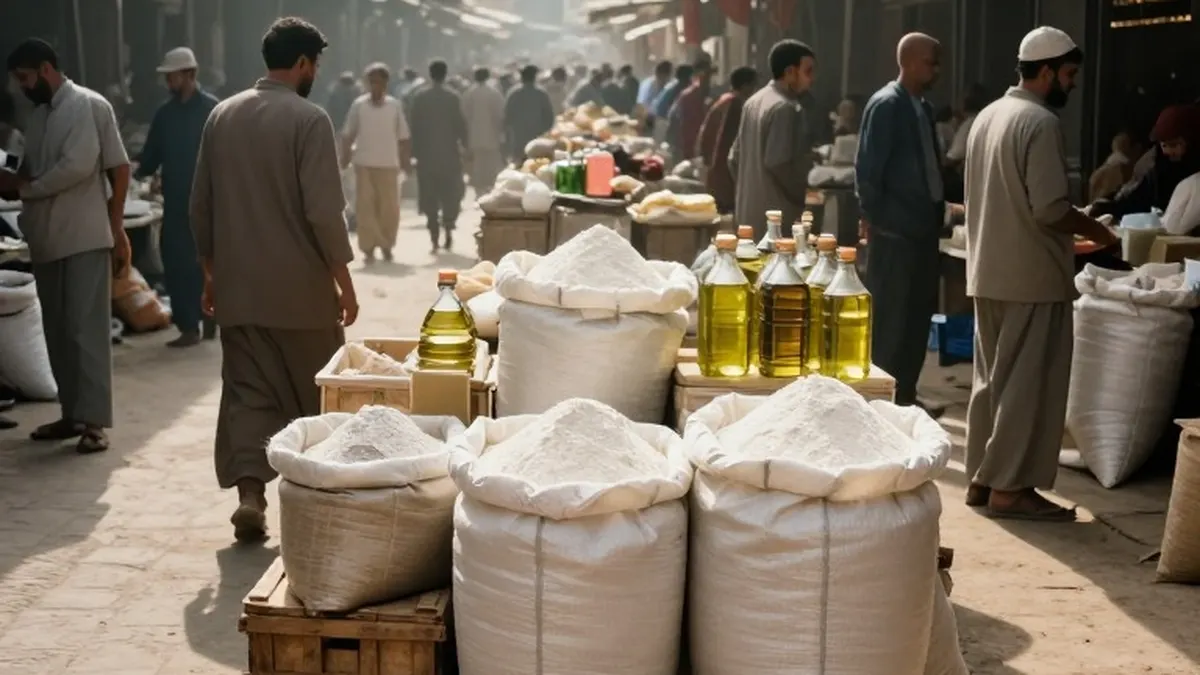
Families in northern Yemen are facing a growing crisis where food remains on shelves but is increasingly unaffordable. In the Red Sea port city of Hodeidah, residents are adjusting their daily habits to cope with rising costs. Umm Sami, a widow supporting four children, now purchases small quantities of flour and oil that last only a single day. She explained that the family can no longer afford to buy full bags, forcing them to ration every meal.
A recent humanitarian assessment indicated that while food was available in markets reached by monitors in September, household budgets had shrunk significantly. In Houthi-controlled areas, the cost of a basic food basket rose by approximately 7 percent in September, reaching 91 dollars. This marked the highest level in a year. Although prices are rising in government-held southern regions as well, the north faces unique challenges related to low income levels and reduced aid.
Economic instability is deeply affecting local workers. FEWS NET reported in October that most households in northern towns secure paid work for only five to 10 days each month. The UN World Food Programme suspended food assistance in Houthi-held areas in September 2025. By mid-2026, the agency had resumed distribution in government-held zones, aiming to reach 1.7 million people, but the gap in northern support remains significant.
Local laborers are struggling to make ends meet. Ahmed Arjash, a motorcycle taxi driver in Hodeidah, noted that many former customers now walk to save on fares. His daily earnings barely cover fuel and vehicle rental. Saleh, a construction worker, stated that even when hired, his wages are insufficient to cover his family's needs for more than a few days at current price points. Fishermen are also seeing reduced demand and higher operational costs, making some trips unprofitable.
The supply chain for food has become more expensive and slower. Yemen imports about 90 percent of its food, with Hodeidah serving as the main entry point for the north. While food imports increased year-on-year, fuel imports dropped sharply by 85 percent in August. Houthi authorities raised petrol prices by 10 percent in September, the first increase in four years. Consequently, bread prices in the region jumped by 25 percent that month.
Military actions have further complicated logistics. In early November, Saudi aircraft attacked a pier and a commercial ship at Ras Isa port. The Saudi-led coalition also targeted operational capabilities in Hodeidah, with Houthi forces threatening retaliation against Saudi Red Sea ports. Although the port remains open, the impact on deliveries is uncertain. Transporting goods inland has slowed, with truck trips from the south to the north taking up to a week instead of three days.
Aid organizations face significant hurdles in the north. The WFP suspended activities after the detention of UN staff, with 73 personnel, including 38 WFP staff, still held as of last month. The Norwegian Refugee Council described the humanitarian response as collapsing due to funding cuts and sanctions. Donors have provided only 16 percent of the requested funds for food security in Yemen this year.
The UN has designated Yemen as a hunger hotspot of highest concern through May 2027. Conflict, displacement, and economic hardship drive the risk in five specific areas. The Integrated Food Security Phase Classification has not recently analyzed Houthi-held zones, but its last nationwide projection in June 2025 estimated that 18.1 million people, or 52 percent of the population, would face crisis-level hunger. FEWS NET expects emergency hunger levels to persist in Hodeidah and Hajjah through 2027.
The situation in Taiz, a government-held city besieged by Houthi forces, is particularly critical. FEWS NET warns of a credible risk of famine between February and May if the siege intensifies. In Hodeidah, markets continue to stock goods, but for many families, the primary question is how much they can afford to buy. Even basic staples like bread have become a financial burden for many households.