Asian Markets Tumble as AI Regulation Fears Follow US Midterm Results
Major Asian stock indices suffered heavy losses on Friday after US midterm election results raised concerns about stricter oversight of the artificial intelligence sector.
By Hassan Okoye ·
Asian technology stocks experienced a significant decline on Friday, with markets in Seoul and Tokyo leading the losses. The sell-off mirrored a sharp drop on Wall Street, driven by investor anxiety that a Democratic victory in the recent US midterm elections would lead to tighter regulations on the artificial intelligence industry.
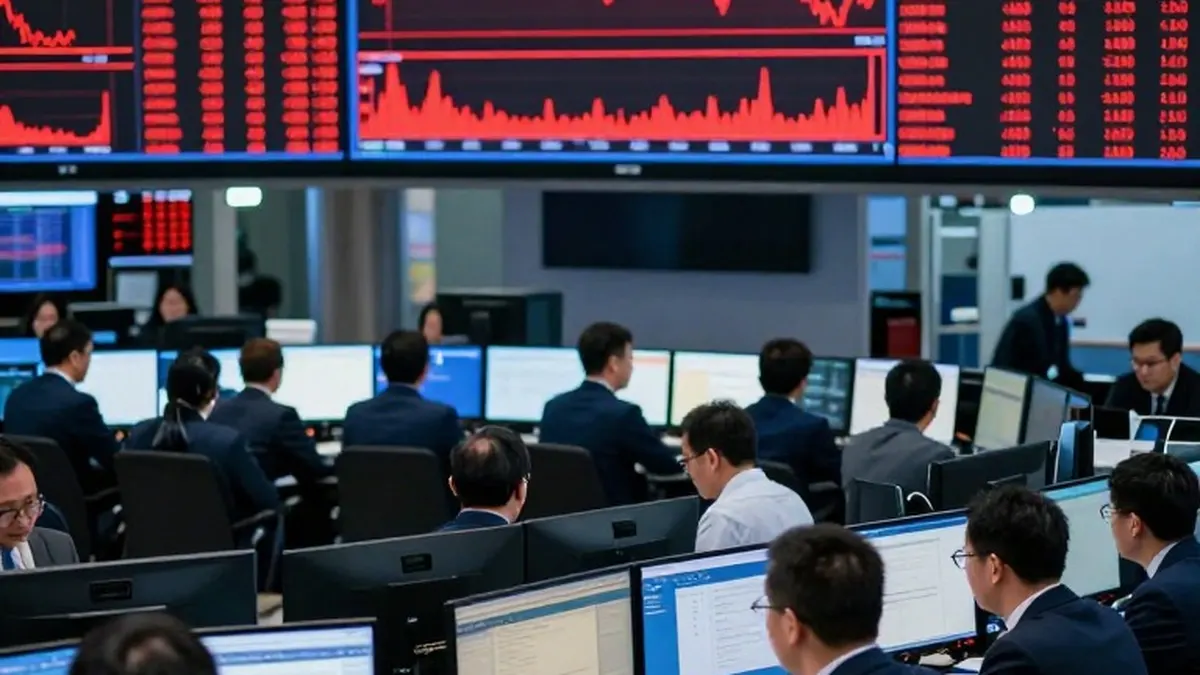
Trading screens in Asia were predominantly red during early business hours. Traders moved to reduce exposure in a sector that had helped push global markets to record highs just five months prior. The uncertainty surrounding the future of AI development prompted a broad retreat from tech-heavy equities.
While the historic Democratic "blue wave" in Tuesday's vote was initially seen as a potential constraint on President Donald Trump's conflict with Iran, market focus quickly shifted to the implications for AI infrastructure. Many candidates who won their seats campaigned on curbing the expansion of data centers, a project that has faced growing opposition from voters across the political spectrum.
Analysts noted that the market reaction was also influenced by a call from US Senator Bernie Sanders for a national moratorium on new data center construction. This added to existing concerns about the hundreds of billions of dollars already invested in the sector and the timeline for seeing returns. Rising borrowing costs further fueled worries about the financial stability of these highly leveraged companies.
In the United States, the Nasdaq index fell by 5.5 percent, marking its worst percentage drop since April of last year when President Trump announced global tariffs. The S&P 500 declined by more than four percent, while the Dow Jones Industrial Average dropped over three percent. Bloomberg reported that the Philadelphia Semiconductor Index had collapsed by approximately 16 percent for the week, heading toward its worst performance since the previous spring.
President Trump attributed the market plunge to the election outcome in a post on Truth Social. He wrote that the stock market crashed because Democrats had a significant victory on Tuesday, stating that the party had only itself to blame for the decline.
The selling pressure was intense in Asia. The Seoul market plunged nearly nine percent at one point, with chip manufacturer SK Hynix down 10 percent and Samsung Electronics falling eight percent. The Kospi index, which had more than doubled between the end of December and mid-June, has since lost almost half of those gains. In Tokyo, the Nikkei 225 dived seven percent, with major tech firms Kioxia and SoftBank giving back more than 10 percent of their value.
Other Asian markets also fell. TSMC's seven percent drop dragged the Taipei index down by around eight percent. Indices in Hong Kong, Shanghai, Sydney, and Singapore all declined by more than one percent, while Wellington and Manila also closed in negative territory.
Neil Wilson of Saxo Markets described the scene as having "blood in the streets," noting fears of a total momentum unwind as Democrats potentially slow the pace of frontier AI development and data center construction. He added that while the drop may seem excessive, the market's tendency to sell everything at once means investors must first look for signs of stability.
Market sentiment was further dampened by a rise in oil prices, which extended gains seen on Thursday after initial plunges following the midterm results. Traders also remained attentive to developments in the US-Iran crisis, where both leaders had indicated progress earlier in the week. US jobs data was scheduled for release later in the day, following generally positive economic indicators earlier in the week.