Asian tech stocks tumble as US election fallout fuels AI concerns
Asian markets extended a US-led technology selloff on Friday as investors worried that the Democrats’ midterm victory could bring tighter AI oversight and slow data centre construction.
By Hassan Okoye ·
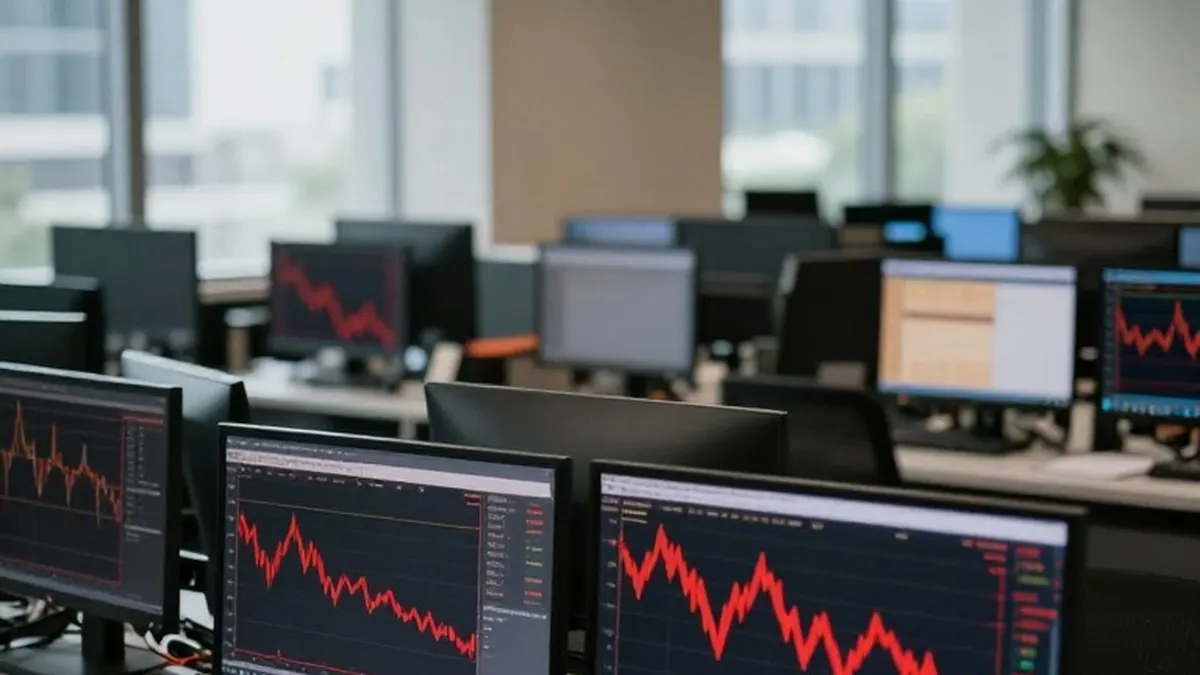
A sharp retreat in technology shares spread from Wall Street to Asian markets on Friday, November 6, as investors assessed the implications of the Democrats’ victory in the US midterm elections. Concerns that greater regulatory scrutiny could restrain artificial intelligence investment and data centre expansion prompted heavy selling, with authorities intervening as losses mounted.
Japan’s Nikkei dropped 6 percent, marking its largest single-day decline since April 2025. Markets in South Korea and Taiwan initially lost more than 8 percent before recovering some ground. The declines followed a turbulent Thursday session in the United States, where the technology-heavy Nasdaq fell 5.5 percent, S&P 500 companies lost $3 trillion in value and Wall Street’s volatility gauge surged.
Investors feared that Democrats could impede the AI expansion encouraged by President Donald Trump. Analysts said the political uncertainty compounded existing doubts about whether enormous investments in AI infrastructure would generate sufficient returns. Dong Baozhen, chairman of asset manager Lingtong Shengtai, told Reuters that AI valuations had rested on overly optimistic expectations and questioned whether rallies elsewhere could survive a reversal in the US market.
Authorities moved to contain the selling. South Korea temporarily suspended trading on the Kospi, while Finance Minister Lee Hyoung-il relaxed rules governing leveraged investments by retail investors. In China, state entities bought equities to support the market, according to Al Jazeera correspondent Katrina Yu. Reporting from Beijing, Yu said major Asian markets had recovered part of their losses but remained in negative territory.
Taiwan’s market finished 4.5 percent lower after its steeper opening decline. Its weekly loss reached 12.2 percent, the largest since 1991, according to LSEG data. The economy ministry sought to reassure investors about the chip-producing island’s technology sector, saying on Friday that expanding demand for AI, high-performance computing and cloud services was expected to support demand for technology companies.
Chipmakers were among the companies hit. Samsung Electronics declined nearly 6 percent and SK Hynix lost 9.4 percent, both recovering from deeper falls earlier in the session. Taiwan’s TSMC closed down 4.7 percent after dropping as much as 8.5 percent. In Japan, Kioxia and AI investor SoftBank Group each fell 11 percent.
The retreat also reflected growing investor attention to opposition to data centres. Analysts said markets had not fully accounted for the costs that construction had placed on communities, adding another source of uncertainty to the outlook for AI infrastructure investment.
Toby Walsh, chief scientist at the AI Institute at Australia’s University of New South Wales, told Al Jazeera that he expected additional data centre regulations in countries including the United States, Australia and the United Kingdom. He said developers had failed to secure social acceptance and questioned the need to locate facilities in urban areas.
Walsh also suggested that a slowdown could benefit the US technology industry by moderating the pace of spending. In his assessment, the political shift could provide a way for the investment bubble to deflate at a manageable pace.