Retired US Admiral Says Washington Failed to Apply Ukraine’s Drone Defense Lessons
Mark Montgomery told RFE/RL that missed opportunities to adopt Ukrainian counter-drone methods left US and Gulf facilities vulnerable as American adversaries expanded their cooperation.
By Hassan Okoye ·
Washington’s failure to learn from Ukraine’s battlefield experience left American facilities and Gulf partners exposed to Iranian drone attacks, retired Rear Admiral Mark Montgomery said in an interview with RFE/RL. He argued that the shortcomings reflected a wider challenge as Russia, China, Iran and North Korea increasingly support one another across different conflicts.
Montgomery, who served 32 years in the US Navy before retiring in 2017, is now senior director of the Center on Cyber and Technology Innovation at the Foundation for Defense of Democracies. Speaking to RFE/RL correspondent Alex Raufoglu after visits to Ukraine and the Middle East, he said the United States had missed opportunities to adopt Ukrainian ground-based drone interceptors.
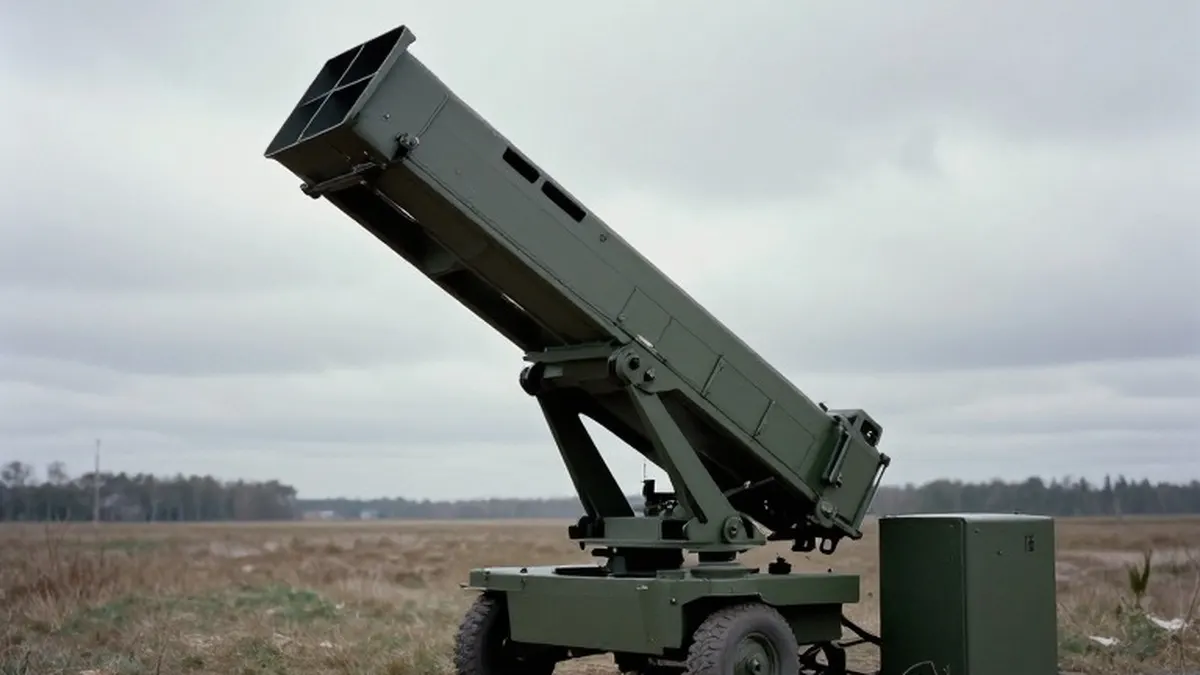
According to Montgomery, Ukrainian President Volodymyr Zelenskyy offered that assistance in the summer of 2025, but Washington declined. He said short flights from Iran to nearby Gulf targets gave defensive aircraft too little time to intercept incoming drones, making ground-based systems essential. Montgomery attributed the end of the 40-day air campaign to an inability to adequately defend Gulf facilities and infrastructure against those attacks, arguing that Ukrainian methods could have prevented significant damage.
Montgomery described cooperation among Washington’s adversaries as extensive and increasingly consequential. He said Axis Of Aggressors, a book he co-authored with FDD scholars Brad Bowman and Elaine Dezenski, documents at least 700 instances of military, economic or technological cooperation among the four countries. In his assessment, Ukraine faces contributions from all four, even though Russia is conducting the main frontline fighting.
He cited Iran’s provision of thousands of Shahed drones and production blueprints to Russia, along with North Korea’s deployment of 12,000 troops during the Kursk offensive. North Korea subsequently supplied personnel for engineering and other duties, as well as 6 million artillery and mortar rounds, he said. Montgomery also credited China with sustaining Russia’s wartime economy and supplying microelectronics used in cruise and ballistic missiles.
On Ukrainian communications, Montgomery said shutdowns or severe speed restrictions affecting Starshield undermine military operations and civilian resilience. He said he believed Washington was deliberately using those restrictions to pressure Zelenskyy into territorial concessions. Separately, he argued that Russian cyberattacks, disinformation, sabotage and other operations sought to weaken European support for Ukraine and confidence in NATO’s willingness to protect its eastern members.
Turning to Iran, Montgomery criticized the initial US objective of regime change, arguing that air power could not achieve it without an armed force on the ground. He nevertheless praised what he described as Washington’s subsequent patience in maintaining a naval blockade and expanding financial sanctions. He characterized the campaign as economic pressure intended to force a change in Tehran’s behavior.
Montgomery warned that support for Russia also brings benefits to its partners. He cited allegations that Moscow had supplied submarine-quieting technology to China, alongside airborne assault training, and said Russian assistance described as space technology was improving North Korea’s intercontinental ballistic missile capabilities. He argued that developments involving Ukraine, Iran and Taiwan needed to be understood together because the countries challenging Washington were cooperating across regions.