Dutch Authorities Seize 26 Rare Turtles from Luggage at Schiphol
Dutch officials seized 26 critically endangered Vallarta mud turtles from a passenger's luggage at Schiphol Airport, a find that may represent nearly 10% of the species' wild population.
By Isabella Kaur ·
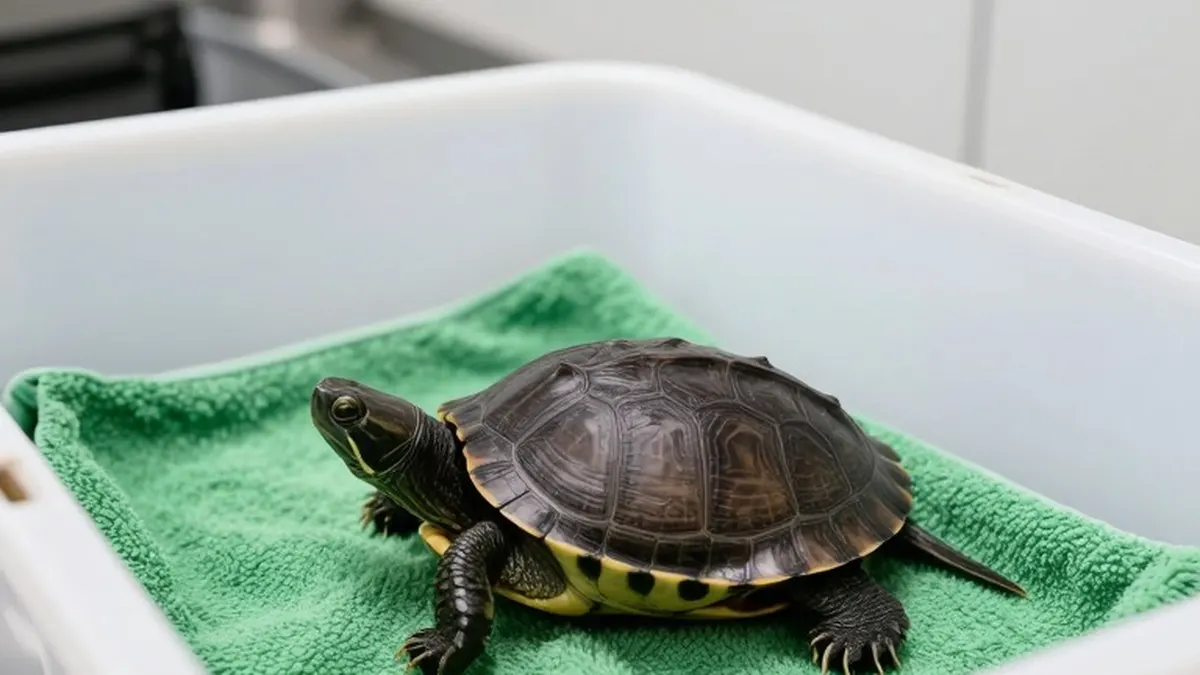
Dutch customs officials intercepted a significant shipment of critically endangered wildlife at Amsterdam's Schiphol Airport. The Netherlands Food and Consumer Product Safety Authority, known as NVWA, announced on Friday that agents had seized 26 Vallarta mud turtles. The animals were discovered hidden within the luggage of a male passenger who was traveling to Hong Kong.
These turtles are native exclusively to Mexico and were only formally described and added to the scientific record in 2018. They are recognized as one of the smallest turtle species in the world. According to the NVWA, the animals were likely removed from the wild in Mexico, where the total estimated population stands at approximately 300 individuals.
The discovery took place on November 21 during a routine inspection. Customs agents noticed the live fauna and contacted the NVWA, which is the lead agency for such cases. Following the request from the NVWA, police arrested the man. As of Friday, the suspect remained in custody while federal prosecutors continued their investigation into the matter.
The NVWA provided details on how the animals were concealed. Most of the turtles were packed inside a box next to a toy car. Other individuals were placed within a sealed sock inside a suitcase. To keep the animals still during transit, they were wrapped in duct tape. Fortunately, all of the turtles survived the journey in this condition.
After the seizure, the turtles were transferred to a specialized rescue facility. There, staff members carefully removed the duct tape from the animals. The NVWA stated that the turtles are now receiving the necessary care at the facility.
Vallarta mud turtles inhabit a very small region in western Mexico. Because the species was discovered so recently, there is limited information available about their biology and behavior. Habitat loss has been a major threat, driven by urbanization and the expansion of the tourist industry in the Mexican state of Jalisco.
The organization Turtle Island, based in Graz, Austria, has recently begun breeding these turtles to serve as a genetic reservoir for potential future rewilding efforts. The group considers this species to be the world's smallest turtle. They estimate that more than 99 percent of the turtles' natural habitat has been lost to urban development.
The small size and distinct appearance of the turtles make them attractive targets for illegal collectors. The IUCN Red List classifies the species as critically endangered. They are also subject to the highest level of protection under the Convention on International Trade in Endangered Species of Wild Fauna and Flora, commonly known as CITES.
The NVWA noted that the suspected poaching of these 26 turtles could have reduced the wild population by nearly 10 percent. This calculation is based on the current estimate of around 300 animals remaining in the wild. Roads and traffic also pose a specific risk to these slow moving creatures.
In light of the seizure, the agency urged the public to report any suspected instances of illegal trade in protected animal or plant species. They highlighted that such trading can occur through various channels, including online forums, marketplaces, bird fairs, and antique or curiosity markets.