Global Noahide Congress Seeks to Unite Non-Jewish Followers of Torah Principles
A gathering in Jerusalem aims to structure a worldwide community of non-Jews who follow the seven Noahide laws, offering a spiritual path distinct from conversion.
By Yuki Kaminski ·
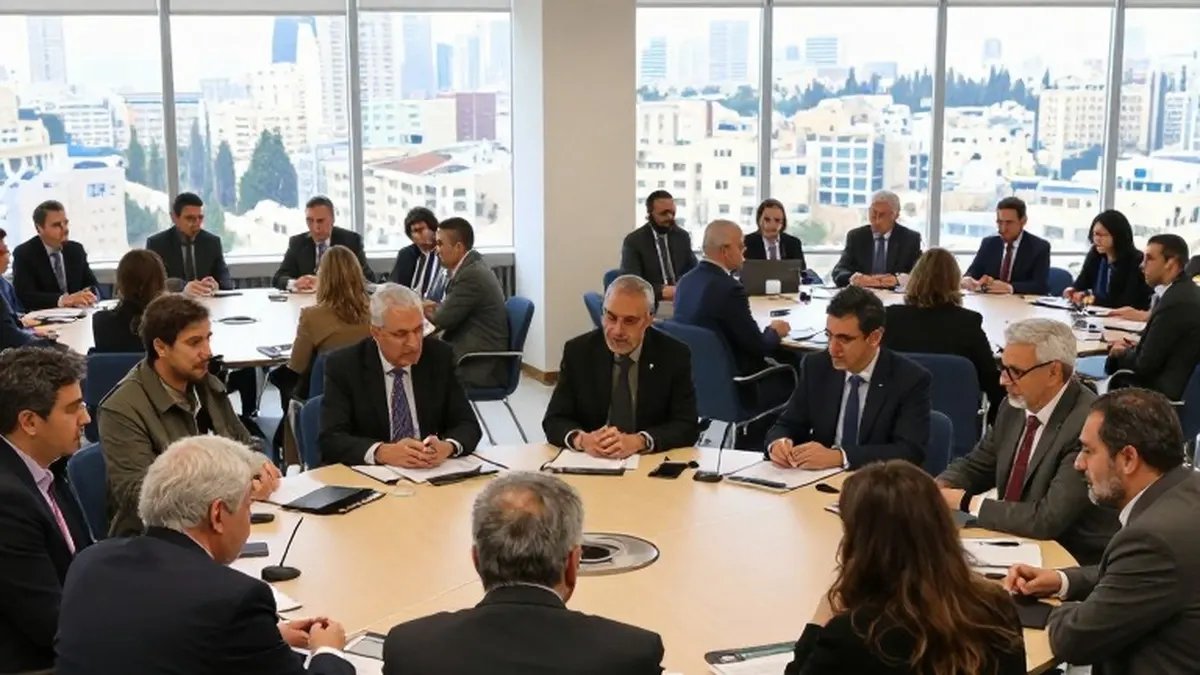
A gathering of approximately 50 self-identified Noahides convened in Jerusalem in early November to discuss the formation of a unified global identity. The event, titled the First International Congress of Noahides, was organized by the Brit Olam group and held on the Mount of Olives. Participants from various countries met at the Seven Arches Hotel to debate how to establish common practices and create a cohesive international community.
The movement caters to non-Jews who wish to live according to the universal principles of the Torah without undergoing the full conversion process. This approach differs from Christianity and Islam, which traditionally seek to convert the entire world. Instead, Noahides adhere to the seven laws given to Noah, which include prohibitions against idolatry, blasphemy, murder, theft, and sexual immorality, as well as a mandate to establish courts of justice.
Rabbi Oury Cherki, chairman of Brit Olam, explained that the organization believes the Torah offers a necessary framework for spiritual morality in the modern world. He stated that the group is collaborating in their love of God to build a better world together. While these laws have historically been a theoretical ideal within Judaism, Cherki noted that thousands of people worldwide now seek to identify with the Jewish people through this ethical monotheism.
Solia Centeno de Baglivo, a lawyer from Bolivia, is one of the many who found this path. Raised Catholic, she began exploring Jewish philosophy during the pandemic but found conversion difficult due to her marriage and the local political climate. With the support of her husband and the blessing of her late father, she declared herself a Noahide. She has since helped develop a community of 40 Noahides in Bolivia and is working to spread awareness to others.
Francisco Gil-White, a Noahide from Spain residing in Israel, emphasized the need for institutional structure. He described his journey from atheism to faith, noting that he wanted to be on the same team as the Jewish people without the specific commitments of conversion. He explained that Noahides remain full members of their original cultures while loving the Jewish people and the Torah. Gil-White mentioned that he often avoids working on Shabbat unless there is an emergency.
Eliezer Vicente Yarid from Cuba joined the movement through a different route. His parents revealed they were Bene Anusim, descendants of Sephardic Jews forced to convert to Catholic centuries ago. Although he felt a strong connection to his heritage, he was not halachically Jewish and found conversion too difficult for his family. He joined a small Noahide community in Cuba before moving to the United States, where he continues to explore this identity.
Brit Olam, established 12 years ago, currently teaches online classes to about 10,000 people weekly. The organization has published several books for Noahides, including a prayer book and a codebook of recommendations for living a proper life. At the conference, participants signed a joint statement affirming their belief in the covenant of the Prophets and Jerusalem as a sacred site. Some also made ceremonial declarations before a legal court in Jerusalem, a symbolic act intended to strengthen their emotional connection to the movement.
Noahide communities already exist in the Philippines, Latin America, Africa, and the United States, but they are often small and disconnected. Brit Olam representatives stated that there is a growing interest from Muslims, particularly since the Abraham Accords. The organization is raising funds to increase its global outreach and unite these scattered networks.
Organizers acknowledge that their mission is ambitious and that few in the Jewish world consider their vision realistic. However, they draw inspiration from the First Zionist Congress held in Basel in 1897. One organizer noted that the Zionists knew their task would be hard, but by bringing people with a vision together, they took the first steps to make it happen. That is the same approach the Noahide congress is attempting to take now.